The City of Gold Complete Guide
Standing at 828 metres with 163 floors, the Burj Khalifa isn't just the world's tallest building - it's an engineering marvel that redefined what's possible. Visit at sunset to watch the city transform from desert gold to a glittering sea of lights. See page 20.
Where ambition meets the desert
Dubai defies logic. In just fifty years, this stretch of desert coastline has transformed from a modest trading port into one of the world's most futuristic cities. Here, the tallest building on Earth towers over ancient souks, man-made islands reshape the coastline, and indoor ski slopes defy the 45°C summer heat. Dubai doesn't just push boundaries - it obliterates them.
Yet beneath the glass-and-steel surface lies a city of genuine warmth. The Creek still bustles with wooden trading dhows as it has for centuries. The call to prayer echoes through Al Fahidi's wind-tower houses. And the Bedouin tradition of hospitality - offering coffee and dates to every guest - remains the bedrock of Emirati culture.
Dubai is a city built on audacity. When told the desert couldn't support a global metropolis, it built one anyway. When the coastline was too short, it created new islands. When summer was too hot for tourism, it built the world's largest indoor attractions. This relentless ambition is precisely what makes Dubai so thrilling to visit.
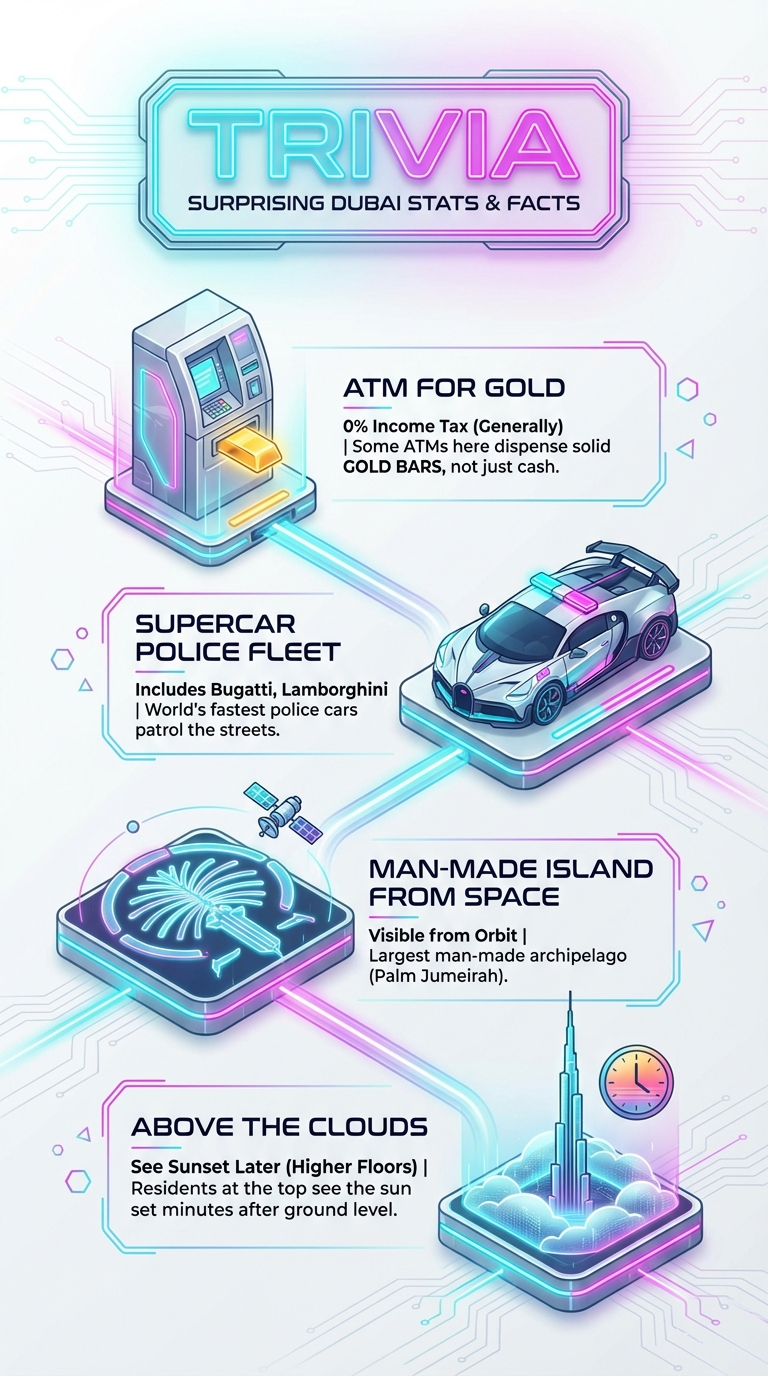
The world's tallest building. The largest shopping mall. The biggest choreographed fountain. The most luxurious hotel. Dubai collects records like other cities collect museums. The Burj Khalifa pierces the sky at 828 metres, the Dubai Mall spans 12 million square feet, and the Palm Jumeirah is visible from space.
Old Dubai tells a different story. Cross the Creek on a wooden abra for just 1 dirham, and you'll find yourself in the aromatic Spice Souk and the glittering Gold Souk, where 10 tonnes of gold are on display at any time. Al Fahidi's coral-stone houses and wind towers whisper of a time before oil.
Dubai sits where the Arabian Desert meets the Persian Gulf, offering both worlds. Spend your morning dune bashing in the red sands, your afternoon on a pristine beach, and your evening dining 122 floors above the city. Few places on Earth offer such dramatic contrasts.
"Dubai is the only city where you can ski indoors at noon, ride a camel through desert dunes at sunset, and dine at a Michelin-starred restaurant 400 metres above sea level - all in the same day. It's excess, yes, but it's also genuinely awe-inspiring." - The Travorea Team
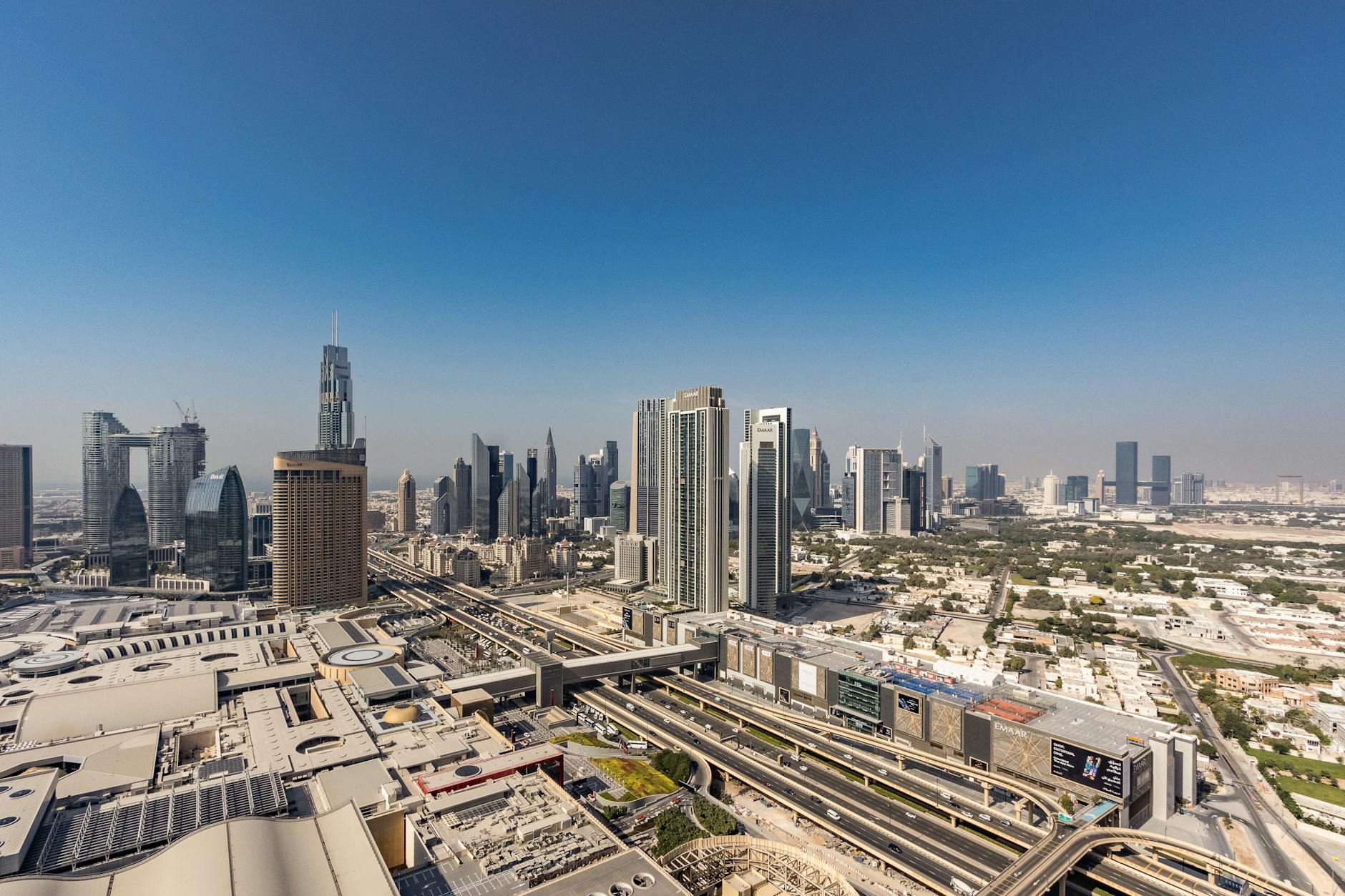
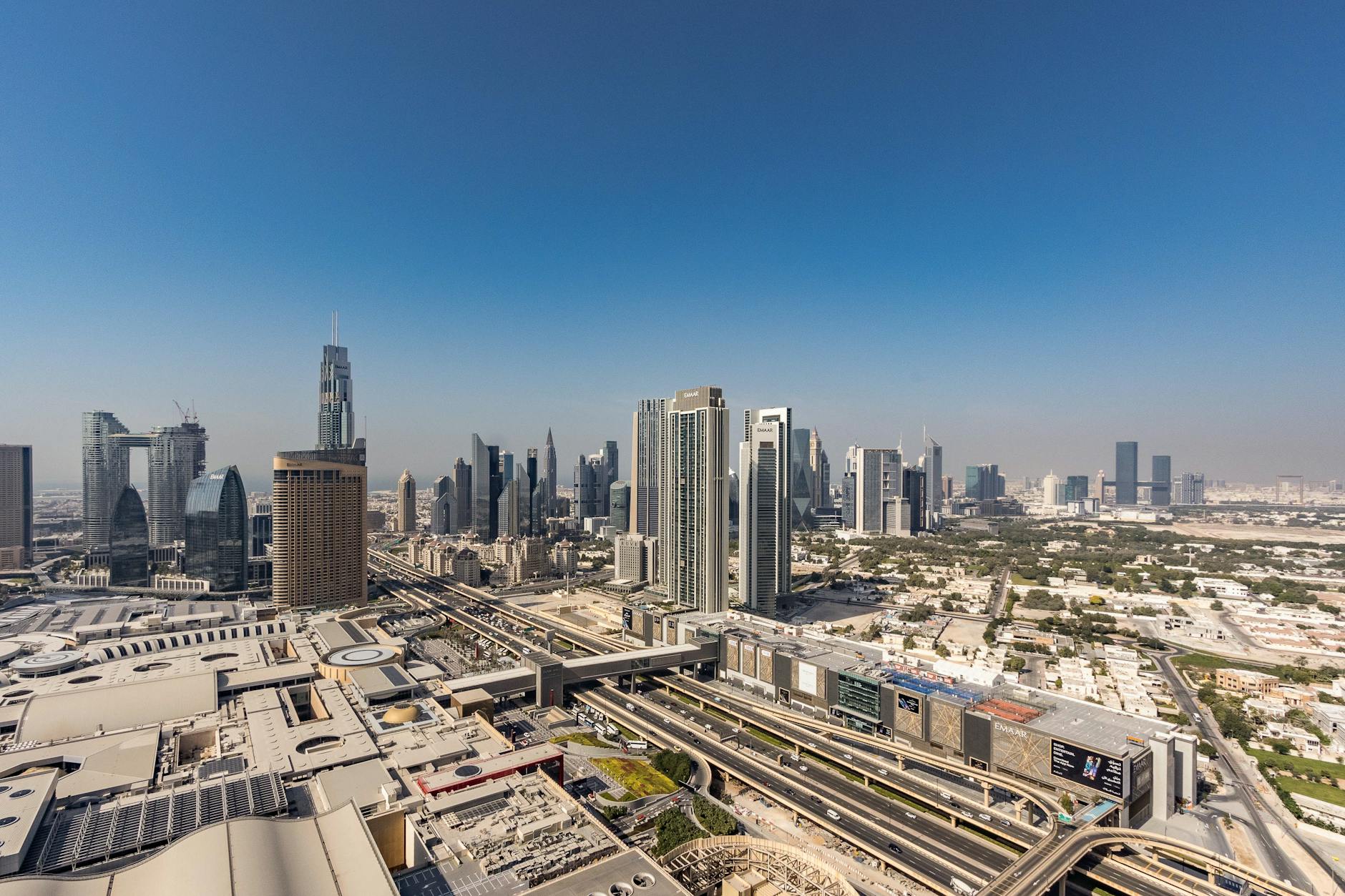
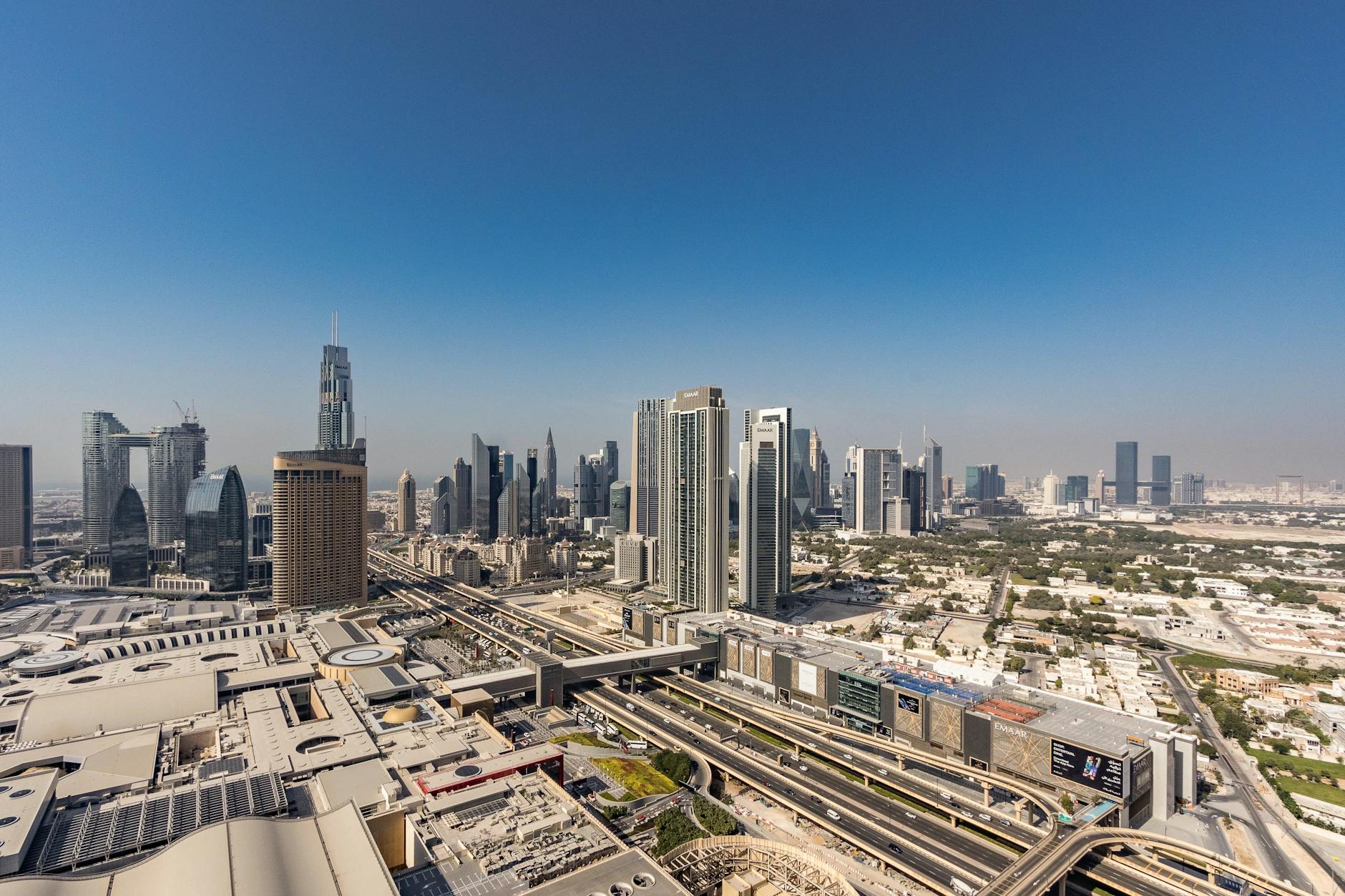
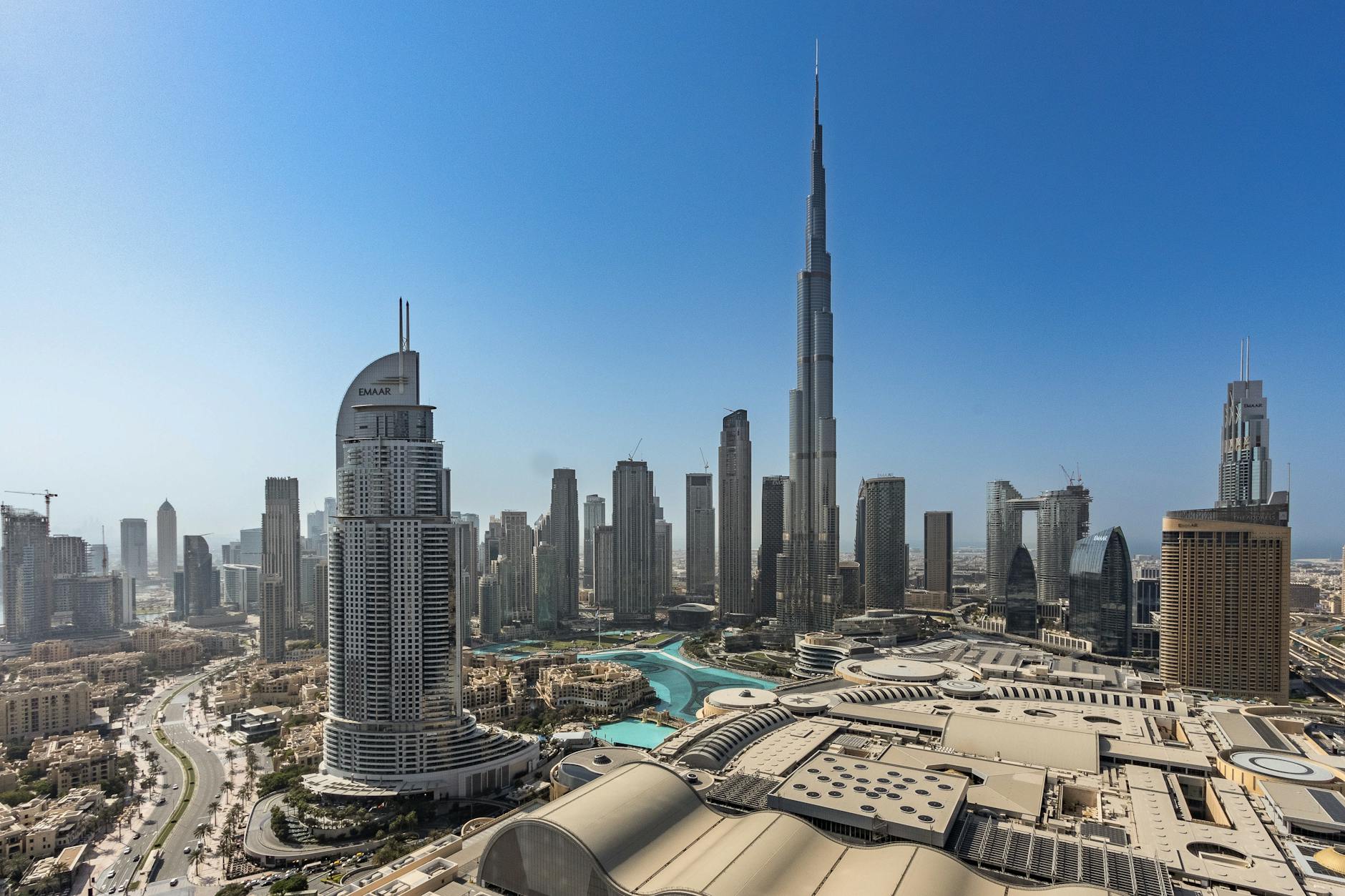
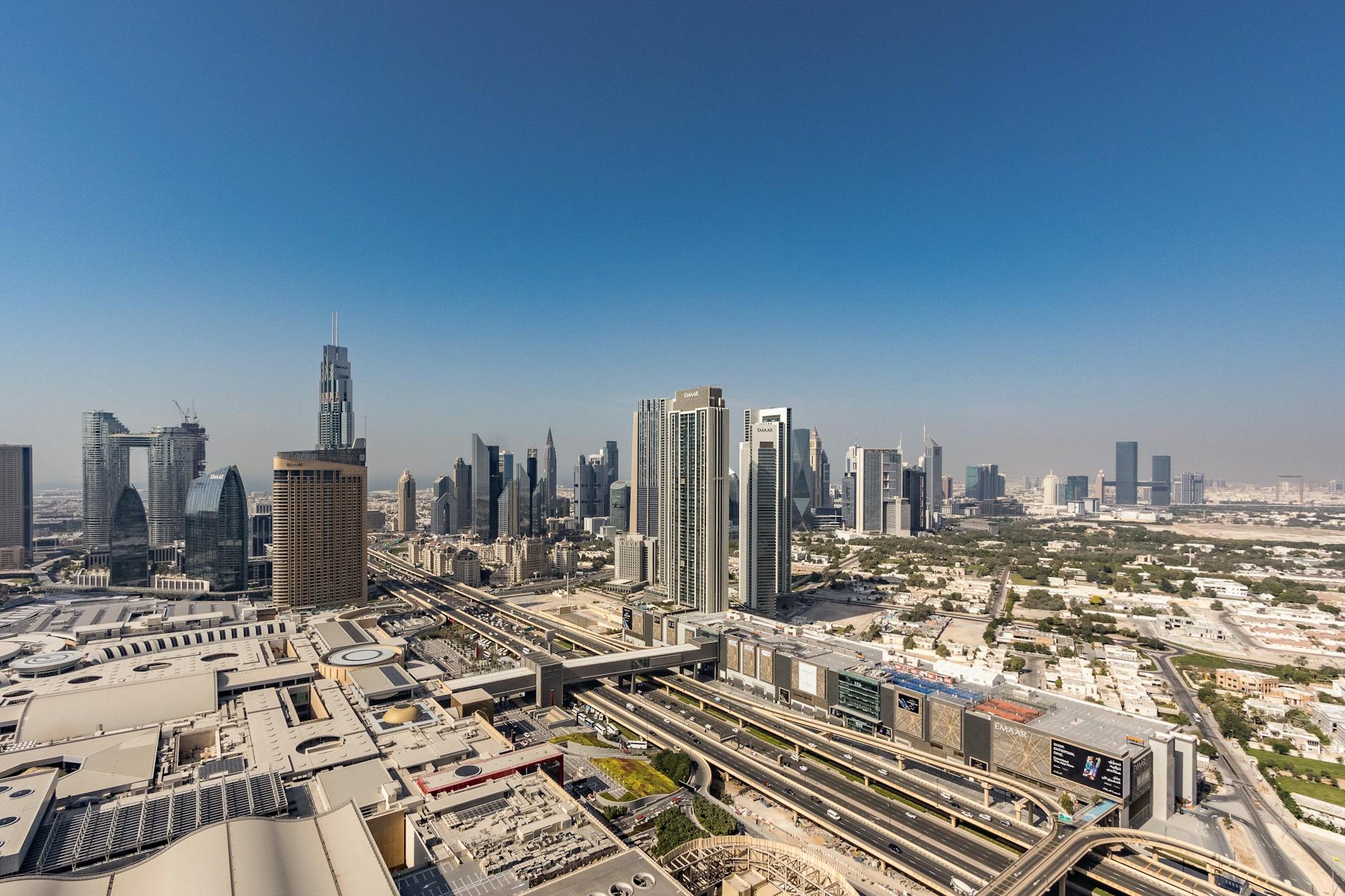
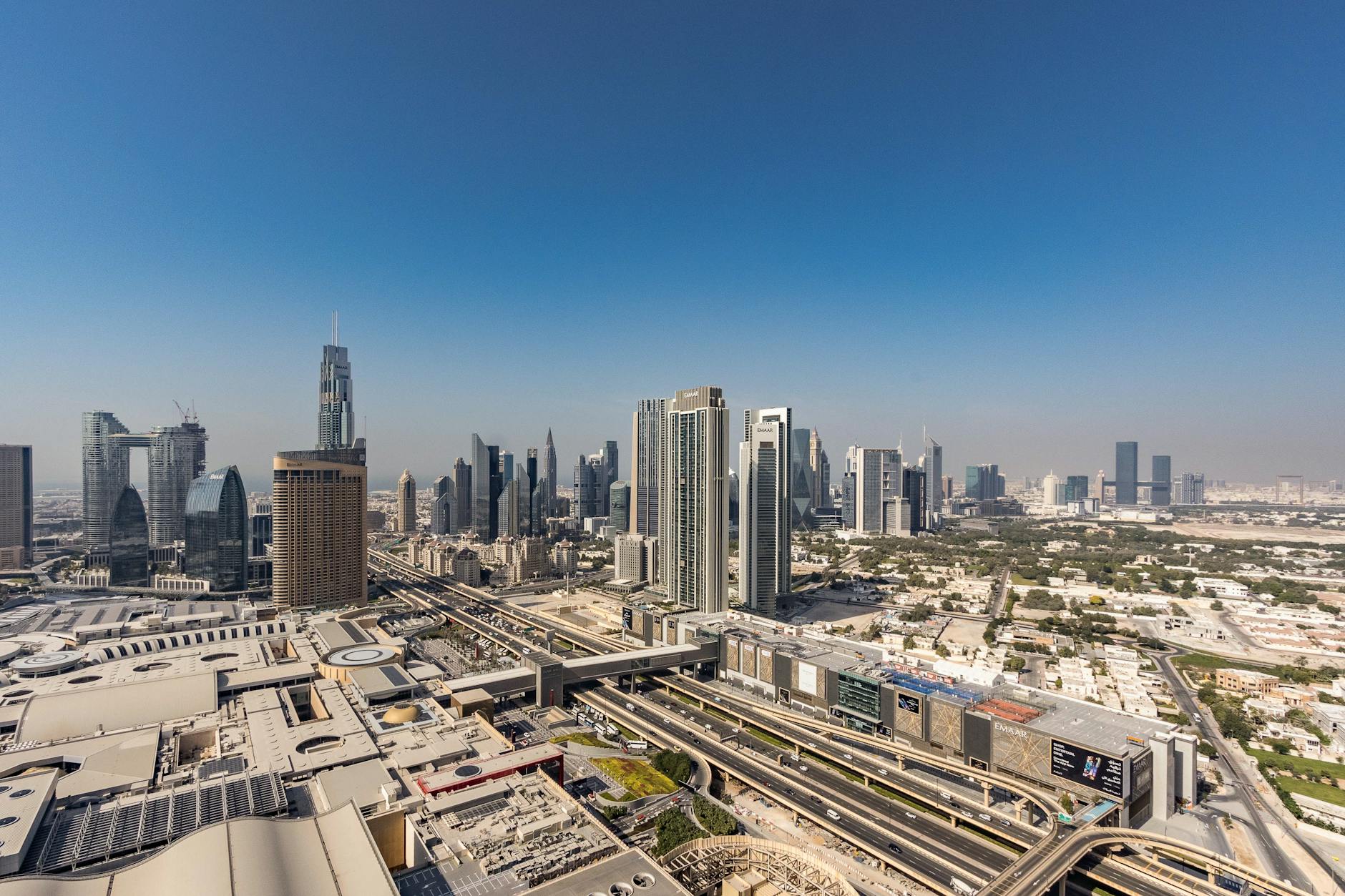
Downtown Dubai's sprawling skyline - a forest of towers stretching to the horizon
November to March: Peak season with pleasant 20-30°C weather. Perfect for outdoor activities, desert safaris, and beach days.
April-May, Sept-Oct: Shoulder season, hot but fewer crowds. Good hotel deals and shorter queues.
June to August: Extreme heat (45°C+). Best hotel deals, massive summer sales, but outdoor activities limited to early morning.
Ramadan: A unique cultural experience. Iftar dinners are special. Respect daytime fasting rules - no eating or drinking in public during daylight.
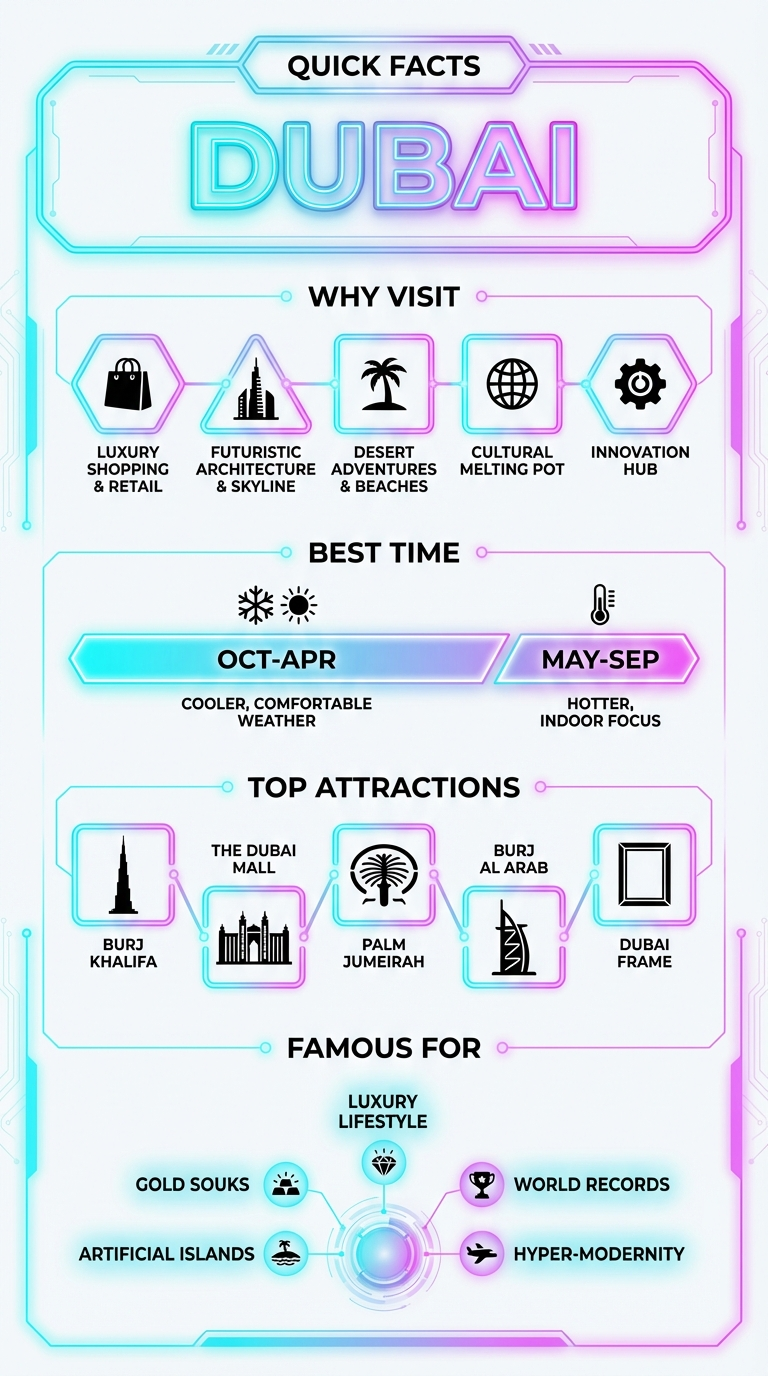
The essential experiences you can't miss

Downtown | AED 169+
World's tallest building at 828m. At the Top observation deck offers 360° views from level 124.
Palm | Free to explore
Man-made island shaped like a palm tree. Atlantis resort, beach clubs, and luxury living.
Downtown | Free entry
World's largest mall: 1,200+ stores, aquarium, ice rink, and dinosaur skeleton.
Zabeel Park | AED 50
150m gold picture frame bridging old and new Dubai. Glass floor walkway at the top.
Deira | Free
Over 300 gold shops with 10 tonnes on display. World's best prices - bargain hard.
Downtown | Free
World's largest choreographed fountain. 275m long, shoots water 150m high. Shows every 30 min from 6pm.
Visit Burj Khalifa at sunset (book the 5:30pm slot in winter) to see the city transform from golden desert light to a glittering sea of lights. The premium "At the Top SKY" (Level 148, AED 399) includes refreshments.
Arabian Desert | AED 150-500
Dune bashing, camel rides, BBQ dinner under the stars, belly dancing, and henna.
Marina | Free
Stunning 3km waterfront canal lined with 200+ towers, restaurants, and yacht berths.
Bur Dubai | AED 1 abra
Al Fahidi heritage district, Creek abra rides, and atmospheric traditional markets.

Jumeirah | Various
Iconic sail-shaped ultra-luxury hotel. Afternoon tea from AED 600 for non-guests.
Dubailand | AED 75
150 million flowers in stunning displays. Open November to May. Instagrammer's paradise.
Deira | Free
Aromatic market selling saffron, frankincense, dried fruits, and Arabic spices.
Sheikh Zayed Rd | AED 149
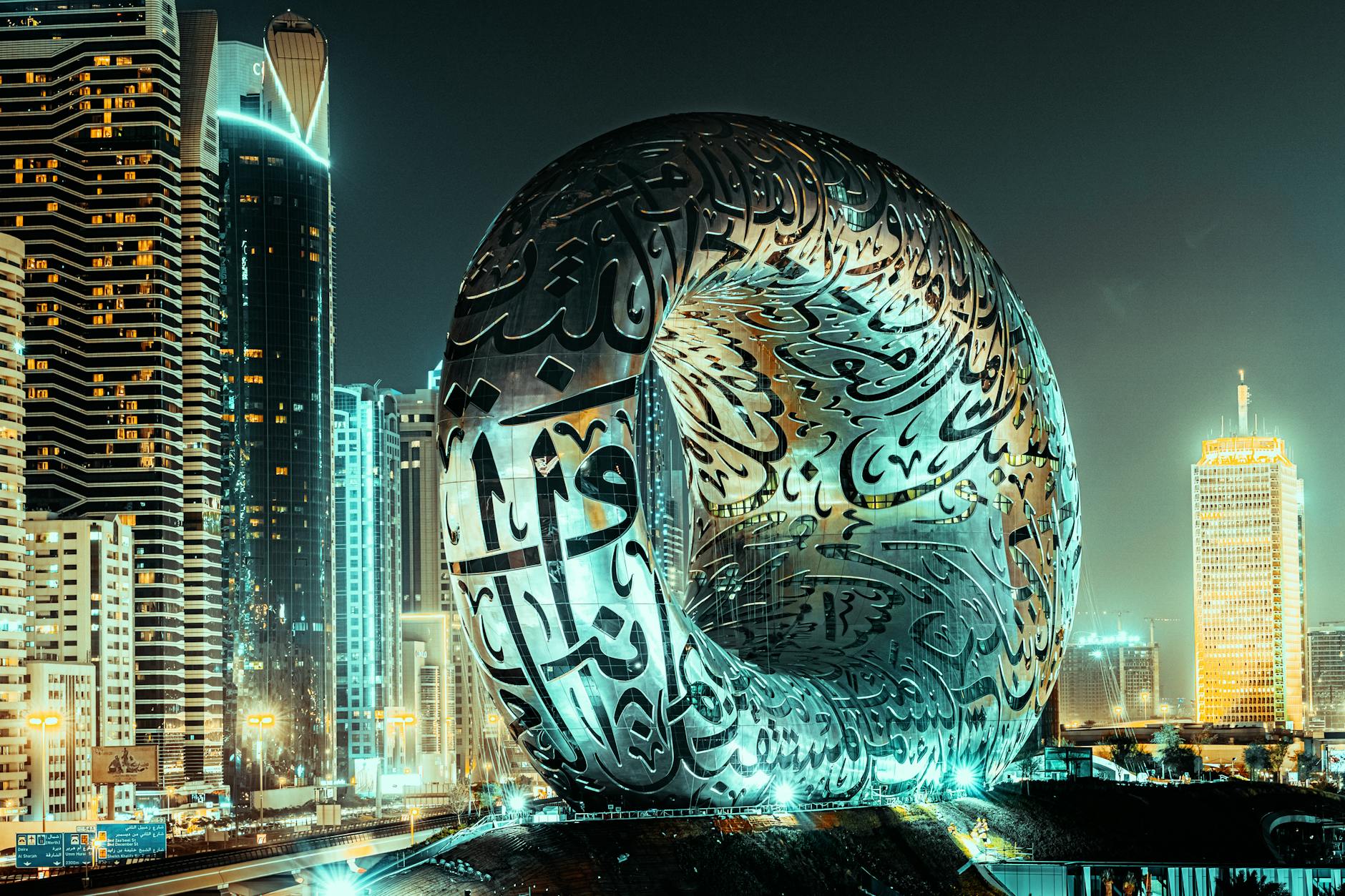
Torus-shaped architectural marvel with immersive exhibits on AI, space, and sustainability.
Palm Jumeirah | AED 339
Mega waterpark with record-breaking slides, a private beach, and shark encounters.
Deira/Bur Dubai | AED 1 abra
Historic trading waterway with traditional dhows. Abra crossing is Dubai's oldest transport.
JBR | Free
1.7km beachfront promenade with dining, shopping, and water sports.
Dubailand | AED 25
Cultural pavilions from 90+ countries with food, shopping, and entertainment. Seasonal Oct-Apr.
Jumeirah | Free
Beachfront lifestyle destination with street art, splash park, cinema, and dining.
Escape the city for rugged mountain scenery just 1.5 hours from Dubai. Hike the trails, kayak on the turquoise dam, cycle through wadis, or try glamping under the stars. Free entry to most areas.
The world's largest observation wheel (250m) on Bluewaters Island offers spectacular views of the Marina skyline, Palm Jumeirah, and the open sea. Currently undergoing maintenance - check status before visiting.
Latest openings and developments in 2026
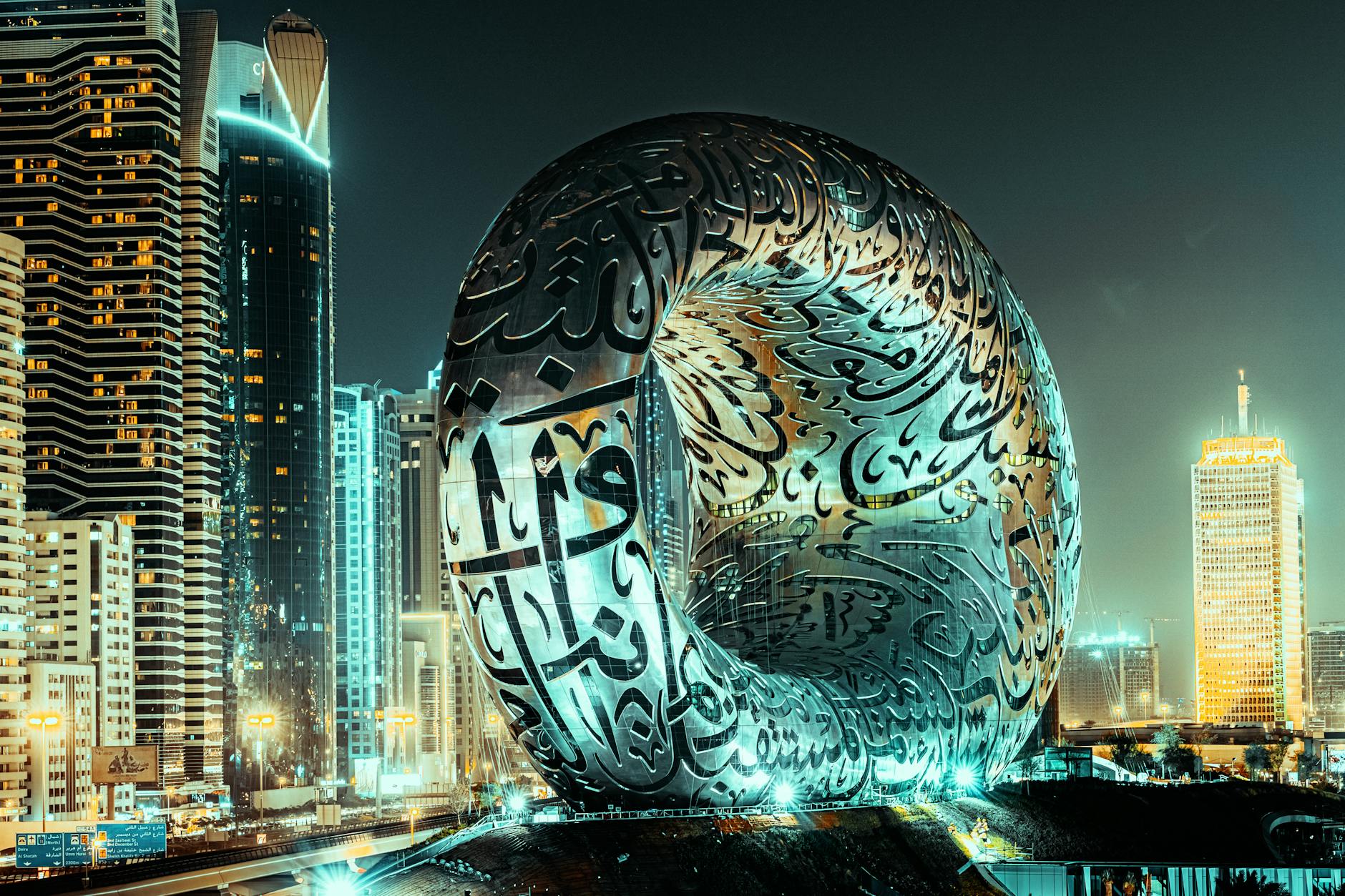
Now fully operational with rotating exhibitions exploring AI, space travel, and sustainability. The torus-shaped building covered in Arabic calligraphy has become one of Dubai's most photographed landmarks. Allow 2-3 hours for the immersive experience.
The massive waterfront development (formerly Deira Islands) is taking shape with new hotels, beaches, and entertainment venues opening in phases. Five interconnected islands will eventually add 20km of new beachfront to Dubai.
The former Expo 2020 site has been transformed into a permanent district. The Terra sustainability pavilion, Al Wasl dome, and Garden area remain open. New residential and commercial zones are being built around it.
The Route 2020 extension to Expo City is fully operational. Several new bus routes and tram extensions improve connectivity to previously hard-to-reach areas. The planned Blue Line will add further coverage.
The new glass-bottomed sky bridge connecting two Address hotel towers at 220m offers vertigo-inducing views of Downtown Dubai and Burj Khalifa. Includes an edge walk experience for thrill-seekers.
Dubai's Clean Energy Strategy is visible everywhere - solar-powered metro stations, sustainable buildings, and the world's largest single-site solar park at Al Maktoum. Green initiatives are reshaping the city's identity.
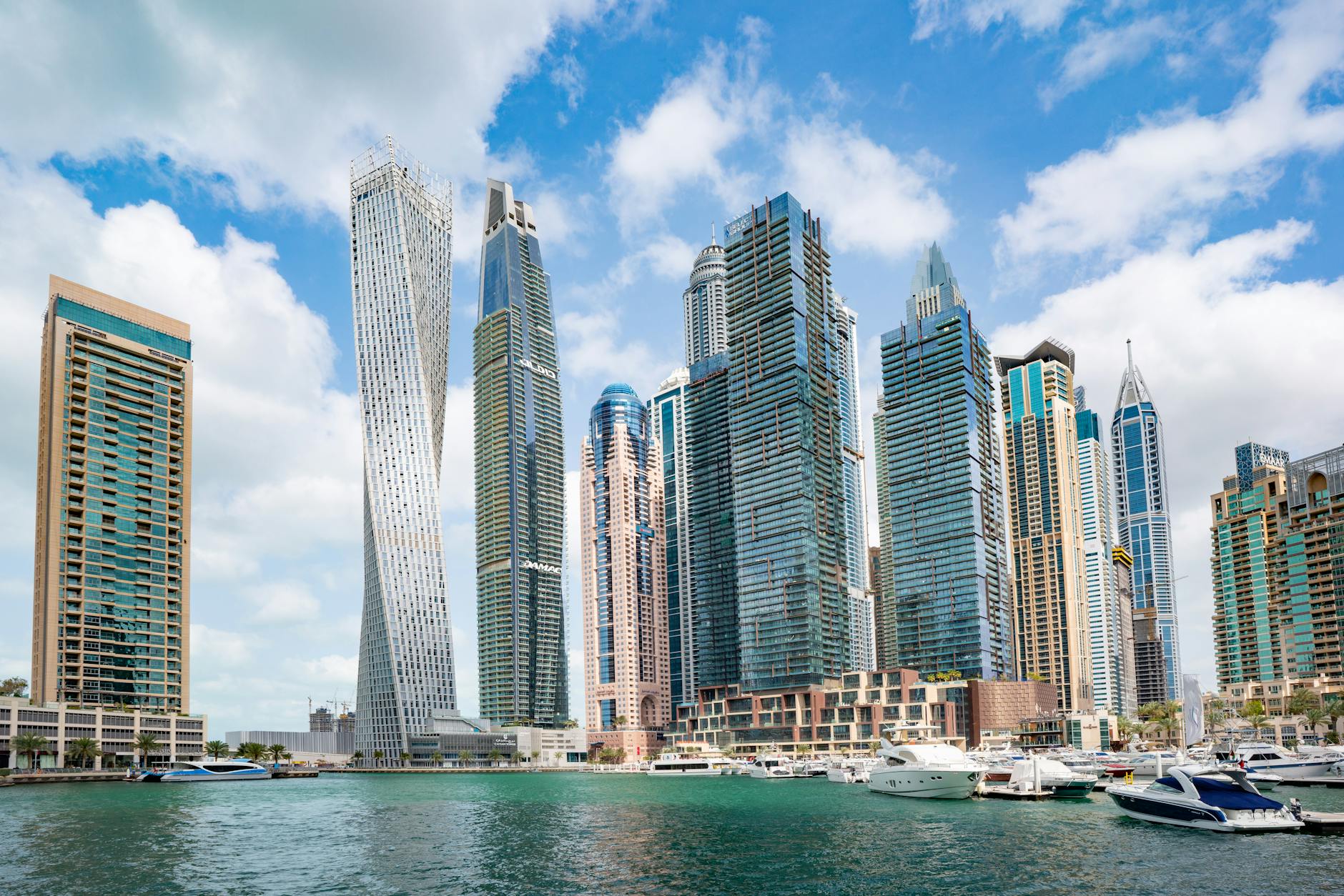
Dubai Marina's iconic Cayan Tower twists skyward beside the yacht-lined waterfront
Essential information before you go
Most nationalities get 30-90 day visa on arrival. Passport must be valid 6+ months. Check UAE ICA website for your country's specific requirements.
AED pegged to USD (1 USD = 3.67 AED). Credit cards accepted everywhere. ATMs abundant. 5% VAT on most purchases. Tourist Tax Refund available at airports.
Free WiFi at malls, hotels, metro. du and Etisalat SIM cards at airport (AED 55-100). eSIM works with most phones. Note: VoIP calls may be restricted.
No vaccinations required. Excellent hospitals (Mediclinic, American Hospital). Tap water is safe but most drink bottled. Travel insurance strongly recommended.
Only at licensed venues (hotels, clubs, restaurants). No drinking in public. Zero tolerance for drink driving. Legal drinking age is 21.
Modest clothing in public areas and malls (cover shoulders and knees). Beachwear only at beaches and pools. Cover fully at mosques (abayas provided).
Ask permission before photographing people, especially Emirati women. No photos of government or military buildings. Tourist sites are fine.
No eating, drinking, or smoking in public during daylight hours. Many restaurants curtained. Beautiful iftar experiences available. Dates shift yearly.
Careem/Uber: Ride-hailing | Google Maps: Navigation & Metro | RTA Dubai: Official transport | Zomato/Talabat: Food delivery | VisitDubai: Official tourism | Entertainer: 2-for-1 deals
| Category | Budget | Mid-Range | Luxury |
|---|---|---|---|
| Accommodation | AED 150-300 | AED 500-1,000 | AED 2,000+ |
| Food | AED 50-100 | AED 150-300 | AED 500+ |
| Transport | AED 20-40 | AED 50-100 | AED 200+ |
| Activities | AED 50-150 | AED 200-400 | AED 800+ |
| Total/Day | AED 270-590 | AED 900-1,800 | AED 3,500+ |
Tips to make your first visit smooth
Downtown: Burj Khalifa views, Dubai Mall on your doorstep, central but expensive. Best for first-timers wanting the iconic experience.
Dubai Marina: Beach access, waterfront dining, great nightlife. Mid to high range. Perfect for couples and young travellers.
Deira/Bur Dubai: Budget-friendly, authentic atmosphere, near souks and Creek. Best for culture seekers and bargain hunters.
JBR: Beach lifestyle, family-friendly, walkable promenade. Mid-range options available. Great for families.
Metro (AED 7.50): Red Line from Terminal 1 & 3. Clean and efficient. 45 min to Downtown, 60 min to Marina.
Taxi (AED 80-120): Metered, safe, reliable. Add AED 25 airport surcharge. 30-45 min to Downtown depending on traffic.
Careem/Uber (AED 60-100): Book via app. Often cheaper than taxis off-peak. Easy pickup from dedicated zones.
Weekend (2-3 days): Hit the highlights - Burj Khalifa, Dubai Mall, desert safari, one souk visit.
4-5 days: Add Marina, Palm Jumeirah, old Dubai exploration, and a beach day.
Week+: Day trips to Abu Dhabi, Hatta Mountains, or Sharjah. Deeper neighbourhood exploration.
1. Underestimating distances - Dubai is spread out, always budget travel time
2. Only visiting malls - Old Dubai has the real character and culture
3. Visiting outdoor attractions in summer midday - schedule for early morning or evening
4. Not bargaining at souks - haggling is expected and part of the experience
Dubai's modern transport network
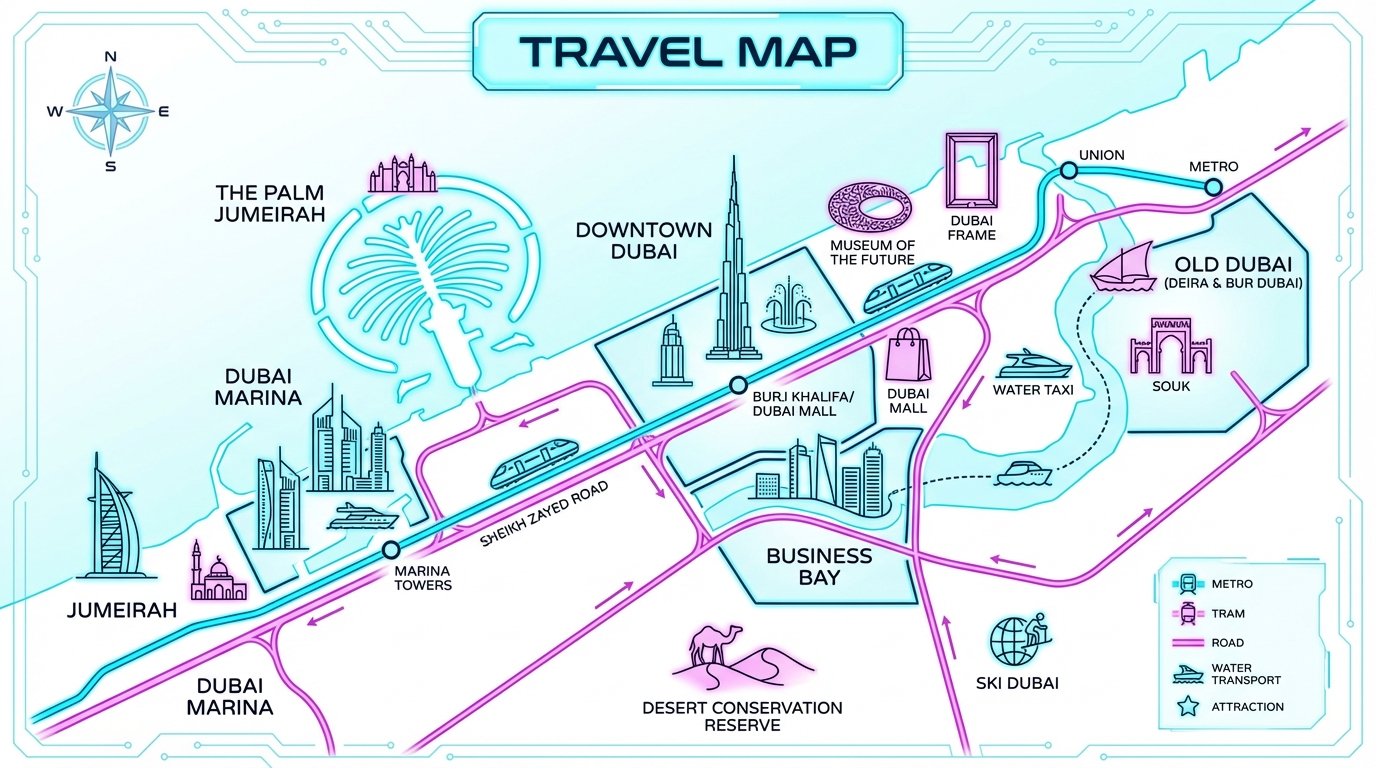
Two driverless lines serving 53 stations. The Red Line runs from Jebel Ali to Rashidiya via Marina, Downtown, and the Airport. The Green Line loops through Deira and Bur Dubai. Trains run 5am-midnight (Fri from 10am). Fares: AED 3-7.50 by zone. Gold Class available for a premium.
Silver Card (AED 25): Stored-value card with AED 19 credit. Works on metro, bus, tram, and water bus. Buy at any metro station.
Red Ticket (AED 4-7.50): Single journey or day pass (AED 22 unlimited travel). Good for short visits.
Gold Card (AED 25): Same as Silver but includes Gold Class metro access - less crowded, plusher seats.
Metered taxis are safe and air-conditioned. Starting fare AED 12 (AED 12 airport surcharge). Pink-roofed taxis have female drivers for women passengers. Careem and Uber widely available and often cheaper. Night surcharge of 30% applies midnight-6am.
11 stations connecting Dubai Marina to Al Sufouh. Links to metro at DMCC and JLT stations. Useful for getting between Marina, JBR, and the Palm monorail.
Abra (AED 1): Traditional wooden boats crossing the Creek. Dubai's oldest and cheapest transport. Runs continuously.
Water Bus (AED 2): Modern air-conditioned boats along the Creek.
Dubai Ferry: Routes connecting Marina, Palm Jumeirah, and the Creek. Great sightseeing option.
Limited due to distances and summer heat. Downtown, Marina Walk, and JBR are the most walkable areas. Air-conditioned skywalks connect some malls and metro stations.
When to go and what's happening
Peak season, perfect weather 20-25°C. Dubai Shopping Festival (Jan) offers massive discounts. Dubai Food Festival (Feb-Mar) celebrates the city's diverse cuisine. Hotel prices at their highest.
Warming to 25-35°C, still pleasant. Dubai World Cup horse racing at Meydan (richest race in the world). Art Dubai fair. Ramadan may fall here - dates shift yearly.
Hot at 38-42°C. Summer sales begin. Dubai Summer Surprises festival with discounts and entertainment. Indoor attractions recommended. Hotel rates start dropping significantly.
Extreme heat 42-48°C. Best hotel deals of the year (up to 60% off). Eid Al Adha celebrations. Water parks and mega malls become your best friends.
Still hot but easing. Dubai Fitness Challenge (Oct) with 30 days of free fitness events. New season openings for outdoor venues begin.
Perfect weather returns at 25-30°C. Dubai Airshow (biennial). Miracle Garden and Global Village season opens. Outdoor brunch season begins.
Peak season, 20-25°C. UAE National Day (Dec 2) with celebrations and sales. Christmas festivities. New Year's Eve fireworks at Burj Khalifa are world-famous.
Best weather: November-March | Best deals: June-August | Best atmosphere: December (NYE) | Avoid if on budget: NYE week, Dubai Shopping Festival peak
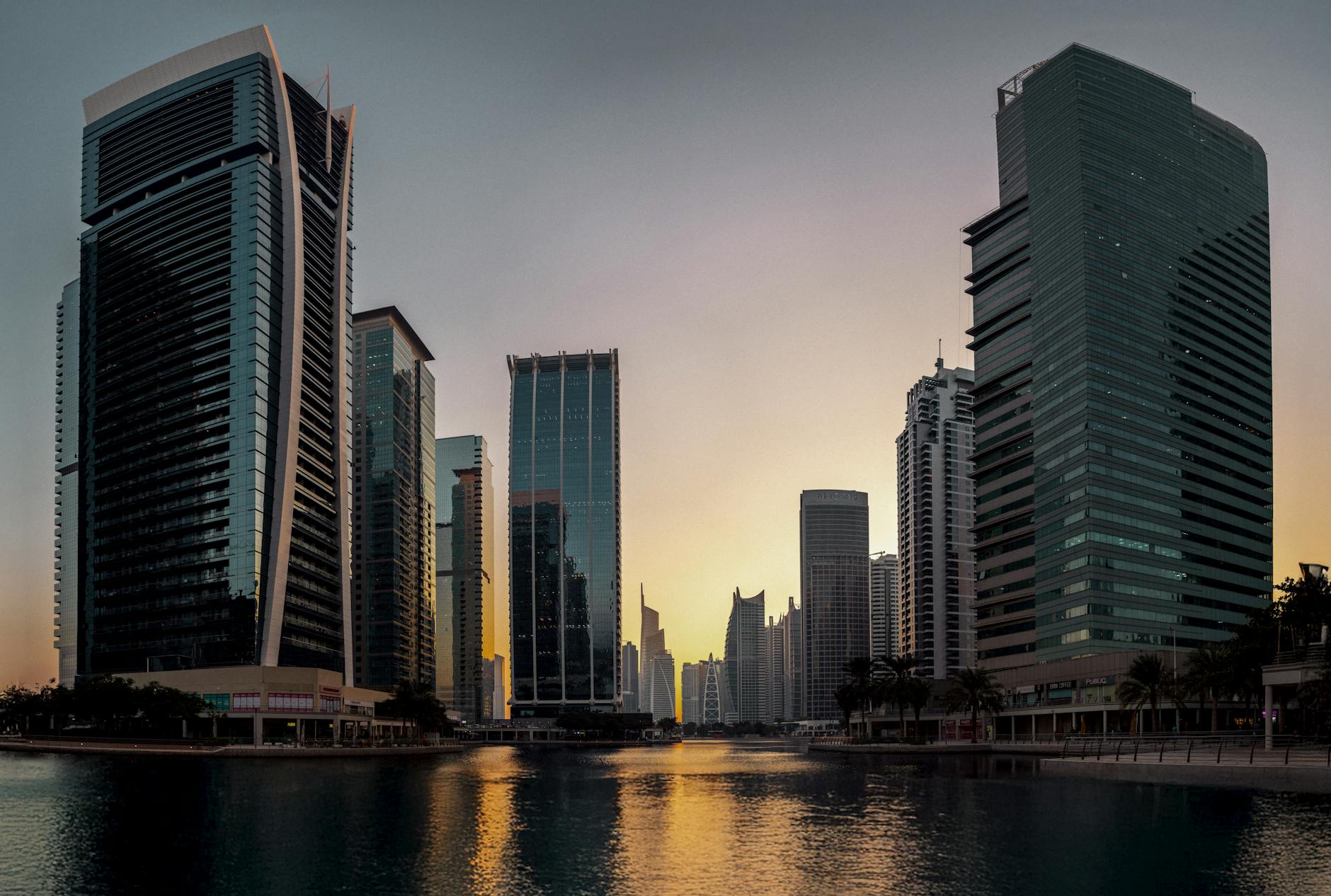
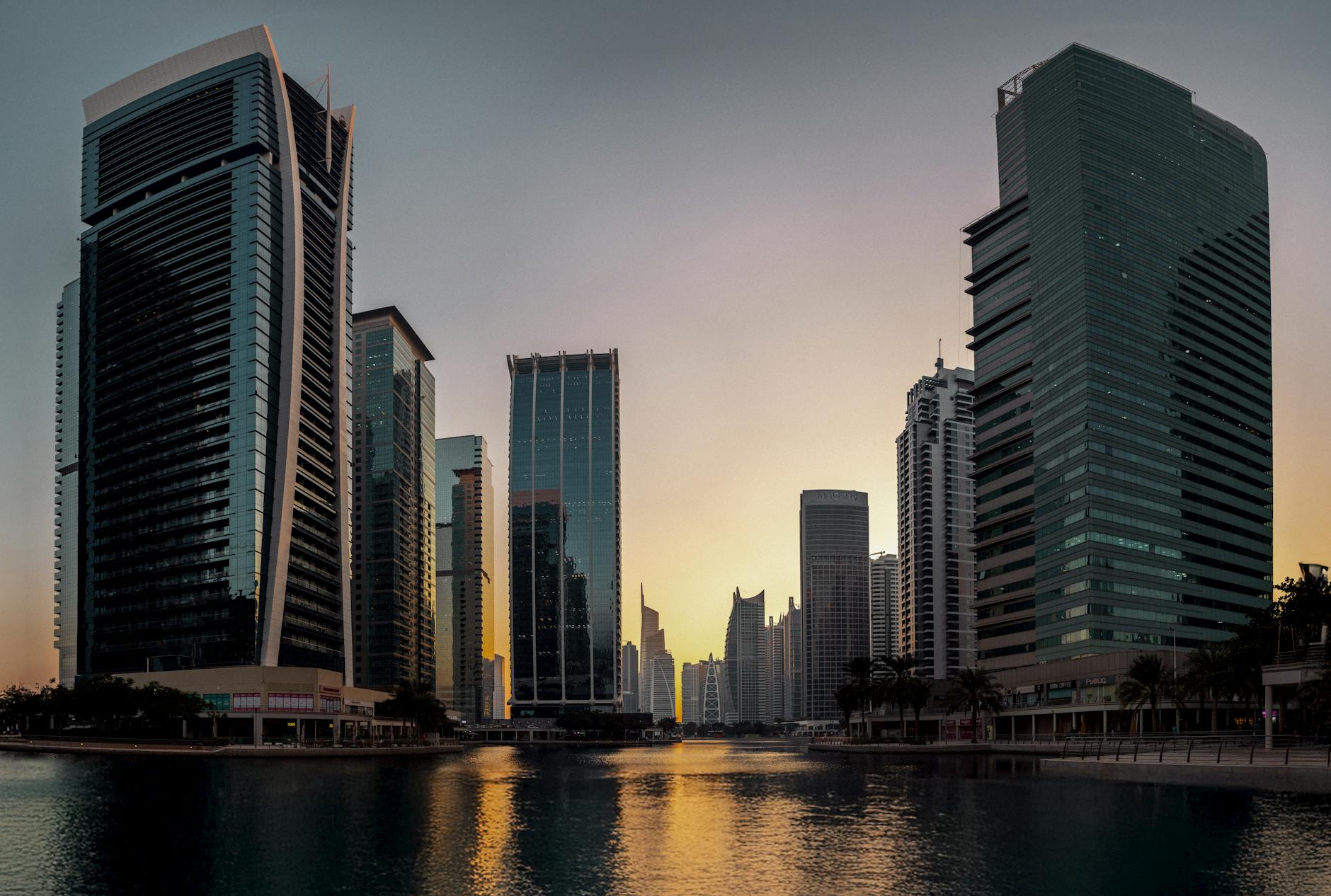
Business Bay's glass towers glow amber along the canal at dusk
Perfectly planned days in Dubai
Book Burj Khalifa tickets online at least 3 days ahead - walk-up prices are significantly higher. The sunset slot costs more but is absolutely worth it for the transformation from day to night.
Day 4 - Culture & Museums: Museum of the Future (AED 149, allow 2-3 hours), Dubai Opera district walk, afternoon at Alserkal Avenue art galleries (free), evening dining in DIFC at Zuma or La Petite Maison.
Day 5 - Luxury & Shopping: Mall of the Emirates with Ski Dubai (AED 210 for slope session), lunch at Ibn Battuta Mall (stunning architecture), evening at Global Village (AED 25, seasonal Oct-Apr).
Day 6 - Day Trip to Abu Dhabi: Sheikh Zayed Grand Mosque (free, stunning), Louvre Abu Dhabi (AED 63), Corniche Beach. 1.5-hour drive or AED 25 bus.
Day 7 - Mountain Adventure: Hatta Mountains - hiking trails, Hatta Dam kayaking, heritage village, mountain biking. Or a full spa and beach club day at the Palm.
Day 1: Dubai Mall - Aquarium & Underwater Zoo, KidZania, Dubai Fountain shows
Day 2: Atlantis Aquaventure waterpark - full day of slides, lazy river, beach
Day 3: Family-friendly desert safari (morning, no dune bashing) + Dubai Miracle Garden (AED 75)
Day 4: IMG Worlds of Adventure indoor theme park + Dubai Frame
Day 1: Old Dubai food walk - Al Fahidi cafes, best shawarma at Al Mallah (AED 7), evening at Bu Qtair fish shack in Jumeirah (no menu, just fresh fish)
Day 2: Friday brunch at a 5-star hotel (AED 200-600), street food tour through Satwa and Karama, dinner at Ravi Restaurant (Pakistani, legendary since 1978)
Day 3: Waterfront Market tour in Deira, Emirati cuisine at Al Fanar, sunset dinner cruise on a traditional dhow
The centre of now - Dubai's beating heart
Downtown Dubai is the epicentre of modern Dubai, a purpose-built district that showcases the emirate's extraordinary ambition. Anchored by the Burj Khalifa and the Dubai Mall, this kilometre-square neighbourhood along Sheikh Zayed Road is where Dubai's future-forward identity is most visible.
The district was master-planned by Emaar Properties as "The Centre of Now" and has delivered spectacularly. The Burj Khalifa Lake serves as the centrepiece, surrounded by the world's largest fountain, luxury hotels, and Souk Al Bahar's arabesque dining terraces. By day it gleams; by night it dazzles.
Burj Khalifa (p.20) - World's tallest building at 828m. Observation decks at Level 124-125 and Level 148. Book sunset slots.
Dubai Mall (p.21) - The world's largest shopping destination with 1,200+ stores, an aquarium, ice rink, and dinosaur.
Dubai Fountain (p.22) - 275m choreographed fountain with 6,600 lights and 25 colour projectors. Free shows every 30 minutes from 6pm.
Dubai Opera - Dhow-shaped 2,000-seat venue hosting world-class performances. Guided tours AED 75.
Souk Al Bahar - Traditional-style market with restaurants offering prime fountain and Burj Khalifa views.
For the best Burj Khalifa photos without crowds, walk to the small park behind the Palace Downtown hotel. The reflection pool captures a perfect mirror image, especially during the blue hour after sunset.
The pinnacle of human engineering
Downtown Dubai from the air - the city's audacious skyline stretches across the desert
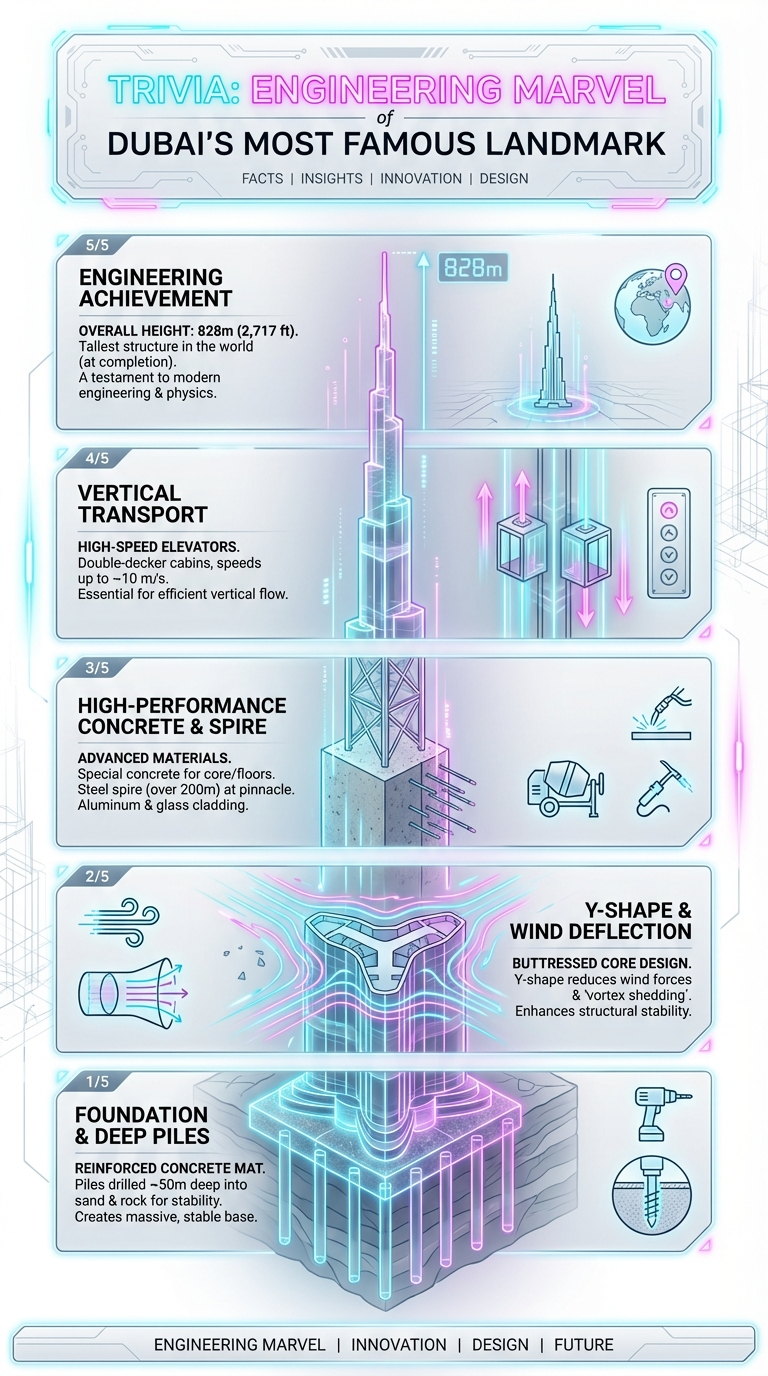
Designed by Adrian Smith of Skidmore, Owings & Merrill and completed in 2010 at a cost of US$1.5 billion, the Burj Khalifa remains the world's tallest structure by a commanding margin. Its Y-shaped floor plan, inspired by the desert flower Hymenocallis, provides structural stability while maximising views from every apartment and hotel room.
The tower contains 57 elevators travelling at 10 metres per second, a 160-room Armani Hotel on floors 1-8, 900 luxury apartments, and the world's highest restaurant, At.mosphere, on Level 122. The tip is so high that residents on upper floors see the sun for two extra minutes after it has set at ground level.
The main observation deck at 452m offers 360° views through floor-to-ceiling glass and an outdoor terrace. Interactive screens identify landmarks. Pre-booking essential - walk-up prices are AED 224. Allow 1.5 hours including the multimedia journey in the elevator.
The premium experience at 555m - the world's highest observation deck. Includes a dedicated lounge, refreshments, a guided tour, and a separate high-speed elevator. Far less crowded than Level 124. Worth the splurge for the exclusivity.
Fine dining at 441m above ground. Afternoon tea from AED 450, dinner from AED 800+. Reservations essential. The views alone justify the price. Dress code: smart casual.
The best FREE view of Burj Khalifa? Head to the Apple Store in Dubai Mall - its open-air balcony has an unobstructed view of both the tower and the fountain. For photos, the footbridge near the Palace Downtown offers the classic reflection shot.
More than a mall - a city within a city
With 1,200+ stores spread across 12 million square feet, the Dubai Mall isn't just a shopping centre - it's a destination. Welcoming over 80 million visitors annually (more than New York City), it contains an aquarium, an Olympic-sized ice rink, a VR theme park, a dinosaur skeleton, and a 250-room luxury hotel. You could spend days here without seeing everything.
The 10-million-litre tank holds 33,000 aquatic animals and boasts the world's largest acrylic viewing panel. Walk-through tunnel, glass-bottom boat rides, cage snorkelling with sand tiger sharks, and the Underwater Zoo upstairs. The viewing panel is free from the mall side.
Olympic-sized ice rink open to the public. Disco nights on Fridays. Skate rental included. A surreal experience when it's 45°C outside.
Virtual reality theme park with rides, simulators, and immersive experiences. The Burj Drop VR and Dubai Drone are highlights.
The luxury wing housing Chanel, Dior, Louis Vuitton, Gucci, and more. Sky-lit walkways, VIP lounges, and valet parking. Window shopping is free and spectacular.
A miniature city where children aged 4-16 role-play adult jobs - from firefighter to pilot to surgeon. Educational and wildly entertaining. Allow 3-4 hours.
Water, light, and world-class performance
The world's largest choreographed fountain system stretches 275 metres across the Burj Khalifa Lake, shooting water up to 150 metres into the air - as high as a 50-storey building. Illuminated by 6,600 lights and 25 colour projectors, the fountain performs a mesmerising dance to music ranging from Arabic classics to contemporary pop.
Show times: Daily at 1pm and 1:30pm (weekdays), then every 30 minutes from 6pm to 11pm. Each show lasts 5 minutes. Free from all surrounding areas.
Best viewing spots: The waterfront promenade outside Dubai Mall, Souk Al Bahar restaurants (book a terrace table), or the footbridge near the Palace Downtown. For an up-close experience, take the Dubai Fountain Boardwalk (AED 20) or an abra boat ride on the lake (AED 65).
Shaped like a traditional wooden dhow (sailing vessel), Dubai Opera is a 2,000-seat multi-format venue that transforms between theatre, concert hall, and flat-floor event space. The building itself is an architectural gem designed by Janus Rostock - its glass bow offers stunning views of the Burj Khalifa.
What's On: World-class ballet, opera, concerts, comedy, and theatrical performances. Past acts include Andrea Bocelli, Placido Domingo, and Cirque du Soleil. Check the schedule online.
Guided Tours (AED 75): Behind-the-scenes tours of the opera house, including the main auditorium, backstage areas, and the sky garden rooftop with Burj Khalifa views.
Opera District: The surrounding area has become a cultural hub with art galleries, fine dining, and boutique shops along Mohammed Bin Rashid Boulevard.
Fascinating facts about Dubai's heart
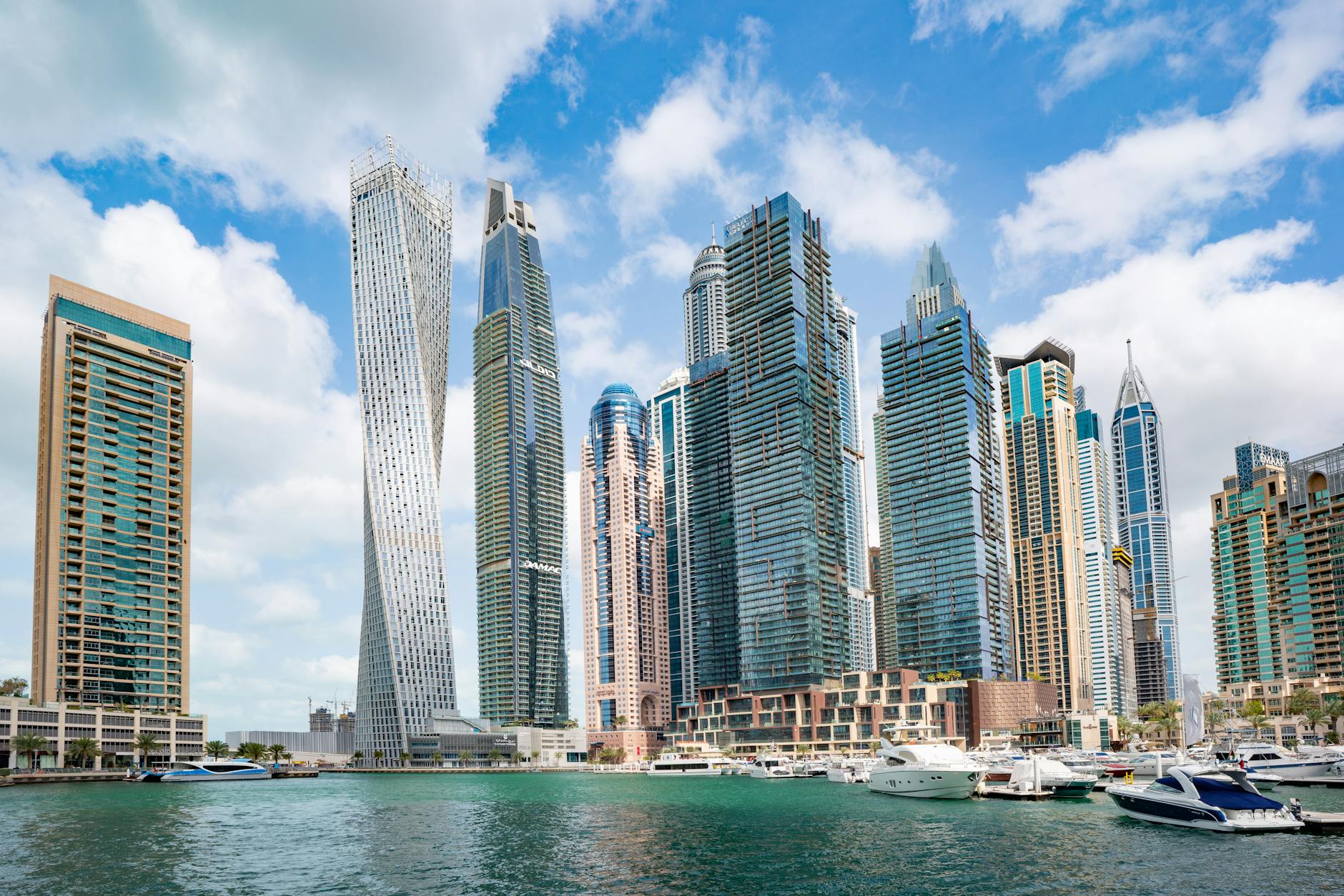
Dubai Marina's twisting towers rise above the yacht-studded waterfront
Downtown Dubai's wide cityscape - towers and highways stretch to the horizon
The city that never stops reaching higher
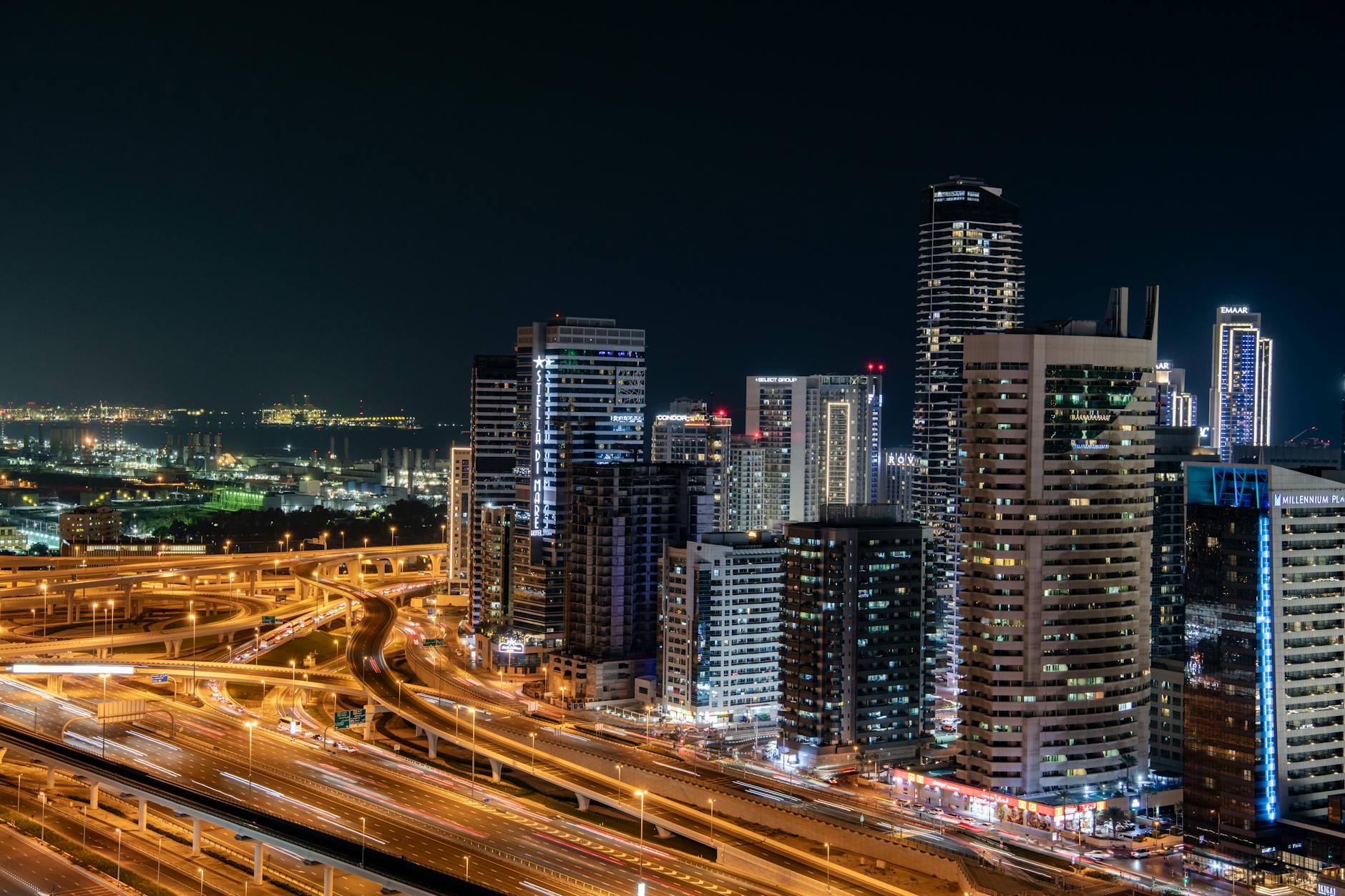
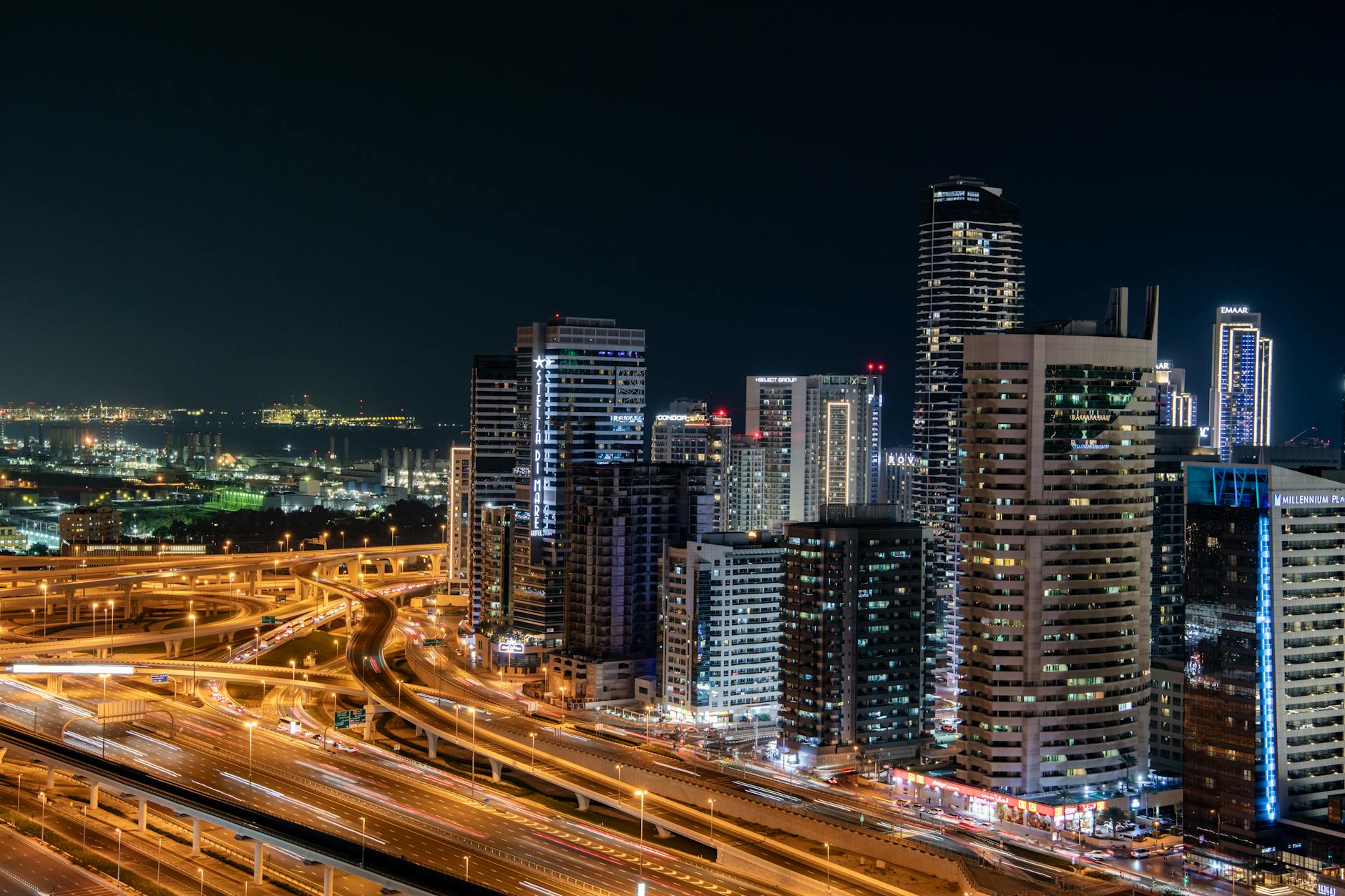
Dubai blazes with light after dark - highways and towers in perfect harmony
The city that never truly sleeps - highways weave between illuminated towers
Dubai Marina's iconic Cayan Tower spirals above the waterfront
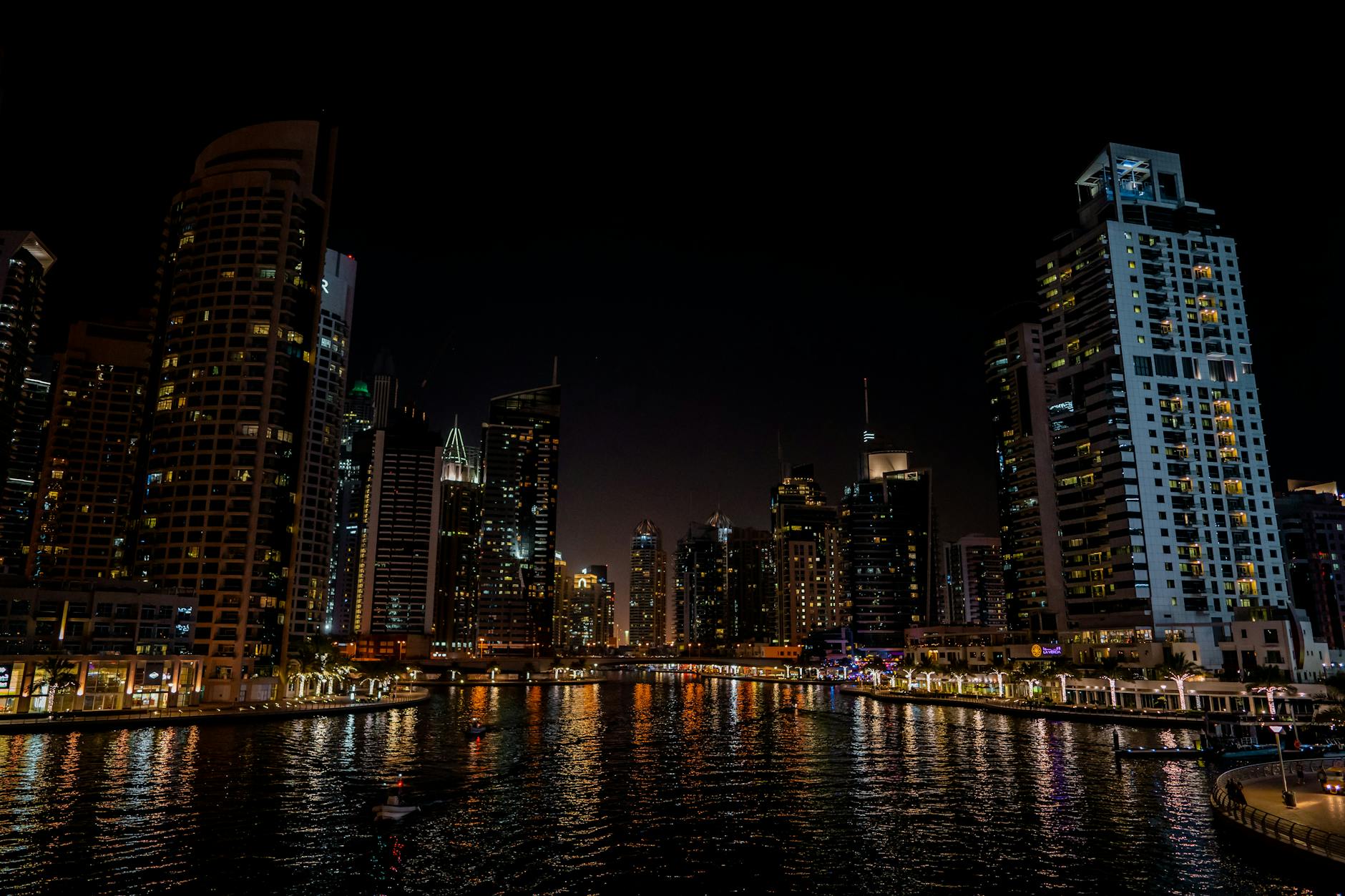
Dubai Marina's towers shimmer in the still nighttime waters
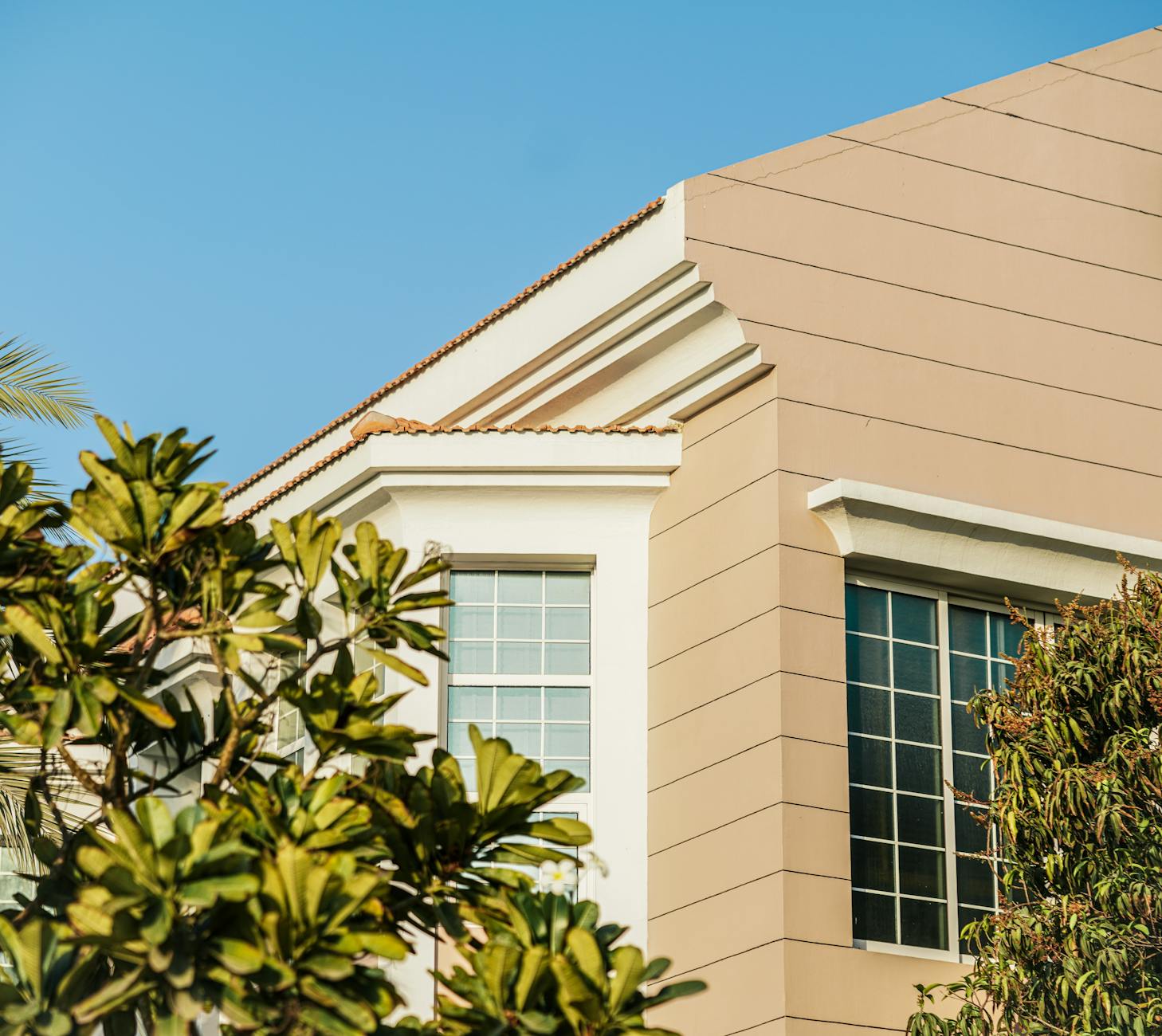
A quiet residential corner - greenery softens Dubai's urban fabric
Before the skyscrapers, before the malls, before the man-made islands, there was the Creek. Dubai's historic waterway has been the centre of trade and life for over two centuries. Wander through the winding lanes of the Gold and Spice Souks, ride an abra across the water, and discover the soul beneath the steel.
Where the story began
Long before Burj Khalifa pierced the sky, Dubai was a modest trading port clustered around a natural saltwater inlet known as the Creek. Al Fahidi Historical Neighbourhood (formerly Bastakiya) preserves this heritage with its coral-stone buildings, wind towers that served as ancient air conditioning, and narrow sikkas (alleyways) that offer welcome shade from the desert sun.
Today, Al Fahidi has been lovingly restored as a cultural quarter. Over 30 traditional houses have been converted into art galleries, boutique hotels, cafes, and cultural centres. The XVA Gallery and boutique hotel is a highlight, set around a tranquil courtyard. The Sheikh Mohammed Centre for Cultural Understanding (SMCCU) offers fascinating cultural breakfasts and mosque visits.
Dubai Museum (Fort Al Fahidi, AED 3): Housed in the 1787 Al Fahidi Fort - Dubai's oldest building. Dioramas recreate pre-oil life. Small but atmospheric.
Coffee Museum (Free): Charming museum tracing coffee from Ethiopian origins through Arabic tradition. Excellent coffee served.
SMCCU Cultural Centre: "Open doors, open minds." Guided mosque visits, cultural breakfasts (AED 80), and Q&A sessions about Emirati life. Essential for understanding local culture.
The historic saltwater inlet that gave birth to the city. Wooden dhows still line the banks, carrying goods to Iran, India, and East Africa. The best way to experience it is on a traditional abra - these small wooden boats shuttle passengers across for just AED 1, operating continuously from dawn to midnight. It's Dubai's oldest form of public transport and a magical experience at sunset.
On the Bur Dubai side of the Creek, this covered souk sells fabrics from India, China, and Thailand. Quality varies, but skilled tailors can create custom garments in 24-48 hours at remarkable prices. Bargain expected.
Gold, spice, and the art of the bargain
The Deira Gold Souk is one of the most dazzling markets on Earth. Over 300 shops line its covered wooden arcades, displaying an estimated 10 tonnes of gold at any given time. From delicate Emirati filigree to chunky Indian designs, Italian craftsmanship to contemporary minimalism, the variety is staggering. Prices are among the world's lowest due to minimal taxation and fierce competition.
Bargaining tips: Start at 40% of the asking price. Walk away if needed - they'll often call you back. Check the daily gold rate (displayed in shops) as a baseline. Quality is generally excellent, but ask for hallmark certification on expensive pieces.
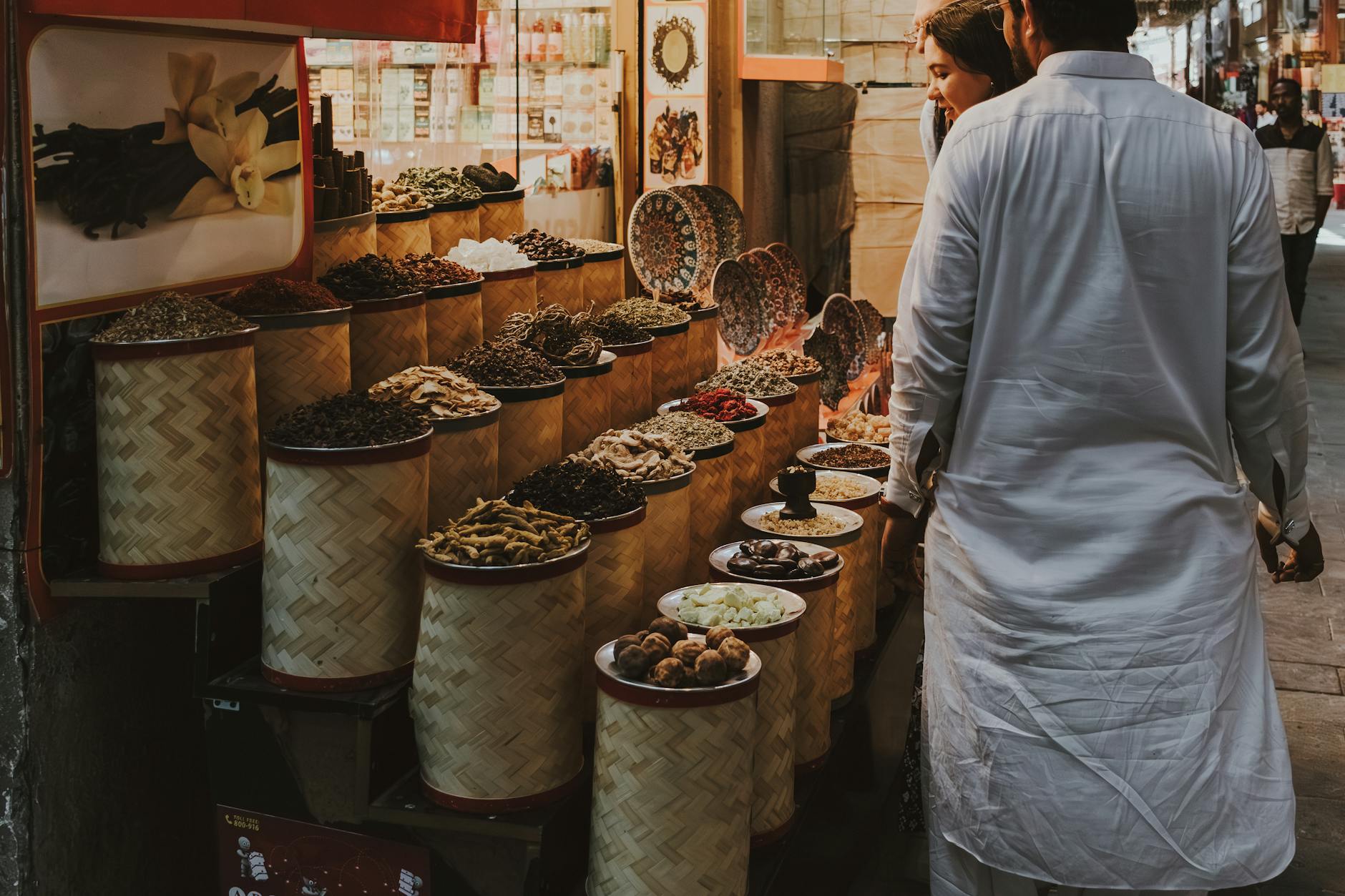
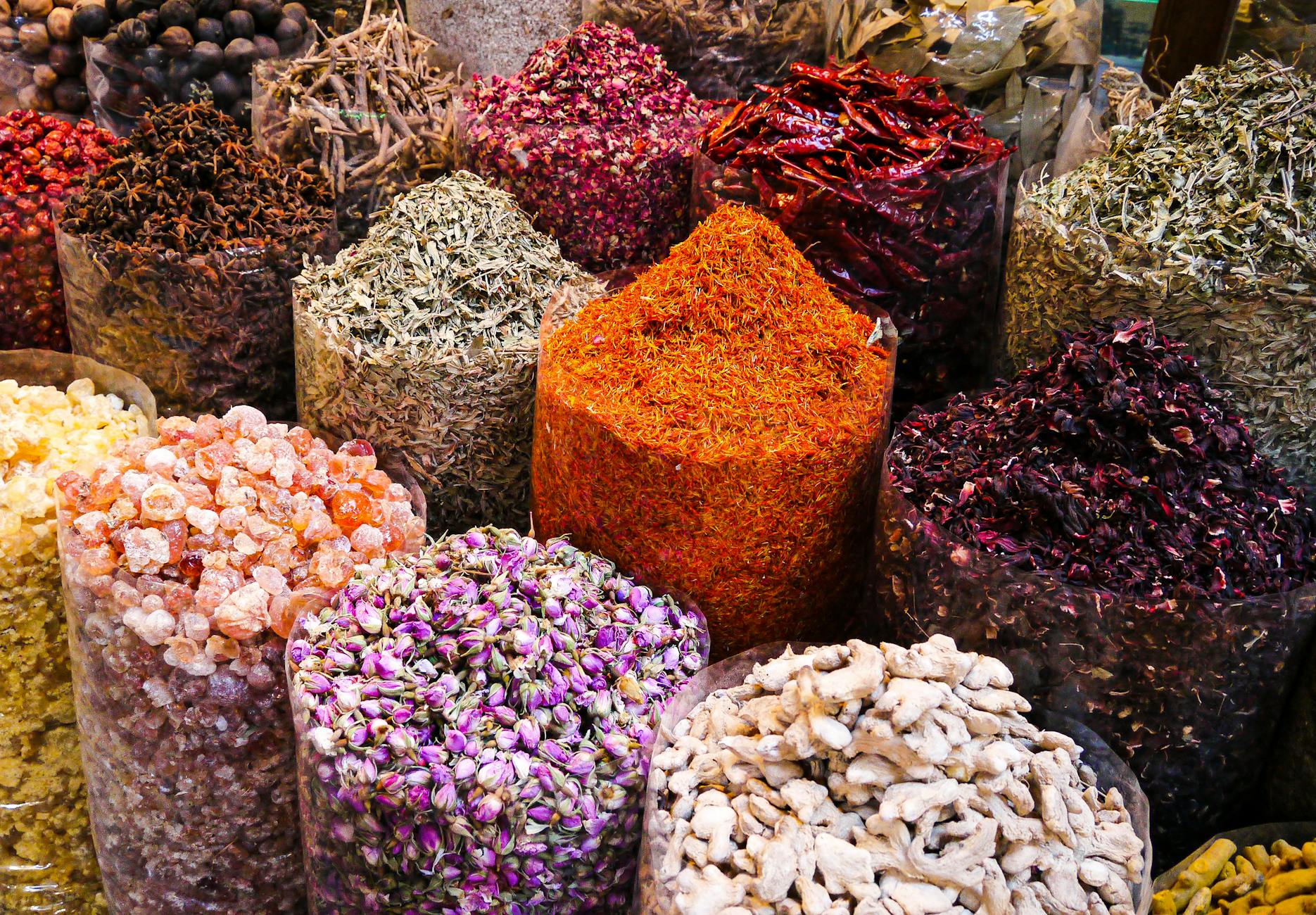
Adjacent to the Gold Souk, the Spice Souk is a sensory overload. Sacks overflow with saffron, frankincense, dried limes, cardamom, and exotic spices you've never heard of. The aroma is intoxicating. Iranian saffron is significantly cheaper here than in Western countries. Don't miss the frankincense section - a resin that's been traded here for millennia.
In the Al Shindagha area near the Creek, traditional perfumeries blend custom Arabic fragrances. Oud (agarwood oil) is the signature scent of the Gulf - rich, woody, and unmistakable. Bottles range from AED 50 to AED 500+. A custom blend makes a unique souvenir.
The modern replacement for the old fish market. Clean, air-conditioned sections for fish, meat, fruits, and spices. Authentic local experience without the tourist markup. Buy fresh fish and have it cooked at a nearby restaurant.
Best time for souks is 4-8pm when it's cooler and all shops are open. Mornings (10am-12pm) are less crowded but some shops may be closed. Gold Souk is most atmospheric after dark when the gold literally glows under the lights.
The heritage behind the history
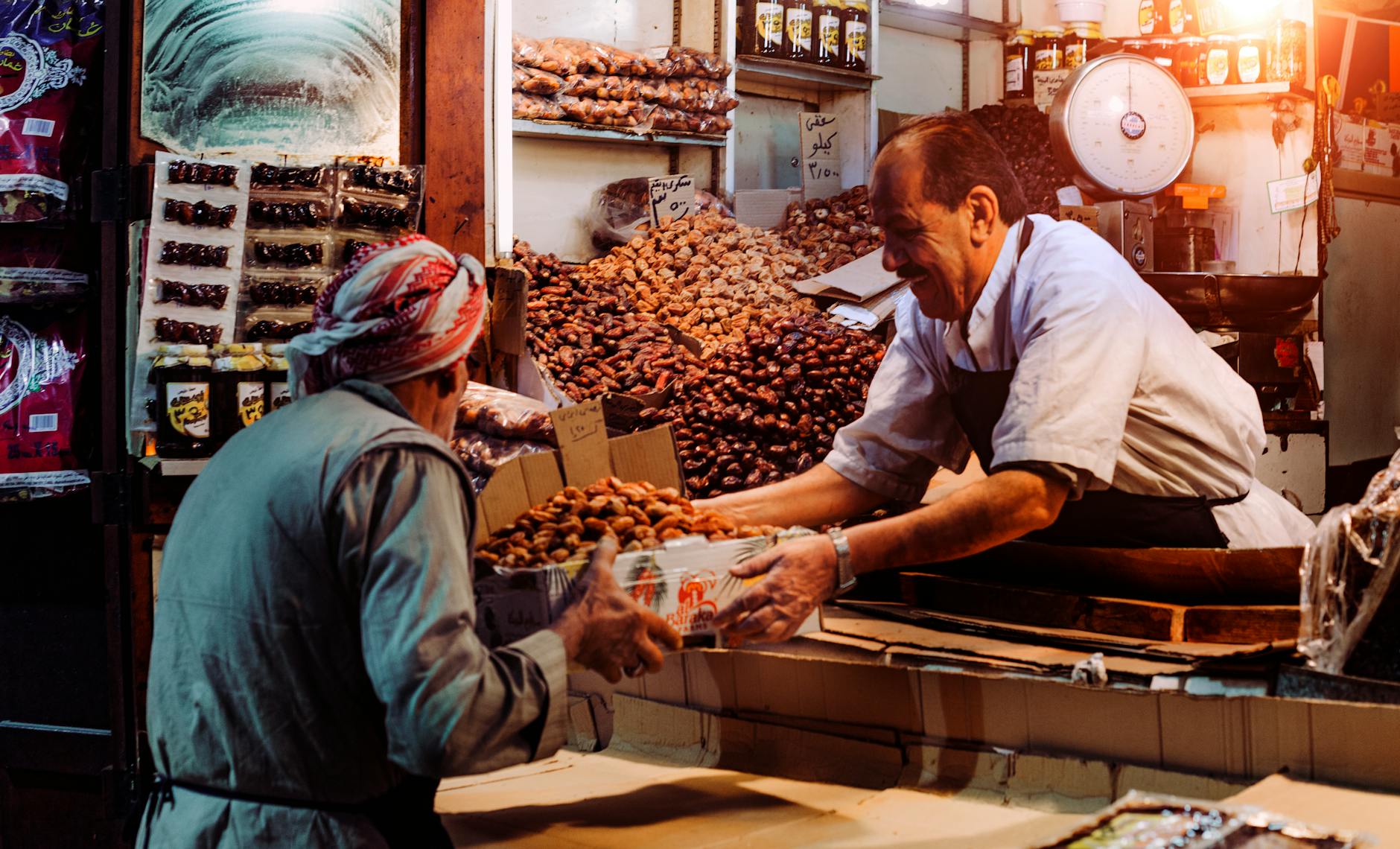
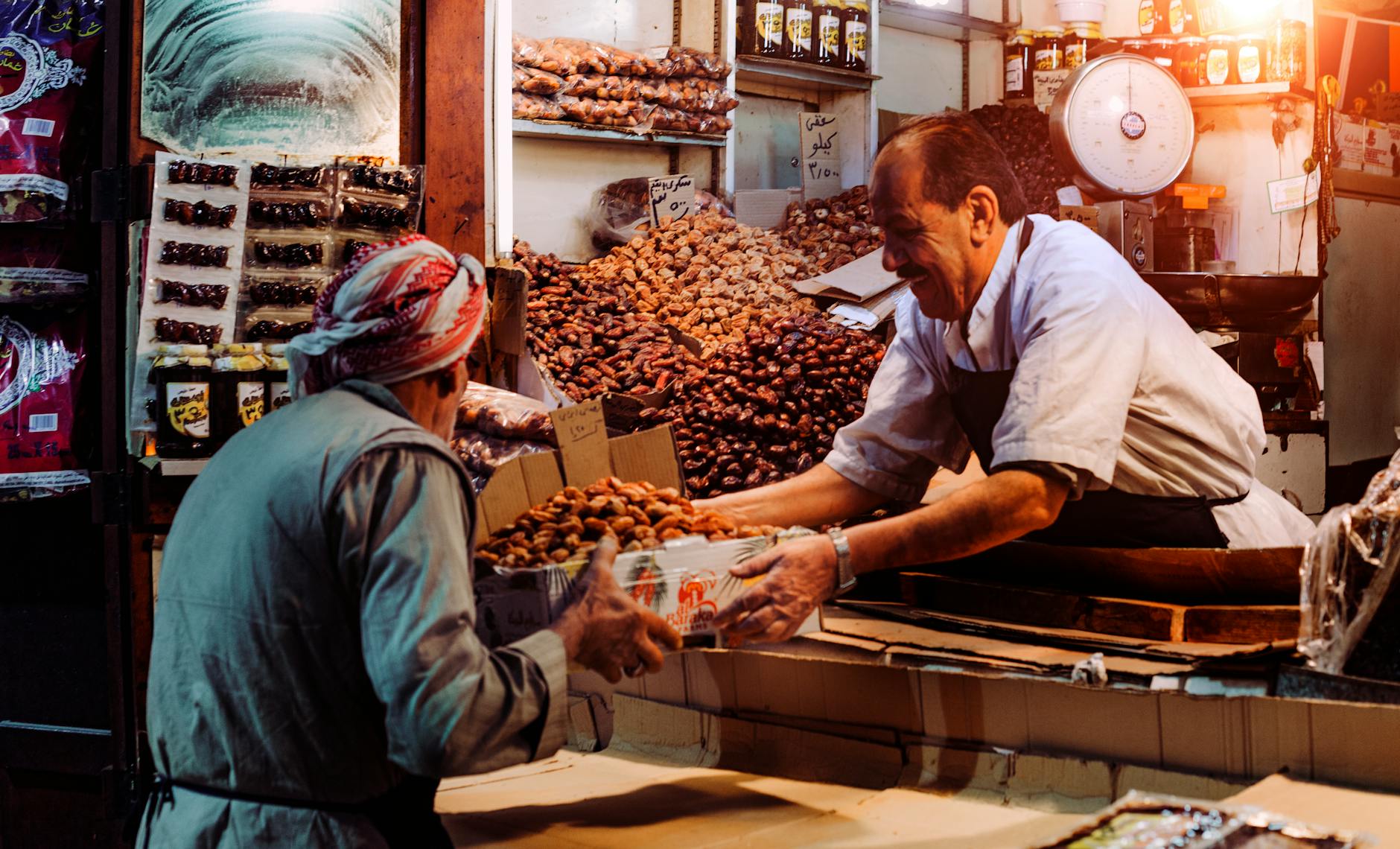
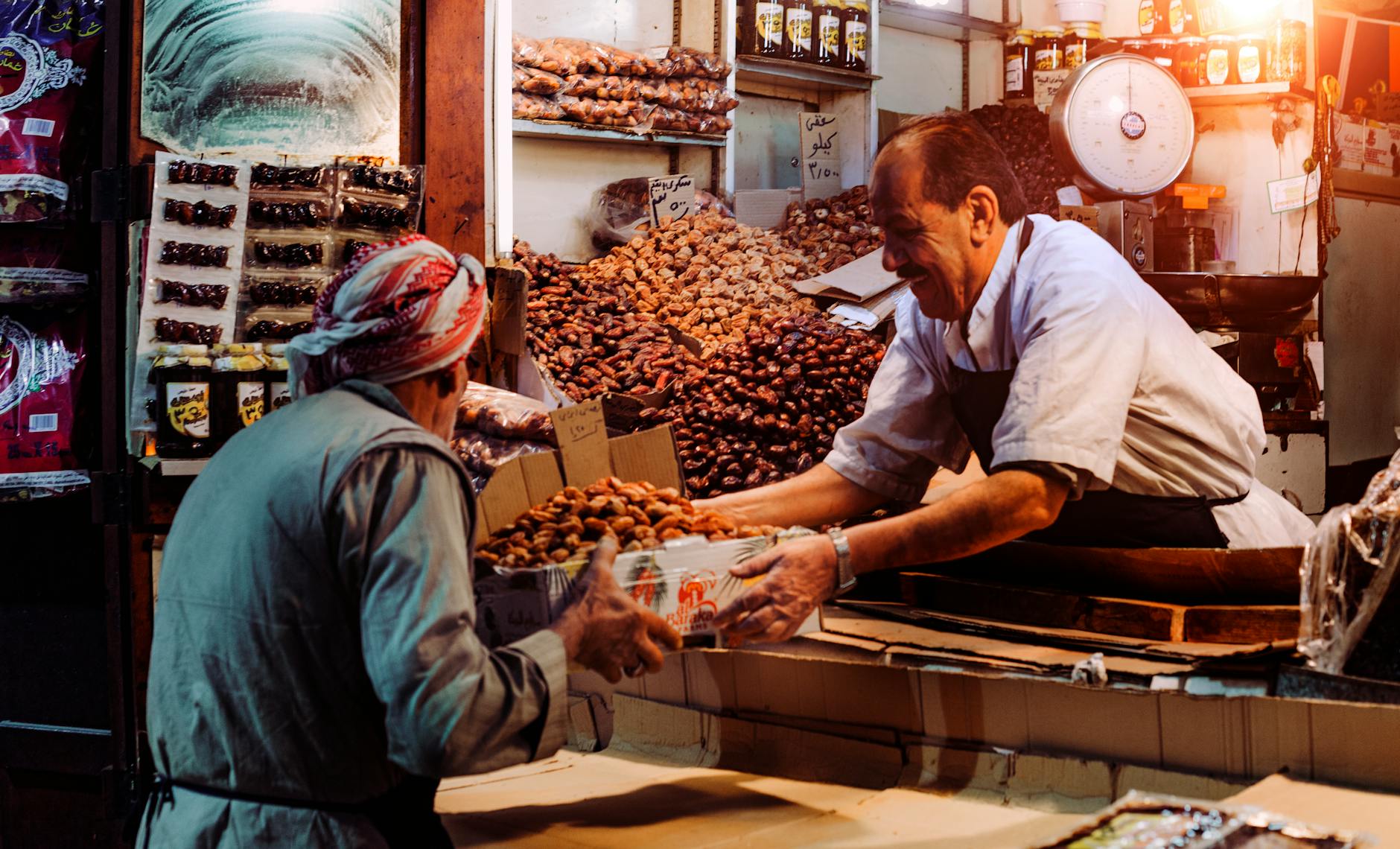
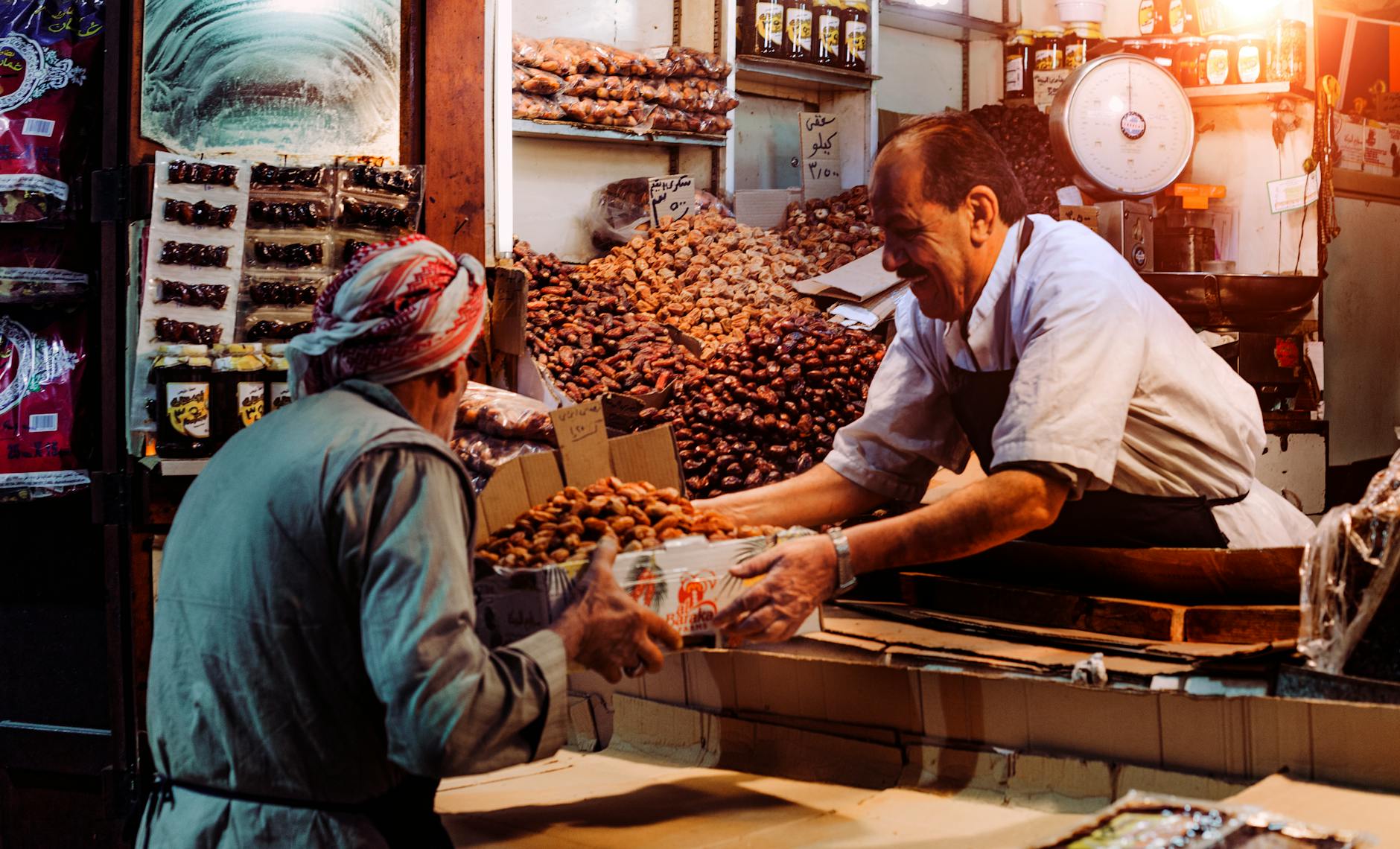
Dates, dried fruits, and nuts overflow at a traditional Deira market stall
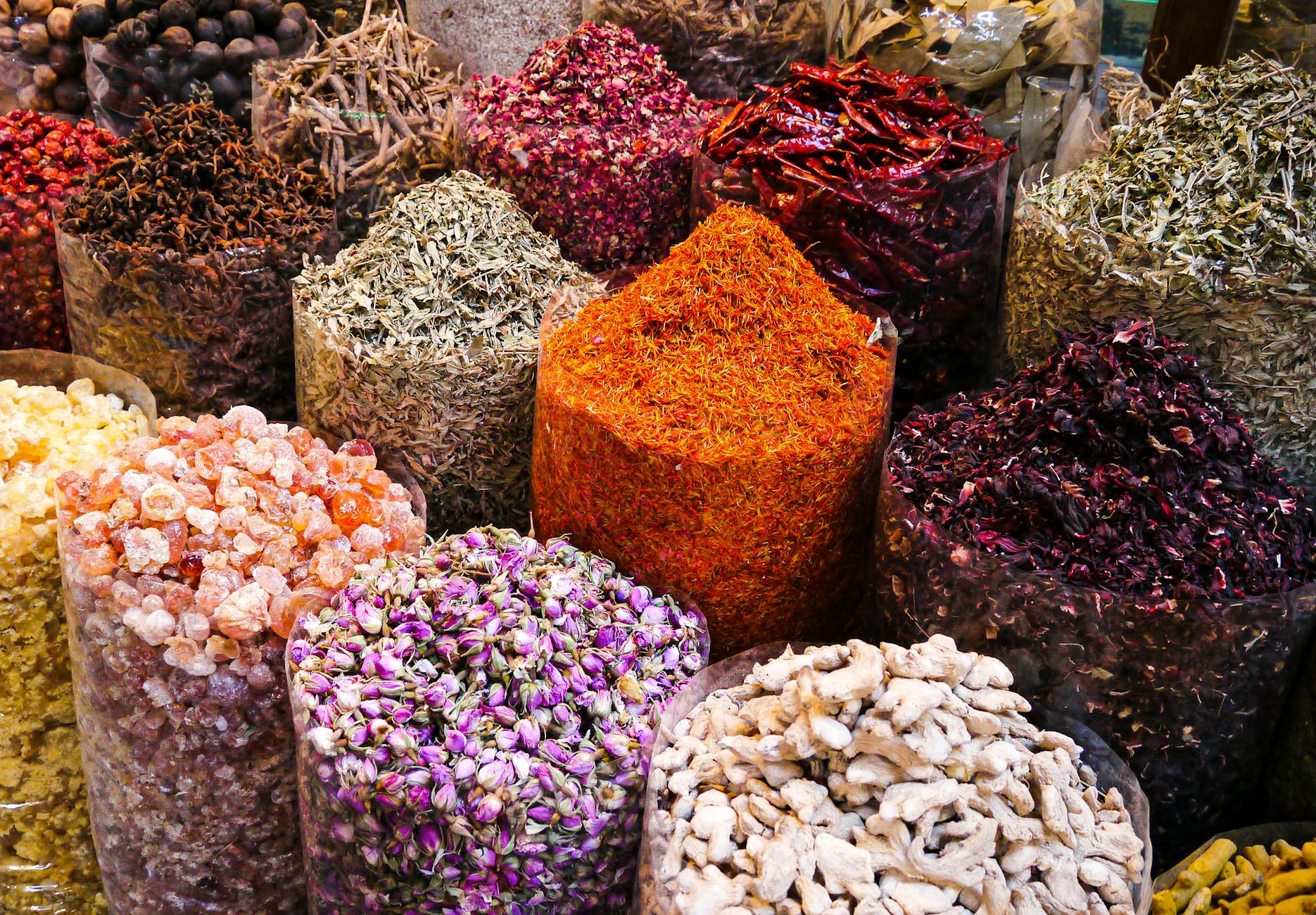
A rainbow of ground spices fills the air with intoxicating aromas
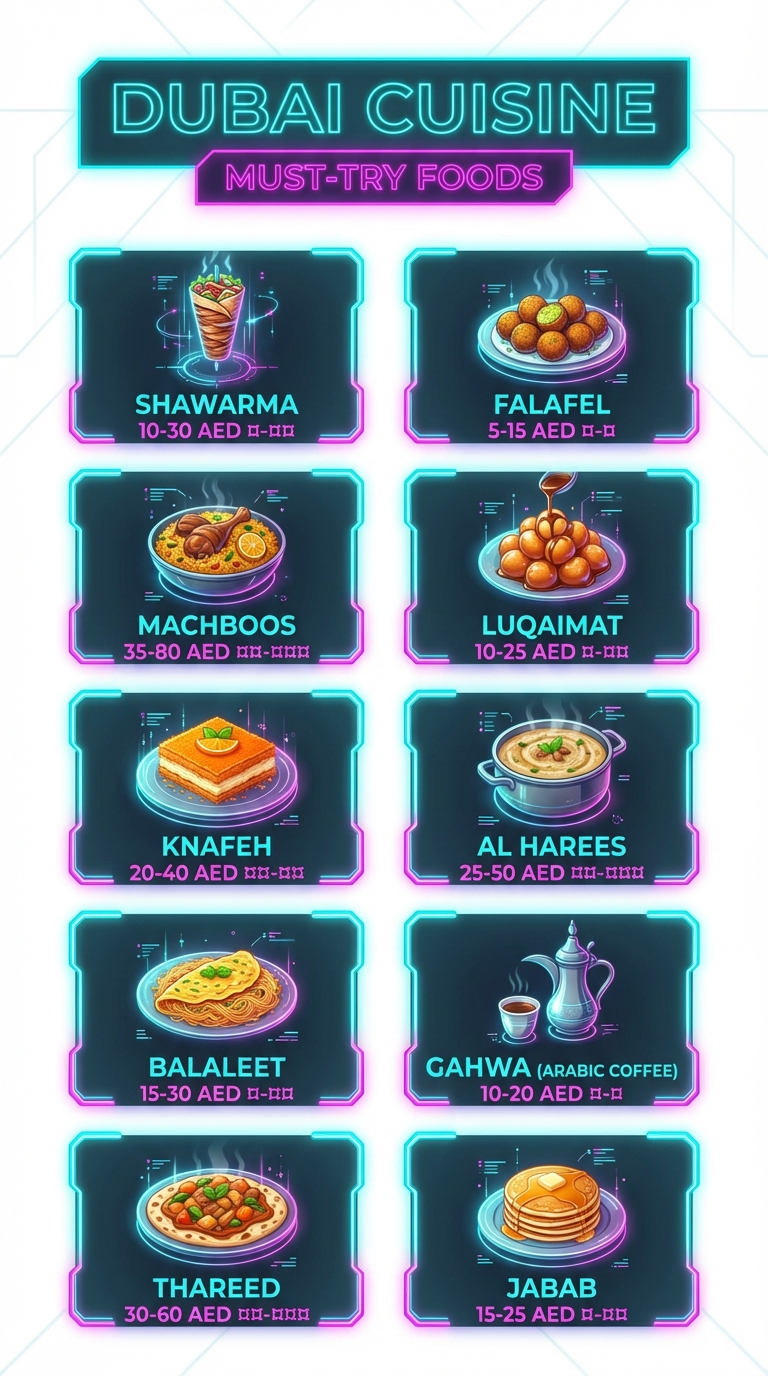
From street shawarma to seven-star dining
Dubai's food scene is as diverse as its population. With over 200 nationalities calling the city home, you can eat your way around the world without leaving the emirate. Lebanese mezze, Pakistani biryani, Indian dosa, Filipino adobo, Japanese omakase, and Emirati machboos sit side by side. The range is extraordinary - from AED 5 street shawarma to AED 5,000 tasting menus.
Al Harees: Slow-cooked wheat and meat porridge, a Ramadan staple. Simple but deeply comforting.
Machboos: Spiced rice with lamb, chicken, or fish. The Emirati equivalent of biryani. Rich with bezar spice mix.
Luqaimat: Golden fried dough balls drizzled with date syrup. Dubai's favourite sweet snack.
Karak Chai: Strong, sweet spiced milk tea. An obsession in Dubai - chai kiosks are on every corner. AED 1-2.
Shawarma (AED 5-10): The king of Dubai street food. Chicken or lamb carved from a rotating spit, wrapped in bread. Al Mallah in Satwa is legendary.
Manakish (AED 5-15): Arabic flatbread with za'atar, cheese, or meat. Dubai's breakfast favourite.
Falafel Wrap (AED 5-8): Crispy chickpea balls in pita. Cheap, filling, and vegetarian-friendly.
Kunafa (AED 15-25): Crispy shredded pastry filled with cheese and soaked in sweet syrup. A must-try dessert.
Ravi Restaurant ($): Pakistani institution in Satwa since 1978. Lamb karahi and butter naan for AED 20. Always packed - that's how you know it's authentic.
Al Mallah ($): Best shawarma in Dubai (locals' choice). Al Dhiyafah Road, Satwa. Open late, AED 7 per wrap.
Bu Qtair ($): Legendary fish shack in Jumeirah. No menu, no frills - just incredibly fresh fish, shrimp, and rice. Cash only. AED 30-50.
Jaffer Bhai's ($): Pakistani biryani institution. AED 25 for a massive plate that could feed two. Multiple branches.
Pierchic ($$$): Seafood on a pier jutting into the Arabian Gulf. Stunning sunset views. Dress smart. AED 300+/person.
Nobu ($$$): Japanese-Peruvian fusion at Atlantis. Black cod miso is the signature. AED 400+/person.
Zuma ($$-$$$): Contemporary Japanese in DIFC. Dubai's most celebrated restaurant. Book 2 weeks ahead. AED 300+.
Al Fanar ($$): Authentic Emirati cuisine in a heritage setting. Try the machboos and luqaimat. AED 80-150/person.
The Friday brunch is a Dubai institution. Hotels put on lavish all-you-can-eat-and-drink spreads from noon to 4pm. It's Dubai's answer to Sunday lunch. Budget AED 200-600 per person. Top picks: Bubbalicious at Westin, Saffron at Atlantis, Brunch & Cake at Palm.
Time Out Market: Curated food hall in Souk Al Bahar with Dubai's top chef concepts under one roof.
Depachika at Nakheel Mall: Japanese-inspired gourmet food hall on the Palm. Artisan producers and bakeries.
The best shawarma debate rages endlessly in Dubai. Locals swear by Al Mallah in Satwa (AED 7) or Al Safadi in DIFC. For Pakistani, it's Ravi or bust. For fish, Bu Qtair is a pilgrimage. All cost under AED 50 and all are unforgettable.
Street food stalls serve flavours from every continent
Traditional Emirati dishes tell centuries of trading history
A 3km man-made canal lined with 200+ gleaming towers, waterfront restaurants, and luxury yachts. Dubai Marina is the city's most vibrant waterfront district - where the beach meets the skyline, and every sunset is a spectacle.
The Venice of the Middle East
Dubai Marina is one of the world's largest man-made marinas - a 3km artificial canal city flanked by over 200 towers of glass and steel. The canal connects to the Persian Gulf, creating a stunning waterfront playground lined with restaurants, cafes, and yacht berths. It's Dubai's most walkable and liveable district, especially popular with young professionals and visitors.
The 7km promenade encircling the canal is Dubai's favourite evening stroll. Lined with cafes, restaurants, and gelato shops, it comes alive after sunset when the tower lights reflect off the calm water. Great for jogging, cycling, or just people-watching.
A 1.7km beachfront community with The Walk (street-level shopping and dining) and The Beach (open-air mall facing the sea). JBR Beach is free, clean, and offers water sports, sunbed rentals, and lifeguard service. The Friday afternoon atmosphere is electric.
On Bluewaters Island, connected to JBR by a bridge, stands the world's largest observation wheel at 250m. Each cabin offers 38-minute rotations with views of the Marina, Palm, and Arabian Gulf. Currently undergoing maintenance - check status at aindubai.com.
Dhow dinner cruise (AED 100-200): Traditional wooden boat with buffet dinner, live music, and stunning views. 2-hour journey through the marina and past JBR.
Yacht charter (AED 500-3,000): Private yacht for groups. Includes crew, music, and swimming stops. Popular for birthdays and celebrations.
Outdoor shopping and dining complex facing the sea. Cinema, splash park for kids, trampoline park, and a Roxy Cinemas with beanbag screenings on the beach.
Pier 7: Seven restaurants stacked in one building overlooking the Marina. Each floor is a different cuisine - from Japanese to Italian to steakhouse. Great for group outings where everyone wants something different.
Asia Asia ($$): Pan-Asian fusion with stunning marina views. Dim sum, sushi, and curries. AED 150-250/person.
BiCE Mare ($$$): Italian seafood on the waterfront. Fresh pasta and Mediterranean flavours. AED 250+.
Marina Social by Jason Atherton ($$): Celebrity chef restaurant with creative British-European dishes. Relaxed atmosphere.
Jet Ski: AED 200 for 30 minutes. Ride along the coastline with the Marina skyline as backdrop.
Parasailing: AED 350 for a 15-minute flight. Views of Palm Jumeirah and the coastline are breathtaking.
Flyboarding: AED 300 for 30 minutes. Hover above the water on a jet-powered board. No experience needed.
Paddleboarding: AED 100/hour. Calm morning waters in the marina are perfect for beginners.
The main shopping destination in the area, connected to the tram. Major brands, food court, supermarket, and entertainment. Less overwhelming than Dubai Mall but still comprehensive.
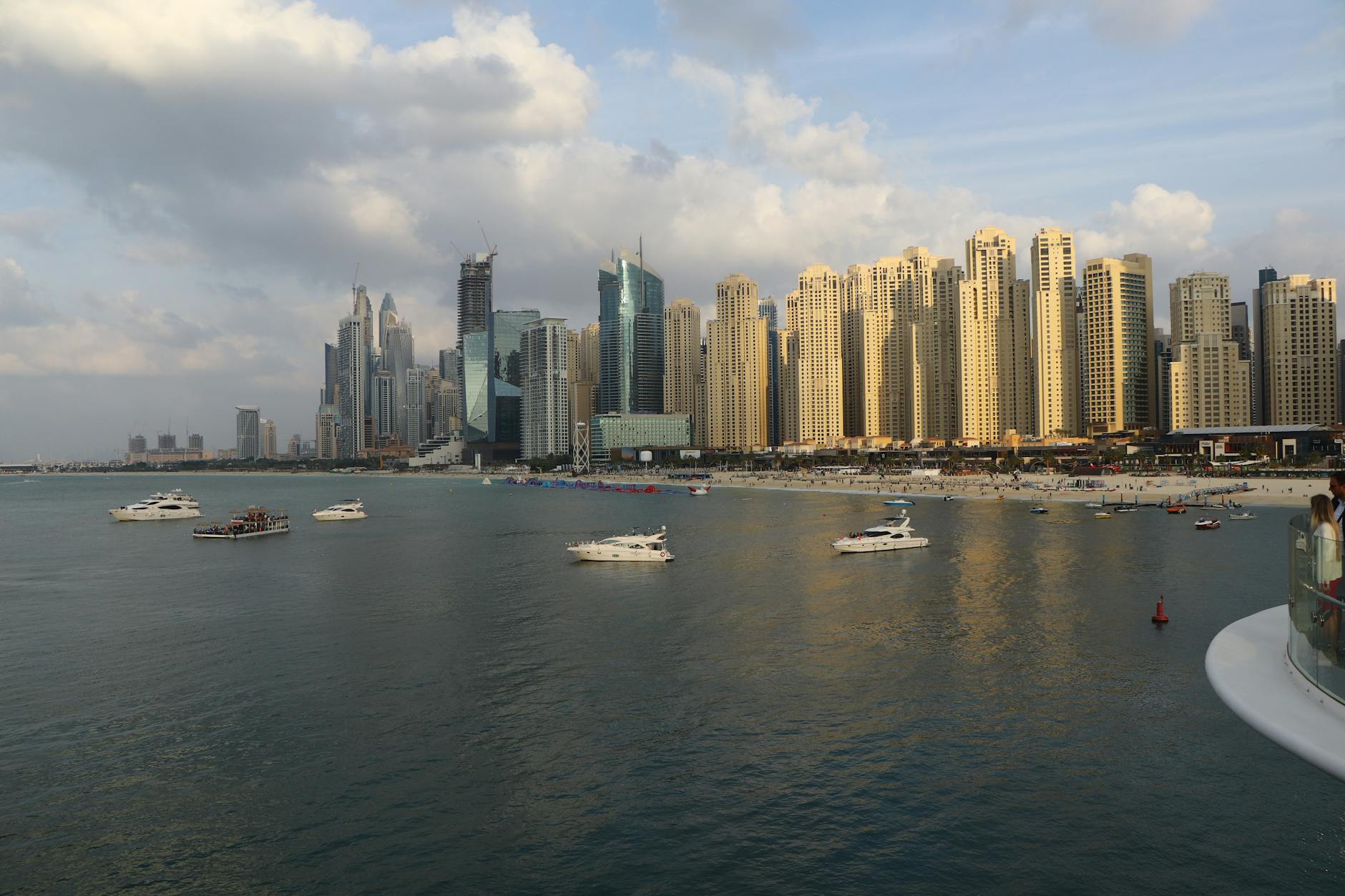
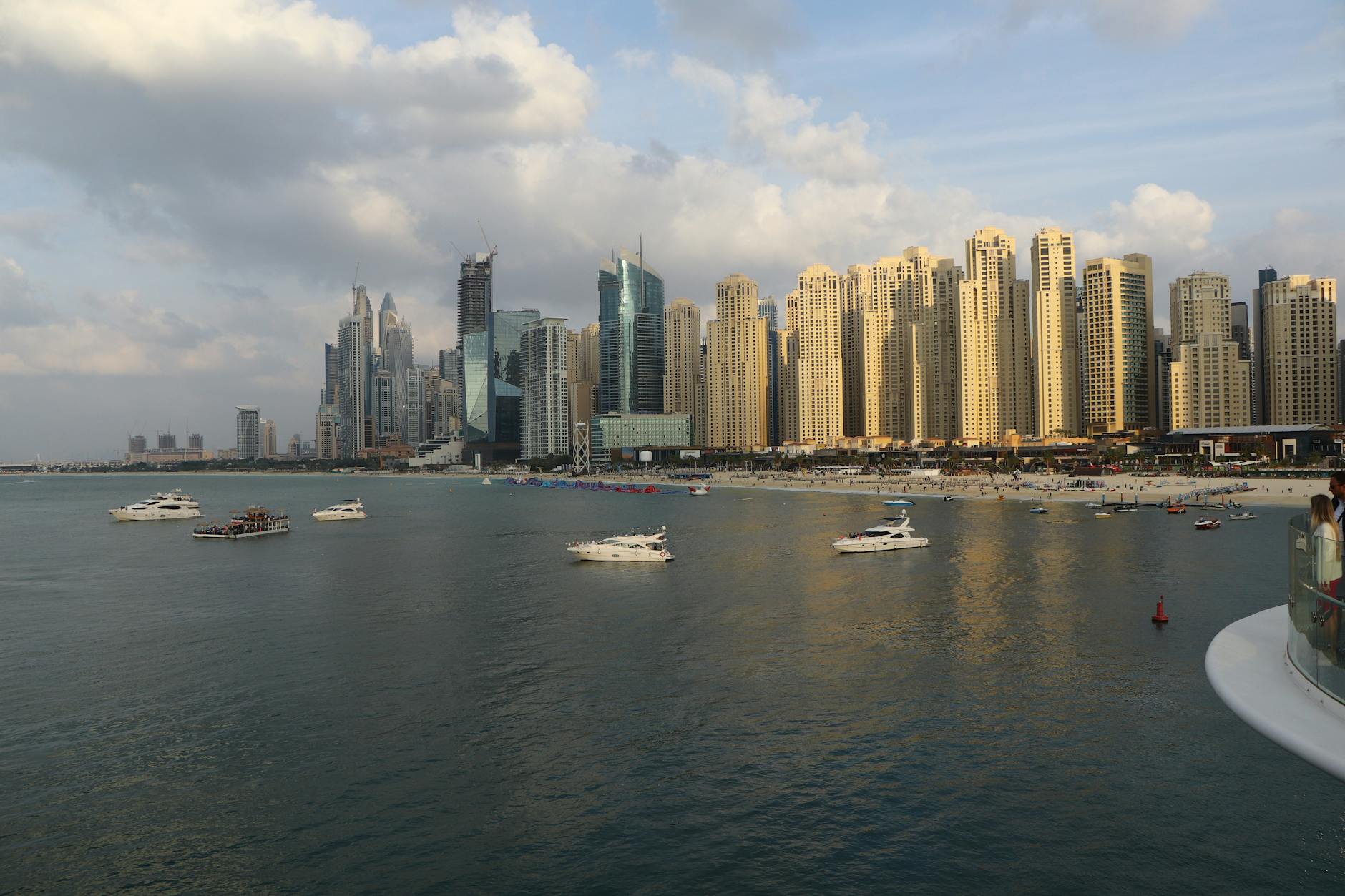
JBR's waterfront with luxury yachts and the Marina skyline rising behind
Sun-drenched JBR - where the beach meets Dubai's most vibrant skyline
For the best Marina photos, walk to the Marina Walk footbridge connecting the two sides of the canal. At sunset, the reflection of the illuminated towers in the still water creates a mirror-perfect shot. The bridge near Pier 7 is the sweet spot.
Downtown Dubai from above - Burj Khalifa commands the skyline
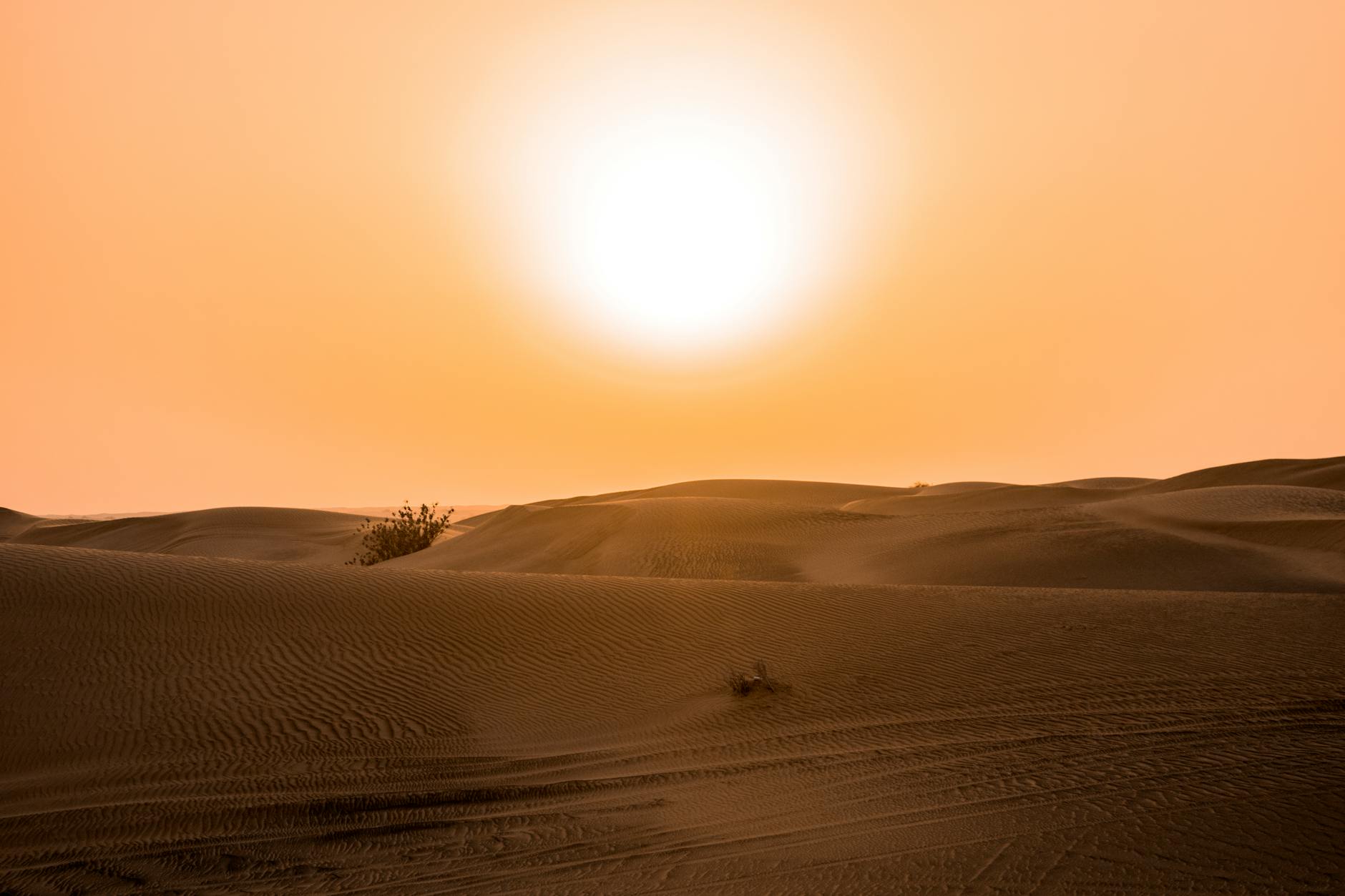
The Arabian Desert at golden hour - endless dunes stretching to the horizon
Visible from space, Palm Jumeirah is arguably humanity's most ambitious construction project. This man-made island shaped like a palm tree added 78km of coastline to Dubai and became home to luxury resorts, private villas, and the iconic Atlantis resort.
The world's most ambitious island
Built between 2001 and 2006, Palm Jumeirah is a feat of engineering that continues to defy belief. The island comprises a trunk, 16 fronds, and an 11km crescent breakwater, all constructed from 94 million cubic metres of sand dredged from the Gulf floor. No steel or concrete was used for the sand base - instead, engineers used GPS-guided precision to spray sand into position from boats.
Today, the Palm is home to luxury apartments, five-star resorts, beach clubs, and the landmark Atlantis resort at the crescent's tip. A monorail runs along the trunk, connecting to the Dubai Tram network and offering views of the fronds and the Marina skyline.
The iconic pink resort at the crescent's tip is Dubai's most recognisable beach hotel. Even non-guests can enjoy Aquaventure Waterpark (AED 339) - the Middle East's largest waterpark with record-breaking slides including the Leap of Faith through a shark-filled lagoon. Lost Chambers Aquarium (AED 140) houses 65,000 marine animals in Atlantis-themed ruins. Fine dining at Nobu, Ossiano (underwater restaurant), and Hakkasan.
The new ultra-luxury sister property opened to massive fanfare. Features an infinity pool on the 22nd floor, Cloud 22 rooftop club (Dubai's hottest day-to-night venue), and restaurants by celebrity chefs including Gastón Acurio, Ariana Bundy, and José Andrés.
An 11km waterfront promenade circling the crescent, perfect for walking, cycling, and e-scooters. Stunning views of the Marina skyline on one side and the open Gulf on the other. Best at sunrise or sunset.
Dining and entertainment complex at the tip of the trunk, facing Atlantis across the water. Over 80 restaurants and shops. The Palm Fountain here performs 3-minute shows set to music - best viewed at night with Atlantis illuminated in the background.
White Beach & Restaurant: Upscale beach club at Atlantis The Royal. Infinity pool, premium sunbeds, DJ sets. Day pass AED 250+.
DRIFT Beach Dubai: At One&Only Royal Mirage. Bohemian-chic vibe, excellent food, calmer atmosphere. Day pass AED 200+.
Five Palm Jumeirah: Trendy beach club with pool parties. Popular with influencers. Day pass AED 150+.
Observation deck on the 52nd floor of The Palm Tower (AED 100). Panoramic views of the entire Palm island from above - you can finally see the famous palm-tree shape. Interactive screens and a cafe at the top.
Large shopping centre on the trunk of the Palm. Depachika food hall (Japanese-inspired gourmet market), cinema, and a good selection of shops. Less crowded than mainland malls.
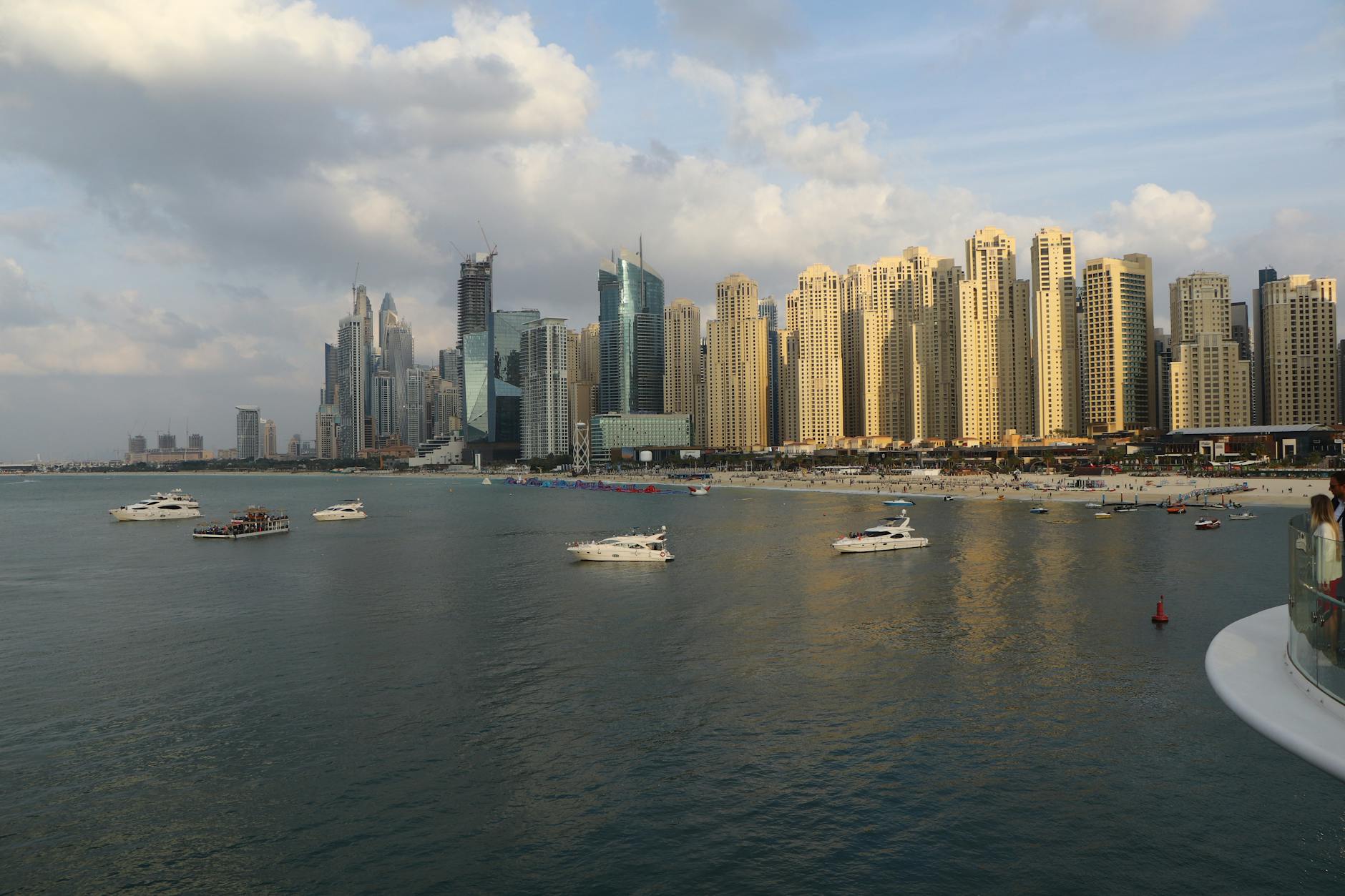
Crystal-clear Gulf waters lap the Palm's beaches
Golden sunset over the Arabian Desert - nature's spectacle beyond the city
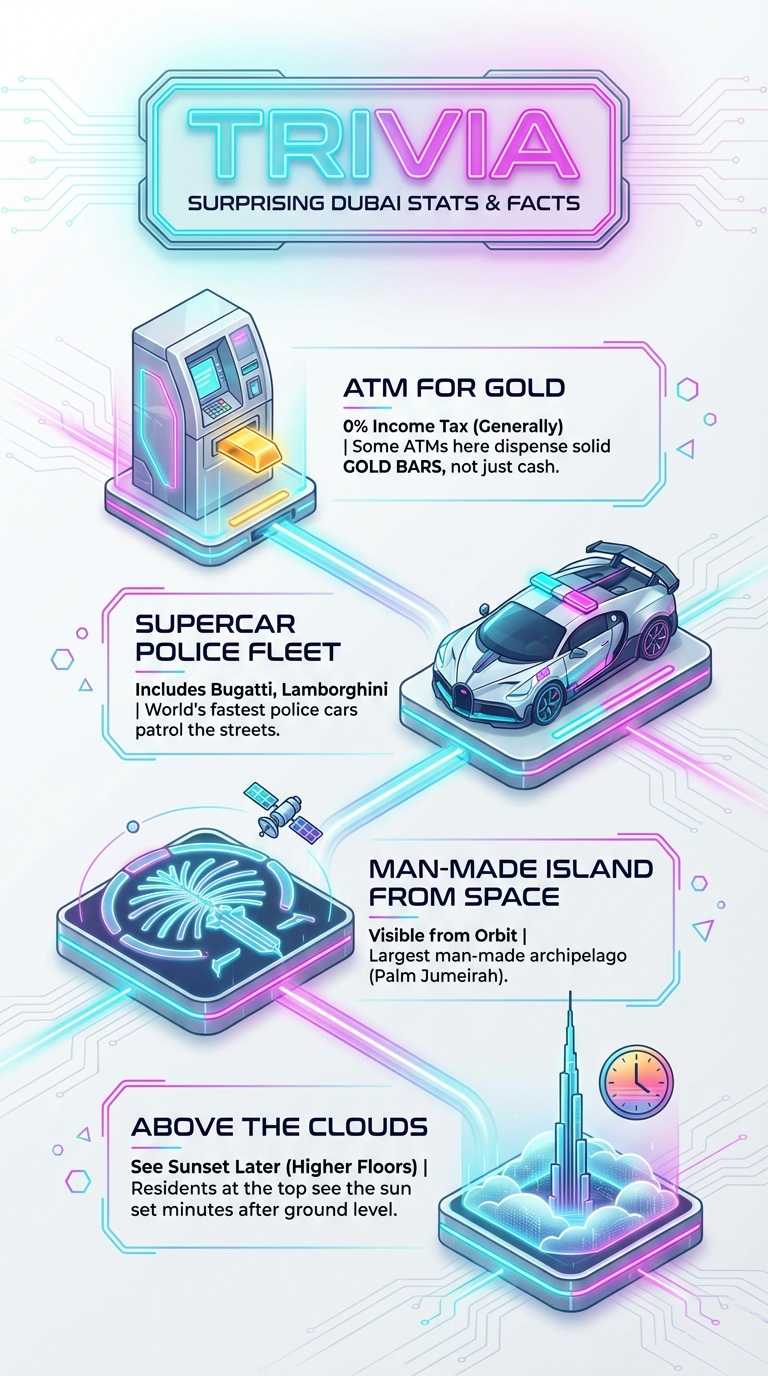
Dubai beyond the headlines
Dubai's art district, hidden in an industrial area. Over 70 galleries, concept stores, and specialty coffee shops occupy converted warehouses. Free to explore. Check Alserkal's events calendar for openings and film screenings. Gallery Isabelle van den Eynde and The Third Line are standouts.
Incredibly, just 20 minutes from Downtown, this wetland reserve is home to over 500 Greater Flamingos. Free viewing hides offer close-up sightings. Best visited in winter mornings (Oct-Mar). A surreal contrast - flamingos with the Burj Khalifa on the horizon.
A charming museum tracing coffee's journey from Ethiopian highlands through Arabic tradition to global phenomenon. The restored courtyard house is beautiful, the free entry is generous, and the Arabic coffee served is excellent.
150 million flowers arranged in stunning displays - the world's largest natural flower garden. A life-size Emirates A380 plane covered in flowers is the centrepiece. Open November to May only. AED 75. Go early to avoid crowds.
Free public desert area for cycling, horse riding, and spotting Arabian oryx and gazelles. The Al Qudra Lakes attract hundreds of bird species. A peaceful escape just 30 minutes from the Marina. Bring water.
Hidden art galleries, the XVA Gallery and boutique hotel, and the SMCCU cultural centre cluster around quiet courtyards. The Majlis Gallery, Dubai's oldest commercial art gallery (since 1989), is here.
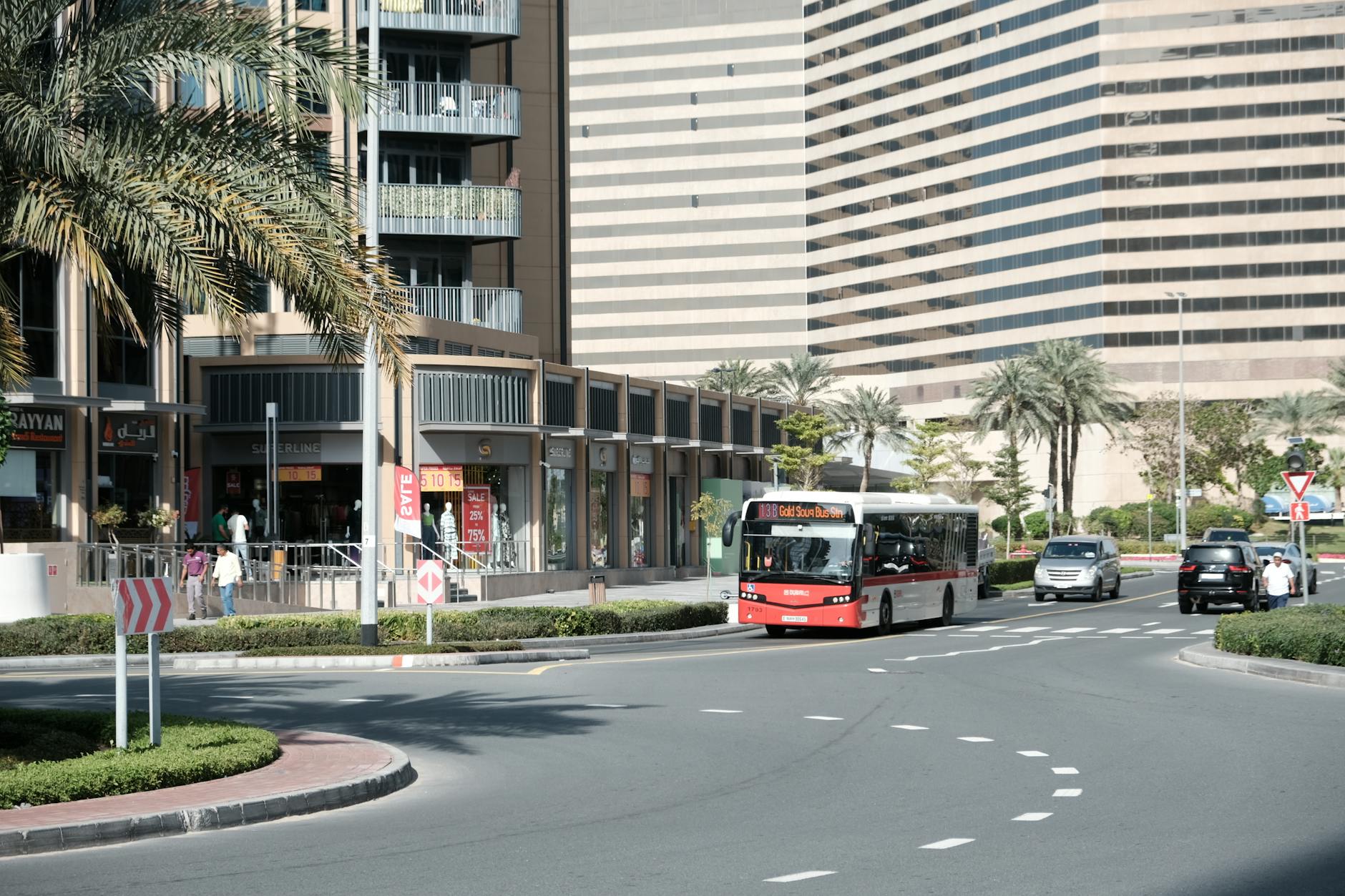
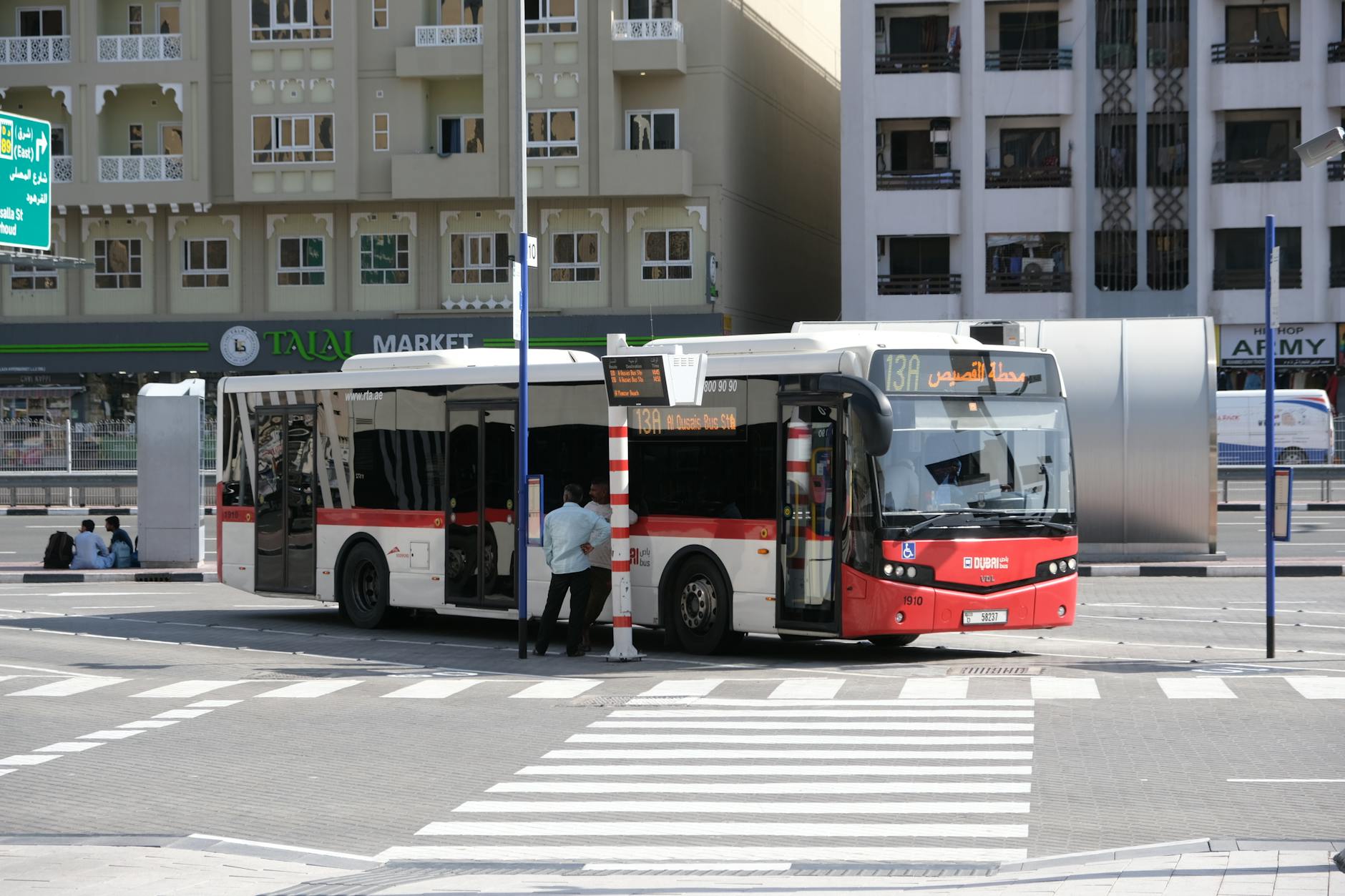
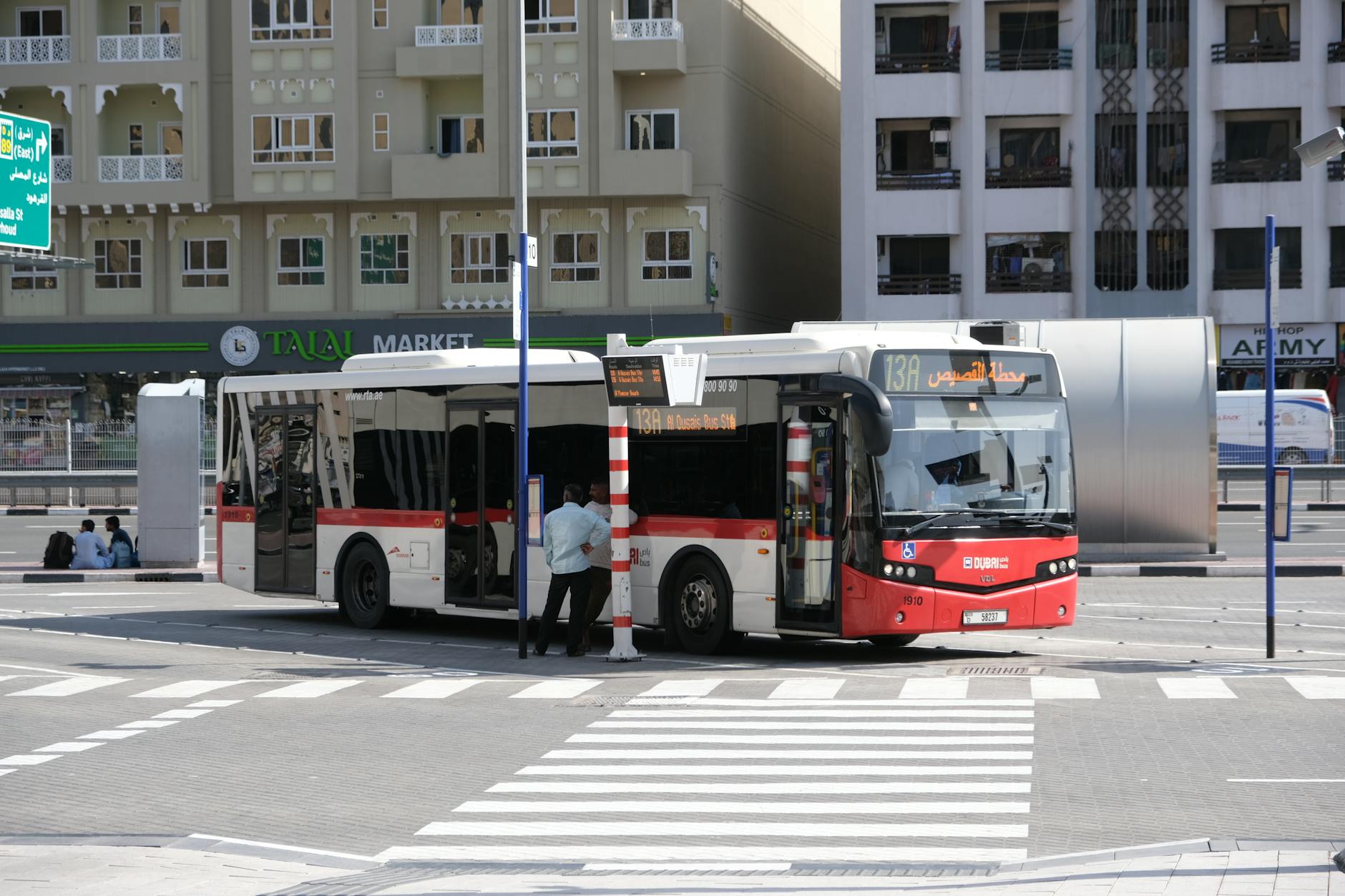
A bustling Dubai street near the Gold Souk bus stop - the real city beyond the malls
Exploring Dubai's neighbourhoods by bus - a local's way to see the city
From mega malls to traditional souks
630+ stores and the legendary Ski Dubai - an indoor ski slope with real snow, penguins, and a chairlift, all in the desert. Ski Dubai slope session AED 210, Snow Park AED 160. The mall has excellent luxury shopping, Magic Planet entertainment, and a strong food court.
Themed after the famous explorer, this mall's architecture alone is worth the visit. Six zones represent countries Ibn Battuta visited - Andalusia, Tunisia, Egypt, Persia, India, and China. The Tunisian and Persian courts are stunning. Good variety of mid-range shopping.
Open-air lifestyle destination in the heart of Dubai. Boutiques, street art installations, outdoor dining, and a relaxed European-plaza feel. Hub Zero gaming centre and Green Planet indoor rainforest are here.
Dubai's financial district has evolved into a cultural and dining hub. High-end restaurants (Zuma, La Petite Maison), art galleries, and stylish bars line the pedestrianised Gate Avenue. Very popular Thursday-Friday nights.
A seasonal (October-April) cultural extravaganza with pavilions from 90+ countries. Each pavilion sells traditional goods, food, and handicrafts. Live entertainment, rides, and fireworks. AED 25 entry. Great for families and bargain hunters.
Designer brands at 30-90% off in a Tuscan-style village setting on Al Ain Road. Coach, Michael Kors, DKNY, and more. Worth the 30-minute drive from Downtown if you're a serious shopper. Less crowded on weekdays.
The world's largest Chinese trading hub outside China. Over 4,000 shops sell everything imaginable at wholesale prices - electronics, furniture, clothing, toys, and gadgets. Quality varies wildly, so inspect carefully. Prices are fixed (no bargaining). A fascinating and overwhelming experience.
Dubai's 5% VAT is low by global standards, and many items are still tax-free. Gold has zero tax, making the Gold Souk genuinely the world's cheapest. Electronics are often cheaper than in Europe or Australia. Tourists can claim VAT refunds on purchases over AED 250 at airport kiosks.
At souks: Bargaining is expected and essential. Start at 30-40% of the asking price. Be prepared to walk away - vendors often call you back with a better price. Smile and enjoy the process - it's a social ritual, not a confrontation.
At malls: Prices are fixed. Never bargain at branded stores. Some independent electronics shops may flex 5-10%.
Key phrases: "Kam?" (How much?), "Ghalee!" (Too expensive!), "Akhir si'r?" (Last price?)
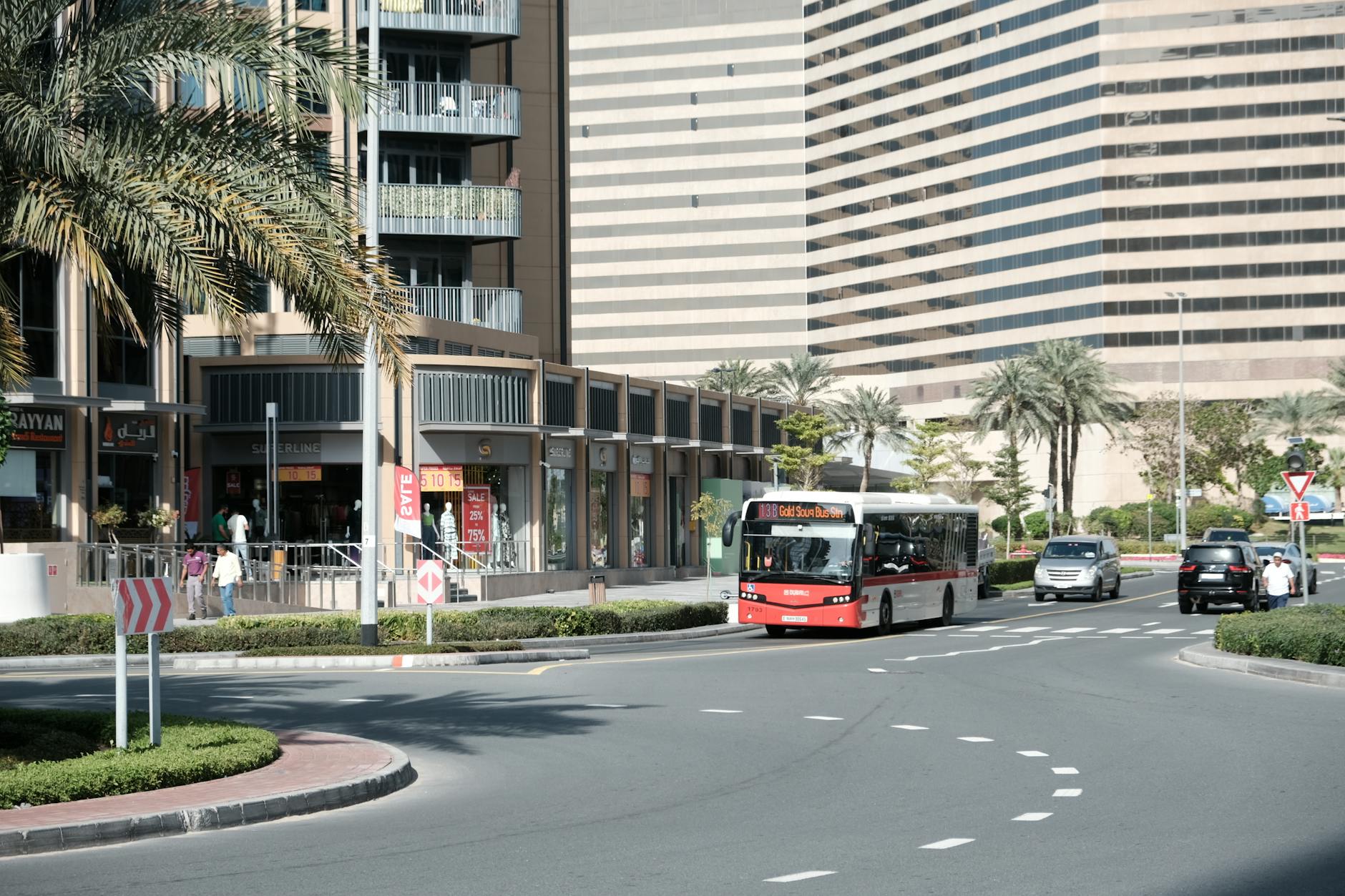
Dubai's streets buzz with everyday life between the shopping districts
The Spice Souk's vivid displays reward every sense
Visit the Gold Souk and Spice Souk in the same trip (they're adjacent). Take the abra across the Creek for the Textile Souk. For malls, start at Dubai Mall for everything, Mall of the Emirates for Ski Dubai, and Ibn Battuta just for the architecture.
Beyond the glittering skyline lies the vast Arabian Desert - an endless sea of red sand dunes that has shaped Emirati identity for millennia. A desert safari is Dubai's most authentic experience, connecting you to the landscape and traditions that existed long before the first skyscraper.
The #1 must-do Dubai experience
No visit to Dubai is complete without venturing into the desert. The Arabian Desert begins just 30 minutes from Downtown, and desert safaris offer a thrilling combination of adventure, culture, and natural beauty. From adrenaline-fuelled dune bashing to peaceful sunset camel rides, the desert delivers some of Dubai's most memorable moments.
4-hour morning adventure with dune bashing, sandboarding on the dunes, a short camel ride, and quad biking (optional, AED 100 extra). Best for families with young children and those who want the afternoon free. Pickup 7-8am, return by noon.
The most popular option. 6-hour experience starting at 3-4pm. Includes dune bashing in 4x4 Land Cruisers, sunset photos at the highest dune, camel riding, sandboarding, a Bedouin-style camp with BBQ dinner, belly dancing, fire show, henna painting, shisha, and stargazing. The highlight is watching the sunset paint the dunes in shades of gold and crimson.
Everything in the evening safari plus sleeping under the stars in a traditional Bedouin camp. Wake up to a desert sunrise, traditional breakfast, and morning falconry demonstration. The silence of the desert at night - away from the city's hum - is transformative.
Sunrise flight over the desert dunes. See Arabian oryx, gazelles, and camels from above. The shadow of the balloon dancing across the dunes is unforgettable. 1-hour flight plus transfers. Book 2-3 weeks ahead as slots fill fast.
A different kind of desert escape - the Hatta Mountains (1.5hr drive) offer hiking trails, Hatta Dam kayaking on turquoise water, mountain biking, a heritage village, and glamping. Free entry to most areas. A full-day trip.
Book through your hotel or a reputable operator - avoid street touts offering AED 50 safaris (unsafe vehicles, poor food). Established operators include Arabian Adventures, Platinum Heritage (conservation-focused), and OceanAir Travels.
What's included: Hotel pickup/drop-off in a 4x4, all activities at the camp, dinner (evening safaris), and soft drinks. Alcohol, quad bikes, and falcon photos are usually extra.
Light, comfortable clothes. Closed-toe shoes for sand (flip-flops get lost in dunes). Sunglasses and sunscreen are essential. Bring a light jacket for cooler desert evenings (Nov-Feb). Women: a scarf is useful for wind protection.
Dune bashing: Wear your seatbelt. Keep windows closed during sand driving. Take motion sickness medication if prone - the ride is genuinely wild. It's perfectly safe with licensed operators but feels like a roller coaster.
Sun protection: The desert sun is brutal. Drink plenty of water, wear SPF 50+, and keep your head covered.
October to April for pleasant temperatures (20-30°C in the desert). Summer safaris depart at 5pm to avoid peak heat. The desert is 5-8°C cooler than the city at night, making winter evenings quite chilly (15°C).
The national bird of the UAE, the falcon is central to Emirati culture. Most premium safaris include a falconry demonstration where trained birds swoop past at 300km/h. Platinum Heritage offers dedicated falconry experiences (AED 1,100) in a conservation reserve.
Where the desert city comes alive after dark
At.mosphere (Burj Khalifa, Level 122): The world's highest bar. Cocktails from AED 90. Dress code enforced. The views alone justify the price. Book a window table weeks ahead.
CÉ LA VI (Address Sky View): Stunning Burj Khalifa views from the glass-bottomed sky bridge. Cocktails, Asian bites, and DJ sets. Thursday nights are legendary.
Treehouse (Taj JLT): Botanical-themed rooftop with 360° views of the Marina and Ain Dubai. Relaxed vibe, great cocktails, surprisingly reasonable prices.
Level 43 (Four Points, Sheikh Zayed Rd): Affordable rooftop with great city views. Less exclusive, more fun. Popular with residents.
Zero Gravity: Beach club and pool by the Marina. Parachuting landing zone doubles as a beach. International DJs on weekends. AED 100-300 entry.
Barasti: Dubai's most famous beach bar at Le Méridien. Casual, fun, and always packed on weekends. Multiple bars, food trucks, and sports screens. Free entry most nights.
Nikki Beach: Upscale beach club at Pearl Jumeira. Mediterranean vibes, fashion-forward crowd. Sunday brunch is an institution. AED 200-400.
Dubai Opera: World-class performances from ballet to concerts to comedy.
La Perle by Dragone: Permanent aquatic theatre show at Al Habtoor City. Cirque-style acrobatics in and above water. AED 300+. Spectacular.
Dubai's financial district transforms at night into the city's most sophisticated entertainment zone. Zuma (Japanese), La Petite Maison (French), and Penthouse (rooftop lounge) are the headline acts. Gate Avenue's outdoor terraces fill with the city's most stylish crowd. Thursday nights are the busiest.
A beloved Dubai tradition - Tuesdays and Wednesdays at most venues, women receive free drinks and sometimes free entry. It's a genuine institution, not a gimmick. Some venues offer 3-4 free drinks. Check Time Out Dubai for the latest listings.
Where: Only at licensed venues - hotels, clubs, restaurants with a licence. Never in public or on the street.
Age: 21+ with ID required. No tolerance for underage drinking.
Driving: Zero blood-alcohol tolerance. One drink = don't drive. Penalties include jail time, fines, and deportation.
Public behaviour: No public intoxication. Be respectful leaving venues. Taxis and ride-hailing are the norm after a night out.
City Walk: Open-air dining and entertainment district with boutiques and street art.
La Mer: Beachfront with cinema, restaurants, and Laguna Waterpark.
Bluewaters Island: Connected to JBR, home to Ain Dubai and entertainment venues.
JBR The Beach: Outdoor cinema, restaurants, and lively evening atmosphere.
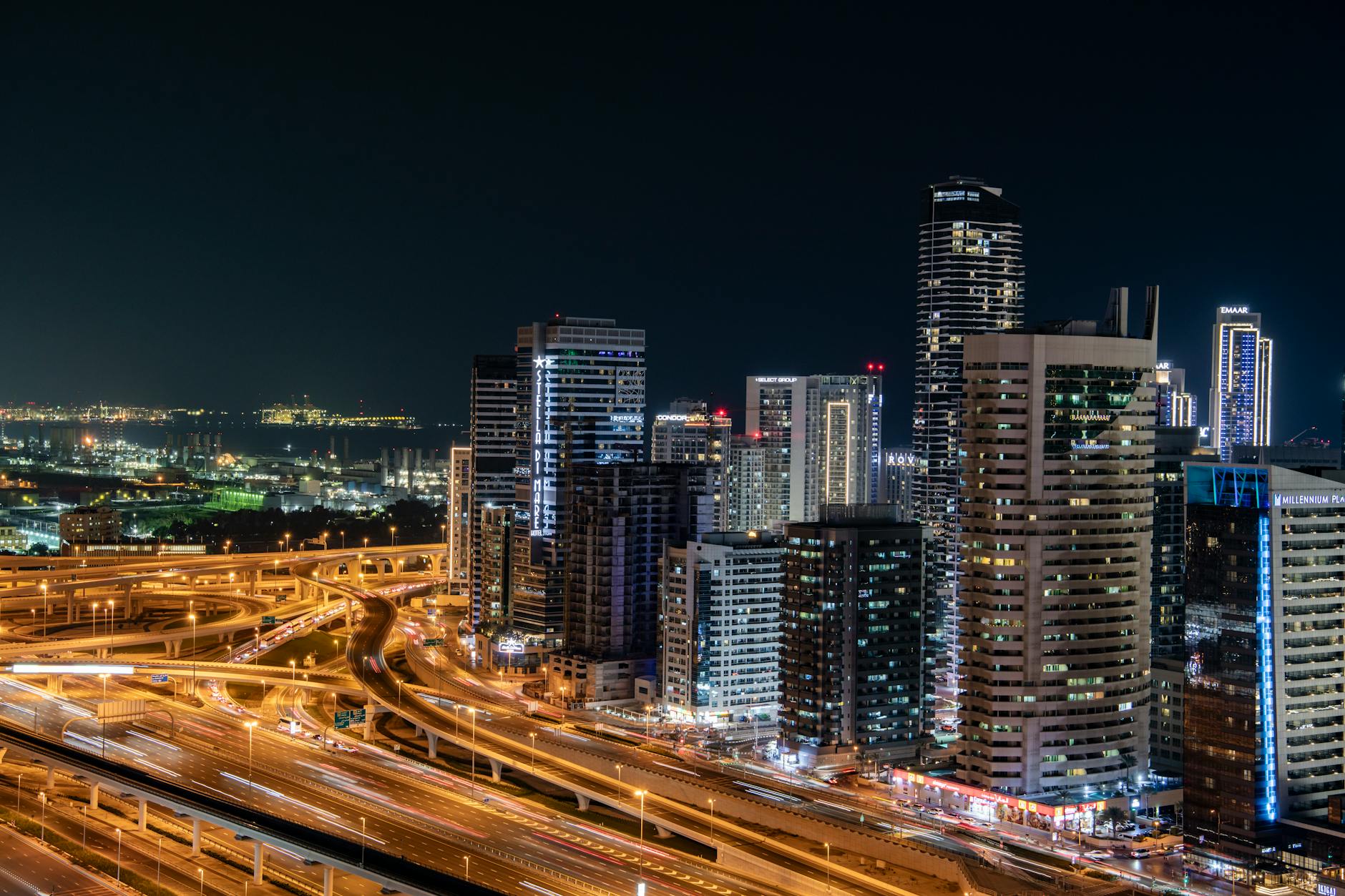
Dubai's nightlife rivals any global city
Business Bay's waterfront towers gleam at the golden hour
Dubai's nightlife peaks Thursday-Friday (the weekend). Book tables at popular venues. Dress codes are enforced at upscale venues - smart casual minimum, no shorts or flip-flops. Ladies' nights (Tue-Wed) are an incredible deal - 3-4 free drinks at many venues.
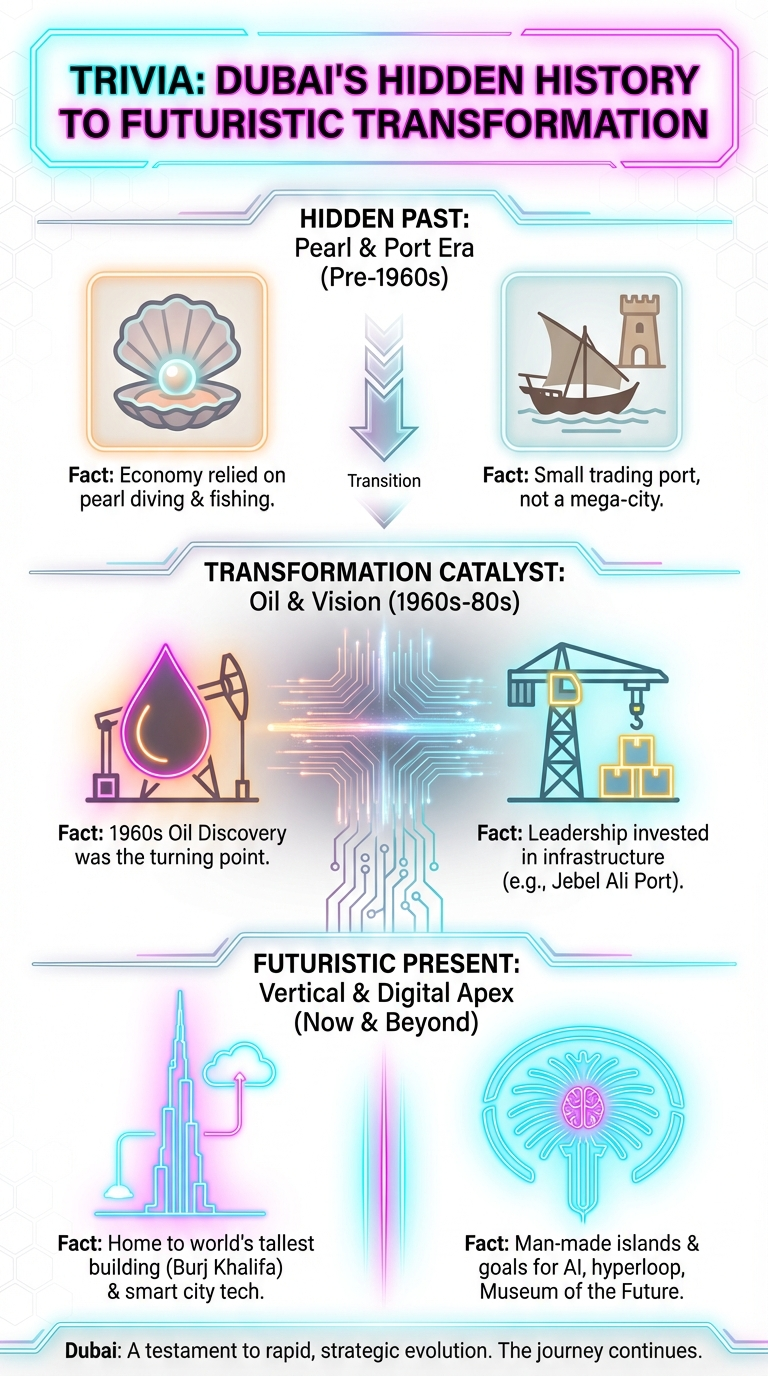
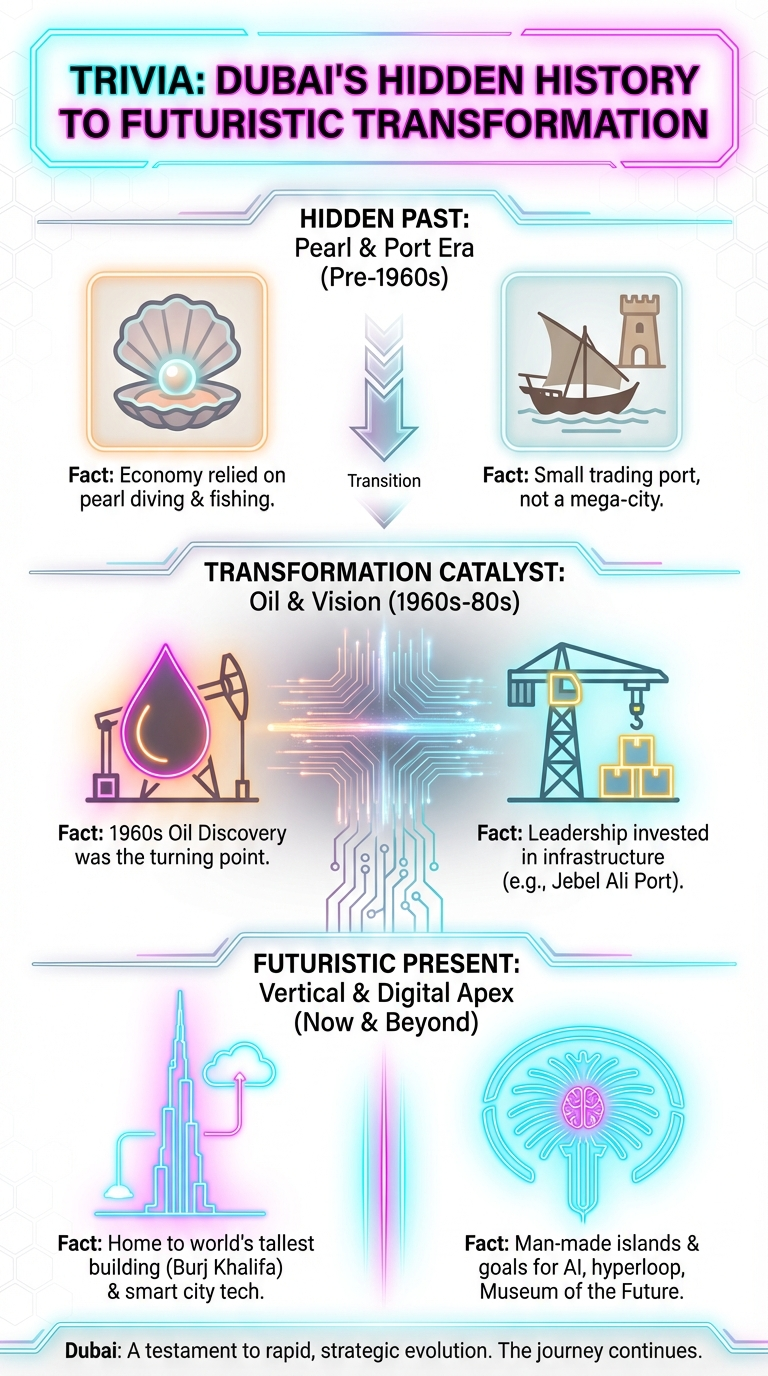
From a fishing village of 800 people in the 1930s to a global megacity of 3.6 million today, Dubai's transformation is one of the most remarkable stories in urban history. This is the tale of pearls, oil, vision, and sheer audacity.
A timeline of extraordinary ambition
Dubai's story is one of constant reinvention. The Bani Yas tribe settled along the Creek in the early 1800s, drawn by its natural harbour and pearl-rich waters. By 1900, Dubai had become a thriving trading port, but the global pearl market crash in the 1930s (caused by Japanese cultured pearls) devastated the economy. It took the vision of the ruling Al Maktoum family to reimagine Dubai's future.
Bedouin settlements along the Creek. Pearl diving was the primary industry - Dubai had over 300 pearl diving boats. Trading dhows carried goods to India, East Africa, and Persia.
Oil is discovered offshore. Revenue begins flowing by 1969. But Sheikh Rashid bin Saeed Al Maktoum, the visionary ruler, famously said: "My grandfather rode a camel, my father rode a camel, I drive a Mercedes, my son drives a Land Rover, his son will drive a Land Rover, but his son will ride a camel." He invested oil wealth in infrastructure, knowing oil wouldn't last forever.
Dubai joins six other emirates to form the United Arab Emirates on 2 December 1971. Abu Dhabi becomes the capital; Dubai becomes the commercial hub.
Jebel Ali Port opens (world's largest man-made harbour). Emirates Airlines launches (1985). Dubai Shopping Festival begins (1996). Burj Al Arab opens (1999), putting Dubai on the global luxury map.
Palm Jumeirah (2001-2006), The World Islands, Dubai Marina, Burj Khalifa (2010), Dubai Mall - the city builds faster than any in history. The 2008 financial crisis pauses construction but doesn't stop the momentum.
Expo 2020 (held 2021-22) welcomes 24 million visitors. Museum of the Future opens. Dubai Islands, Expo City, and renewable energy projects signal a post-oil future.
Buildings that redefined what's possible
Y-shaped plan inspired by the desert flower Hymenocallis. The buttressed core design distributes wind forces across three wings. At 828m, it's 300m taller than its nearest rival. The exterior cladding uses 26,000 hand-cut glass panels.
Sail-shaped silhouette on an artificial island 280m offshore. At 321m, it was the world's tallest hotel when completed in 1999. The interior is a riot of gold leaf, marble, and coloured glass. The helipad has hosted Roger Federer and Tiger Woods for publicity shoots.
A torus-shaped wonder with no straight lines or supporting pillars inside. The Arabic calligraphy on the stainless steel facade is actually poetry by Sheikh Mohammed. 2,400 diagonally intersecting elements form the facade - each unique. Named the world's most beautiful building by National Geographic.
A 150m x 93m gold-clad picture frame in Zabeel Park. One side faces old Dubai, the other faces the new skyline - literally framing past and future. Glass floor walkway at the top.
A 306m residential tower that twists 90° from base to top. Each of its 75 floors is rotated 1.2° from the one below. The twist is purely aesthetic - it was the world's tallest twisted tower when completed in 2013.
The late architect's iconic void-cut cube design houses the ME Dubai hotel. The building appears to have a cube carved out of its centre, creating a dramatic visual effect. The interior is equally futuristic with flowing, organic forms.
Downtown Dubai's vast skyline - a testament to the city's architectural ambition
Understanding the soul beneath the steel
Only about 11% of Dubai's 3.6 million residents are Emirati nationals. Yet Emirati culture profoundly shapes the city. Deep Bedouin traditions of hospitality define social interactions - Arabic coffee (gahwa) and dates are offered to every guest. Family, tribe, and religion form the foundation of Emirati identity.
Friday is the holy day (weekend is Friday-Saturday). The call to prayer sounds five times daily from mosques across the city. For visitors: the Sheikh Mohammed Centre for Cultural Understanding (SMCCU) offers guided mosque visits, cultural breakfasts (AED 80), and Q&A sessions where no question is off-limits. Essential for deeper understanding.
Men: White kandura (dishdasha) with ghutra headdress secured by a black agal cord. Formal occasions call for a bisht (cloak). Women: Black abaya with shayla headscarf. Many younger Emiratis add designer accessories. Tourists are not expected to wear traditional dress, but modest clothing is appreciated.
Greet with "As-salamu alaykum" (Peace be upon you). Use your right hand for greetings and eating. Don't photograph people without permission, especially Emirati women. During Ramadan, respect fasting by not eating, drinking, or smoking in public during daylight hours.
Eid Al Fitr: End of Ramadan. Family gatherings, feasts, and citywide celebrations.
Eid Al Adha: Festival of Sacrifice. Prayer, charity, and family time.
UAE National Day (Dec 2): Patriotic celebrations, fireworks, and sales.
Dubai Shopping Festival (Jan): Month-long shopping and entertainment extravaganza.
Explore the UAE beyond the city
Sheikh Zayed Grand Mosque: One of the world's most beautiful mosques. 82 domes, 1,000 columns, the world's largest hand-knotted carpet, and 7 crystal chandeliers. Free entry. Dress modestly (abayas provided). Allow 2 hours.
Louvre Abu Dhabi (AED 63): Jean Nouvel's stunning "rain of light" dome houses a world-class art collection spanning civilisations. Temporary exhibitions rotate. Allow 3 hours.
Yas Island: Ferrari World (AED 310) with the world's fastest roller coaster, Yas Waterworld, and Warner Bros World indoor theme park.
UNESCO Creative City of Culture. Sharjah Art Museum (free), stunning Blue Souk (officially Central Souk - great for carpets and handicrafts), Heart of Sharjah heritage area, and Islamic Museum. A more conservative, artsy counterpart to Dubai.
The adventure emirate. Jebel Jais is the UAE's highest mountain at 1,934m, home to the world's longest zipline (2.83km, AED 330). Mountain hiking trails, Via Ferrata climbing, and Jais Adventure Park. Also has quiet beaches and the ruins of the ancient city of Julfar.
The only emirate on the Gulf of Oman (east coast). Excellent snorkelling at Snoopy Island with sea turtles and reef fish. Al Bidyah Mosque - the oldest mosque in the UAE (15th century). Mountain wadis for swimming. A completely different landscape from Dubai.
A mountain enclave of Dubai emirate nestled in the Hajar Mountains. Hatta Dam: Kayak or pedal boat on turquoise water surrounded by rocky peaks. Heritage Village: Restored mountain settlement with 200-year-old buildings. Hiking trails: Multiple difficulty levels from 2-16km. Mountain biking: World-class trails through the wadis. Glamping: Hatta Sedr Trailers offer overnight stays under the stars.
The Garden City. Al Ain Oasis (UNESCO): 3,000+ date palms with falaj irrigation channels - free and peaceful. Al Ain Zoo: 4,000 animals including Arabian oryx. Jebel Hafeet: UAE's second-highest peak (1,249m) with hot springs at the base and a spectacular mountain road.
The "Norway of Arabia" - dramatic limestone fjords on the Straits of Hormuz. Take a dhow cruise through the fjords to spot dolphins, go snorkelling in crystal-clear water, and enjoy traditional Omani hospitality. Note: You need your passport (crossing into Oman). Tour operators handle the border formalities.
Beyond Dubai - the UAE offers dramatic desert and mountain landscapes
One country, seven distinct personalities
The UAE's seven emirates each offer a unique character
Everything you need to know
Only at licensed venues (hotels, clubs, restaurants). No drinking in public, on the street, or on the beach. Legal age 21 with ID. Zero-tolerance for drink driving - penalties include jail, fines, and deportation. You can buy duty-free alcohol at the airport on arrival.
Widely available at malls, banks, hotels, and metro stations. All major international cards accepted. Exchange rates are fair. Cash is useful for souks and small shops, but most places accept cards.
November-March: 20-30°C, sunny, occasionally rainy. April-October: 35-48°C, extremely humid (peaks in August at 90%+). Air conditioning is everywhere. Dubai uses more AC energy than any city in the world.
No import of pork products (available in licensed stores), pornography, religious material against Islam, or e-cigarettes. Drug possession carries severe penalties including long prison sentences. Check UAE customs regulations for medication - some common medicines (codeine, tramadol) are banned.
Modest dress in public areas (cover shoulders and knees). Beachwear only at beaches and pools. Malls have dress code signs. Mosques require full coverage (free abayas provided). Smart casual for restaurants and clubs.
International licence valid for 6 months. Right-hand drive (left-hand traffic). Speed cameras are everywhere (flash at +20km/h over limit). Salik toll gates charge AED 4 per crossing. Rental from AED 80/day.
220V, 50Hz. UK-type G plugs (3-pin rectangular). Same as UK, Singapore, and Hong Kong. US/EU visitors need an adapter.
Police: 999. Ambulance: 998. Fire: 997. Coast Guard: 996. Dubai Police tourist security: 901.
Free WiFi at malls, hotels, cafes, and metro. 5G coverage is excellent. VoIP calls (WhatsApp, FaceTime video) may be restricted - use dedicated apps from du/Etisalat or a VPN.
Same-sex relationships are illegal under UAE law. While enforcement against tourists is rare, discretion is essential. Avoid public displays of affection. There is no visible LGBTQ+ scene.
Excellent hospitals and clinics. Mediclinic, American Hospital, and Rashid Hospital are top-tier. Travel insurance strongly recommended - medical costs can be very high without it. Pharmacies (Boots, Aster) are widespread.
UAE Dirham (AED). Fixed rate: 1 USD = 3.6725 AED. Cards accepted virtually everywhere. Tipping not expected but 10% is appreciated at restaurants if no service charge. Hotel porters: AED 5-10. Taxi drivers: round up the fare.
No photos of people without consent, especially Emirati women. No photography of government or military buildings. Tourist sites, skylines, and street scenes are fine. Drones require a permit from Dubai Civil Aviation Authority.
The holy month of fasting (dates shift yearly). No eating, drinking, or smoking in public during daylight hours. Many restaurants are curtained during the day. A special spiritual atmosphere pervades the city. Iftar (breaking fast at sunset) is a wonderful cultural experience - many hotels offer iftar buffets.
Dubai is extremely safe. Violent crime is virtually non-existent. Petty theft is rare but take normal precautions. Scams are uncommon. Keep receipts for expensive purchases. The biggest dangers are sun exposure and dehydration.
Designated areas only in malls and public places. No shisha under 18. Indoor smoking banned in most venues. Vaping regulations are strict.
5% VAT on most goods and services. Tourism Dirham (AED 7-20/night at hotels). Tourist Tax Refund available at airports for purchases over AED 250 from participating retailers. No income tax.
GMT+4 (Gulf Standard Time). No daylight saving time. When it's noon in Dubai, it's 8am London, 3am New York, 6pm Sydney.
Most nationalities get visa on arrival (30 or 90 days). GCC nationals: no visa needed. Check ICA website for your country. Passport must be valid 6+ months from arrival date.
Tap water is safe (desalinated) but tastes different. Most locals and visitors drink bottled water (AED 1-2). Stay hydrated - the desert climate dehydrates faster than you expect.
A comprehensive transport guide
The world's busiest airport for international passengers. Terminal 1: International airlines. Terminal 2: Budget airlines (flydubai). Terminal 3: Exclusive to Emirates. Metro Red Line connects T1 and T3 (T2 requires bus transfer). Free WiFi throughout. Multiple currency exchanges with competitive rates.
Newer airport in southern Dubai near Expo City. Growing but less busy. Taxi or bus to city centre (45-60 min). Some budget airlines and charters use DWC.
Red Line (29 stations): Jebel Ali → UAE Exchange via Marina, Internet City, Mall of Emirates, Downtown Burj Khalifa, Airport T1/T3, Rashidiya. The spine of the city.
Green Line (20 stations): Etisalat → Creek via Gold Souk, Bur Dubai, Healthcare City. Serves old Dubai and the Creek area.
Route 2020: Extension of Red Line to Expo City Dubai. 7 stations serving the southern corridor.
Dubai is divided into zones for metro pricing. Most tourist journeys are 1-2 zones (AED 3-5). Cross-zone journeys up to AED 7.50. Gold Class adds 50% to the fare. Day Pass (AED 22) offers unlimited travel on metro, bus, and tram.
| Card | Cost | Credit | Best For |
|---|---|---|---|
| Red Ticket | AED 4-7.50 | Single trip | One-off journeys |
| Silver | AED 25 | AED 19 | Most tourists (3+ days) |
| Gold | AED 25 | AED 19 | Premium class access |
| Day Pass | AED 22 | Unlimited | Heavy metro users |
Starting fare: AED 12 (AED 12 airport surcharge on top). Per km: AED 1.96. Pink taxis: Female drivers for women and families. Night surcharge: 30% from 10pm-6am. Taxis are metered, safe, and air-conditioned. All accept card payment. Tip: round up the fare.
Careem (local, now owned by Uber) and Uber both operate. Generally cheaper than taxis, especially off-peak. Easy app booking with estimated fares upfront. Pickup points at malls and airports are well-signed.
11 stations connecting Marina to Al Sufouh. Links to Metro at DMCC and JLT stations, and to Palm monorail at Palm Jumeirah station. Useful for Marina ↔ JBR ↔ Palm. Nol card required.
Abra (AED 1): Traditional wooden boats crossing the Creek. Bur Dubai to Deira in 5 minutes. The cheapest and most atmospheric way to cross.
Water Bus (AED 2): Modern, air-conditioned boats along the Creek route. Nol card required.
Dubai Ferry: Routes connecting Marina, Palm Jumeirah, and Creek. AED 15-50 depending on route. Great sightseeing option with views you can't get from land.
From AED 80/day for economy. International licence valid 6 months. Salik toll gates (AED 4 each, auto-charged). Speed cameras flash at +20km/h. Parking: most malls free, street parking via mParking app. Drive on the right.
Abu Dhabi: Bus E100 from Ibn Battuta station (AED 25, 2hrs, every 20 min).
Sharjah: Bus E306/E307 from Union Square (AED 10, 45min).
Other emirates: Intercity buses from Al Ghubaiba station. Affordable but slow.
Metro for major attractions (Downtown, Marina, Mall of Emirates, Airport). Taxi/Careem for areas not on the metro. Abra for the Creek. Tram for Marina ↔ Palm. Buy a Silver Nol Card on day one and top up as needed - it saves time and money vs. single tickets.
Essential phrases to enhance your visit
As-salamu alaykum - Peace be upon you (universal greeting)
Wa alaykum as-salam - And upon you peace (response)
Marhaba - Hello (informal)
Sabah al-khayr - Good morning
Masa' al-khayr - Good evening
Ma'a salama - Goodbye
Shukran - Thank you
Afwan - You're welcome
Na'am - Yes
La - No
Min fadlak/fadlik - Please (male/female)
Kam? - How much?
Wayn? - Where?
Yalla - Let's go! (used constantly)
Inshallah - God willing (used for future plans)
Mashallah - God has willed it (expression of appreciation)
Khalas - Enough / finished / done
Chai - Tea
Qahwa - Coffee
Mai - Water
Laham - Meat
Samak - Fish
Khubz - Bread
Zain / Helwa - Good / Sweet
Al-hisab - The bill
Wahid - 1
Ithnayn - 2
Thalatha - 3
Arba'a - 4
Khamsa - 5
Sitta - 6
Sab'a - 7
Thamaniya - 8
Tis'a - 9
Ashara - 10
Ghalee! - Too expensive!
Akhir si'r? - Last price?
Mumkin takhfeed? - Discount possible?
Abghi hatha - I want this
La shukran - No, thank you
A
Abu Dhabi day trip 54
Al Fahidi 26
Al Quoz / Alserkal 41
Alcohol laws 58
Arabic phrases 62
Architecture 52
Atlantis 38
ATMs 58
B
Bargaining 43
Beach clubs 39, 48
Brunch culture 31
Budget tips 5
Burj Al Arab 8
Burj Khalifa 20
Bus transport 60
C
Camel riding 45
Car rental 61
Climate 58
Coffee Museum 26
Creek 27
Culture 53
Currency 5
D
Desert safari 45
DIFC 49
Downtown 19
Dress code 58
Dubai Creek 27
Dubai Frame 7
Dubai Fountain 22
Dubai Mall 21
Dubai Marina 34
E-F
Emergency 58
Etiquette 53
Falconry 46
Festivals 53
Food guide 30
Friday brunch 31
Fujairah 54
G-H
Getting around 15
Global Village 42
Gold Souk 27
Hatta 55
Hidden gems 41
History 51
I-J
Ibn Battuta Mall 42
Index A-Z 58
Itineraries 17
JBR Beach 34
K-L
KidZania 21
La Mer 9
Ladies' nights 49
Language 62
M-N
Mall of Emirates 42
Marina 34
Metro 15, 60
Money 13
Month by month 16
Museum of Future 9
Nightlife 48
Nol card 60
O-P
Old Dubai 26
Packing list 67
Palm Jumeirah 38
Photography 58
R-S
Ramadan 58
Ras Al Khaimah 54
Safety 59
Sharjah 54
Shopping 42
Ski Dubai 42
Spice Souk 27
T-Z
Taxis 60
Transport 60
Visas 58
Water taxi 61
Weather 16
Airport (DXB) to Downtown: 15km, 20-30 min
Downtown to Marina: 25km, 25-35 min
Downtown to Old Dubai: 8km, 15-20 min
Marina to Palm: 5km, 10-15 min
Downtown to Abu Dhabi: 140km, 1.5 hrs
Police: 999
Ambulance: 998
Fire: 997
Tourist Police: 901
Dubai Tourism Helpline: 600 555 559
RTA Transport Info: 800 9090
visitdubai.com - Official tourism portal
rta.ae - Transport authority
timeoutdubai.com - Events and restaurant reviews
dubai.ae - Government services
dubaiairports.ae - Airport information
1 AED = ~$0.27 USD = ~£0.22 GBP = ~€0.25 EUR
1 USD = 3.67 AED (fixed peg)
Temperature: 40°C = 104°F, 25°C = 77°F
Distance: 1km = 0.62 miles
If you do nothing else, do these
1. Sunrise from Burj Khalifa At the Top
Watch the city awaken 452m above the ground. The desert turns gold, the skyline emerges from the haze, and you understand why this building exists.
2. Evening Desert Safari with BBQ Dinner
Dune bashing, sunset over red sand, camel rides, and a feast under the stars. This is the Dubai experience that connects you to the land.
3. Gold Souk Bargaining Session
Ten tonnes of gold glittering under warm lights. Haggle, explore, and leave with something beautiful.
4. Abra Ride Across the Creek at Sunset
For just AED 1, the most magical transport ride in the Middle East. Old Dubai on one side, the souk aromas on the other.
5. Friday Brunch at a Five-Star Hotel
A uniquely Dubai institution. Eat everything, try everything, and clear your afternoon schedule.
6. Dubai Fountain Night Show
Water dancing 150m into the sky, set to music, with Burj Khalifa as the backdrop. Free and mesmerising.
7. JBR Beach Sunset Swim
Float in the warm Gulf waters as the Marina skyline turns orange. The perfect end to any Dubai day.
8. Museum of the Future
Not just a building - an experience. The torus-shaped marvel pushes the boundaries of what a museum can be.
9. Dhow Dinner Cruise in the Marina
Traditional wooden boat, modern skyline, buffet dinner, and gentle waves. Romance and wonder combined.
10. Day Trip to Sheikh Zayed Grand Mosque
One of the world's most beautiful buildings. The white marble, 82 domes, and crystal chandeliers take your breath away. Free.
Desert city + beach + nightlife = pack smart
☐ Passport (6+ months validity)
☐ Travel insurance documents
☐ Credit/debit cards
☐ AED cash (AED 500)
☐ Phone with Careem & Maps apps
☐ UK-type G power adapter
☐ Portable charger
☐ Photocopies of passport
☐ Light, breathable tops (cotton/linen)
☐ Shorts and light trousers
☐ Swimwear (2 sets)
☐ Comfortable walking shoes
☐ Sandals/flip flops
☐ Smart casual outfit (restaurants)
☐ Modest outfit (mosques - cover shoulders/knees)
☐ Light scarf/shawl (women, for mosques)
☐ Sunscreen SPF 50+ (essential!)
☐ Sunglasses (polarised recommended)
☐ Reusable water bottle
☐ Lip balm (dry desert climate)
☐ Moisturiser (AC dries skin)
☐ Basic medications
☐ Hand sanitizer
☐ Insect repellent (beach evenings)
☐ Book Burj Khalifa tickets
☐ Book desert safari
☐ Download Careem/Uber app
☐ Download Google Maps offline
☐ Check Ramadan dates
☐ Set up eSIM or buy SIM plan
☐ Book Friday brunch
☐ Book restaurant reservations
☐ Notify bank of travel dates
☐ Check visa requirements
Leave behind: Heavy jackets (even winter is warm), revealing clothes for public areas (save for beach/pool), too much cash (cards work everywhere), drones (require permit), alcohol (buy duty-free on arrival instead), e-cigarettes (regulations are strict).
Travorea is an AI-powered travel platform dedicated to creating comprehensive, honest, and beautifully designed travel guides. We combine cutting-edge artificial intelligence with deep travel expertise to produce guides that help you discover the world's most amazing destinations.
Every recommendation in this guide has been researched using real traveller reviews, local insights, and current pricing data. We include transparent notes about potential downsides because we believe honest information makes for better trips. No hotel, restaurant, or attraction has paid for inclusion.
Cover and feature images sourced from Unsplash and Pexels under Creative Commons and free-to-use licences. We gratefully acknowledge the photographers whose work brings Dubai to life in these pages.
Prices, opening hours, and other practical details were accurate at time of publication (2026) but are subject to change. Dubai evolves rapidly - we recommend confirming details before your visit, especially for restaurants and attractions that may have seasonal hours.
This guide is updated regularly. Visit www.travorea.com for the latest version and additional destination guides for Singapore, India, Japan, Thailand, and more.
Found an error? Have a suggestion? Want to share your Dubai story? We'd love to hear from you. Visit our website or reach out through our contact page.
More Travorea Guides
Singapore: The Lion City | Rajasthan: Royal Heritage Trail
Kerala: God's Own Country | Goa: Beaches & Beyond
Bangkok: Temples & Street Food | Tokyo: The Complete Guide
Download free at www.travorea.com/ebooks
The Complete Guide
72 Pages of Expert Travel Advice
Top 20 Experiences & Hidden Gems
Food Guide & Restaurant Picks
Desert Safari & Adventure Guide
Shopping Districts & Souk Bargaining
History, Culture & Architecture
Complete Survival Guide A-Z
2026 Edition | www.travorea.com
Powered by AI. Designed for Travellers.