
Agra holds countless fascinating stories and secrets waiting to be discovered. From ancient legends to modern marvels, this destination continues to captivate visitors with its rich heritage.
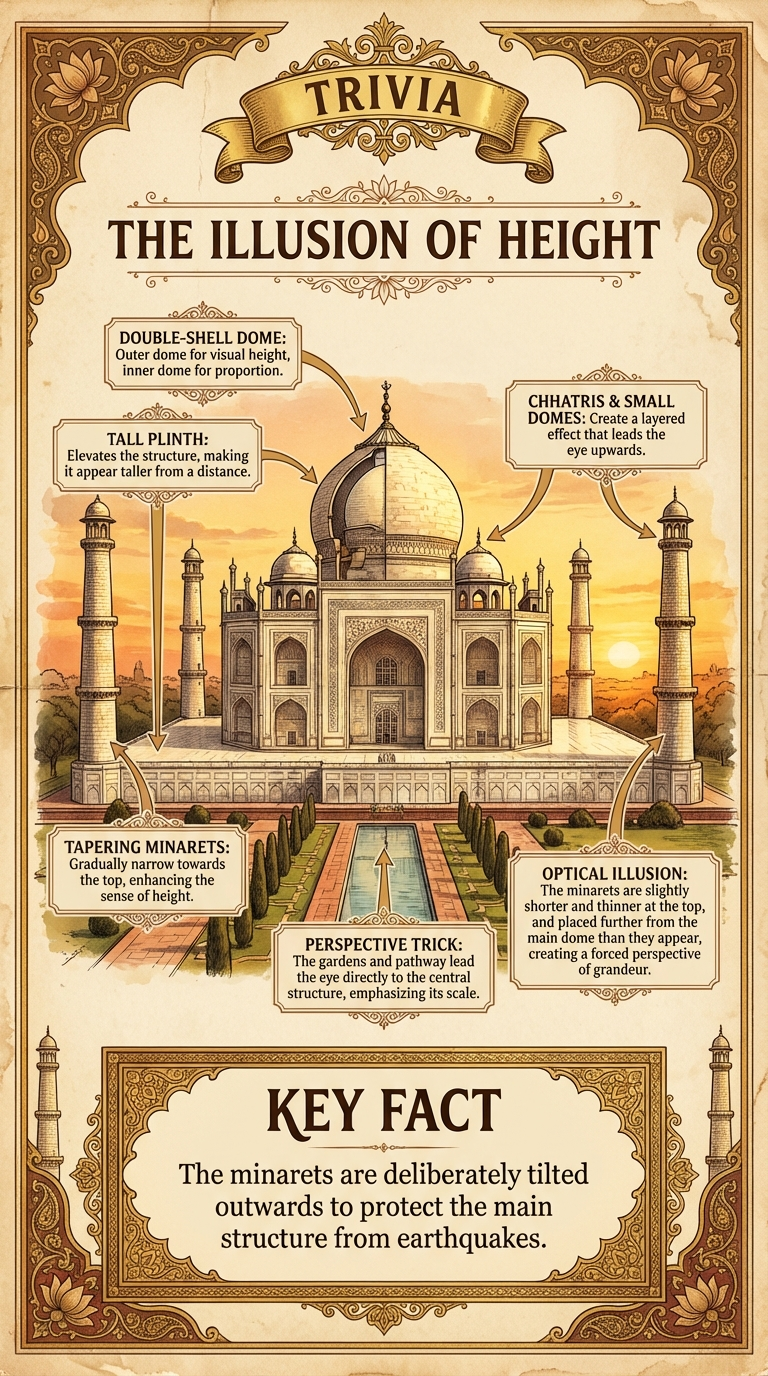
The Illusion of Height
The Taj Mahal's minarets are slightly tilted outwards. This isn't a construction flaw, but a deliberate design choice. In the event of an earthquake, the minarets would fall away from the main structure, preventing damage to the central dome. This subtle engineering marvel showcases the builders' foresight and concern for the monument's longevity. From a distance, the subtle slant is unnoticeable, preserving the aesthetic harmony of the Taj Mahal. The use of perspective tricks throughout the monument ensures it looks flawless to the naked eye. This meticulous planning extends beyond structural safety to visual perfection.
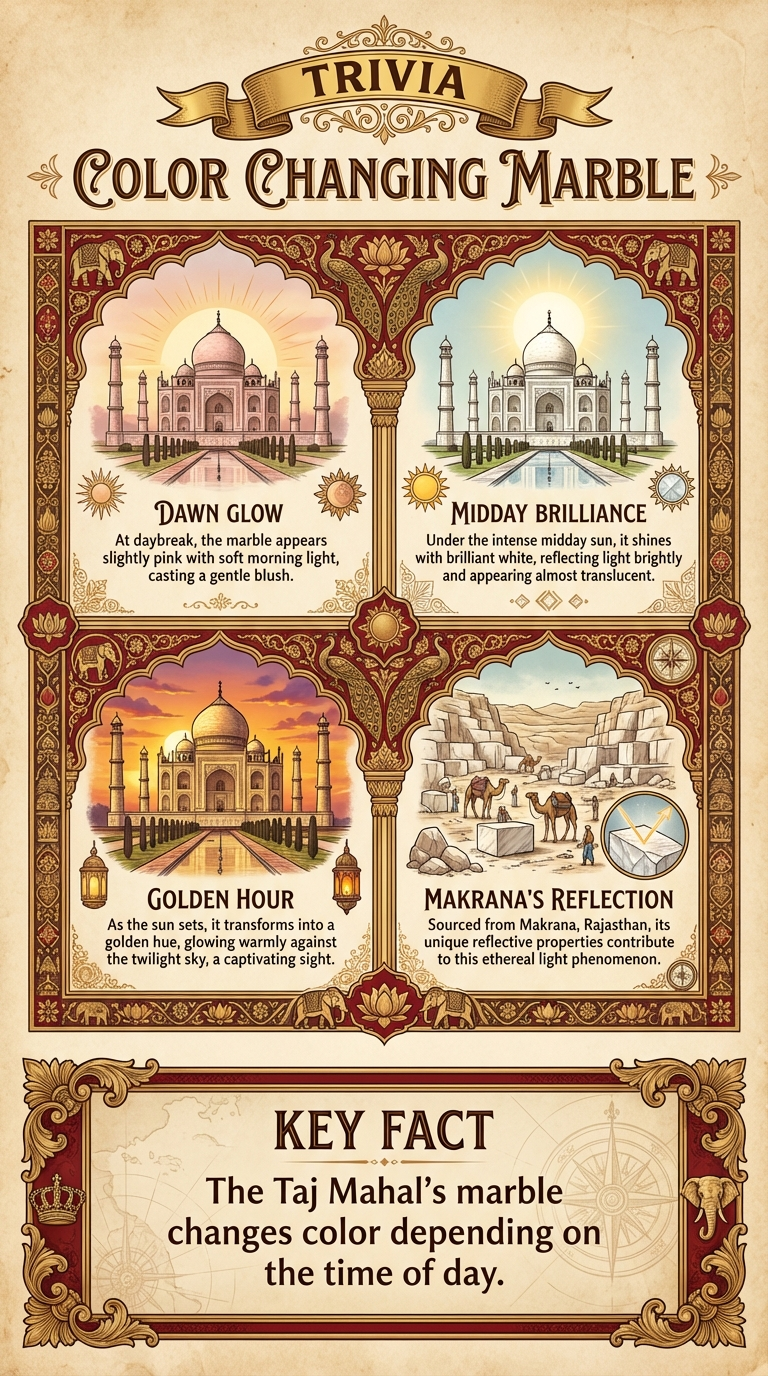
Color Changing Marble
The marble used in the Taj Mahal isn't just white; it possesses a unique ability to change color depending on the time of day and the angle of the sunlight. At dawn, it appears slightly pink; during the day, it shines brilliantly white; and at sunset, it takes on a golden hue. This captivating phenomenon adds to the monument's ethereal beauty and makes each visit a unique experience. The pristine white marble was sourced from Makrana, Rajasthan, and its reflective properties contribute to this stunning visual transformation throughout the day. The play of light and shadow on the intricate carvings further enhances the marble's changing appearance. This dynamic interplay makes the Taj Mahal seem almost alive, breathing and transforming with the passage of time.

The Black Taj Myth
A popular legend claims that Shah Jahan intended to build a black marble replica of the Taj Mahal across the Yamuna River as his own mausoleum. However, there is no concrete historical evidence to support this claim. Archaeological excavations at Mehtab Bagh, the proposed site for the 'Black Taj', have revealed the foundations of a large garden complex, but no evidence of a black marble structure. Most historians believe that the legend originated from European travelers' accounts and artistic interpretations. The darkening of the white marble over time, due to pollution, might have also contributed to the myth. While the idea of a Black Taj remains a fascinating 'what if' scenario, it is more likely a romanticized fiction than a historical reality. Despite the lack of physical evidence, the story continues to capture the imagination and adds another layer to the Taj Mahal's mystique.
Want More Agra Stories?
Get our complete 80+ page ebook with all the trivia, attractions, and insider tips.
Ebook Coming Soon