
Ayodhya holds secrets spanning over 9,000 years of continuous habitation. From being mentioned in the ancient Atharvaveda to now hosting one of the largest religious gatherings in human history, this city's stories are as magnificent as its temples.
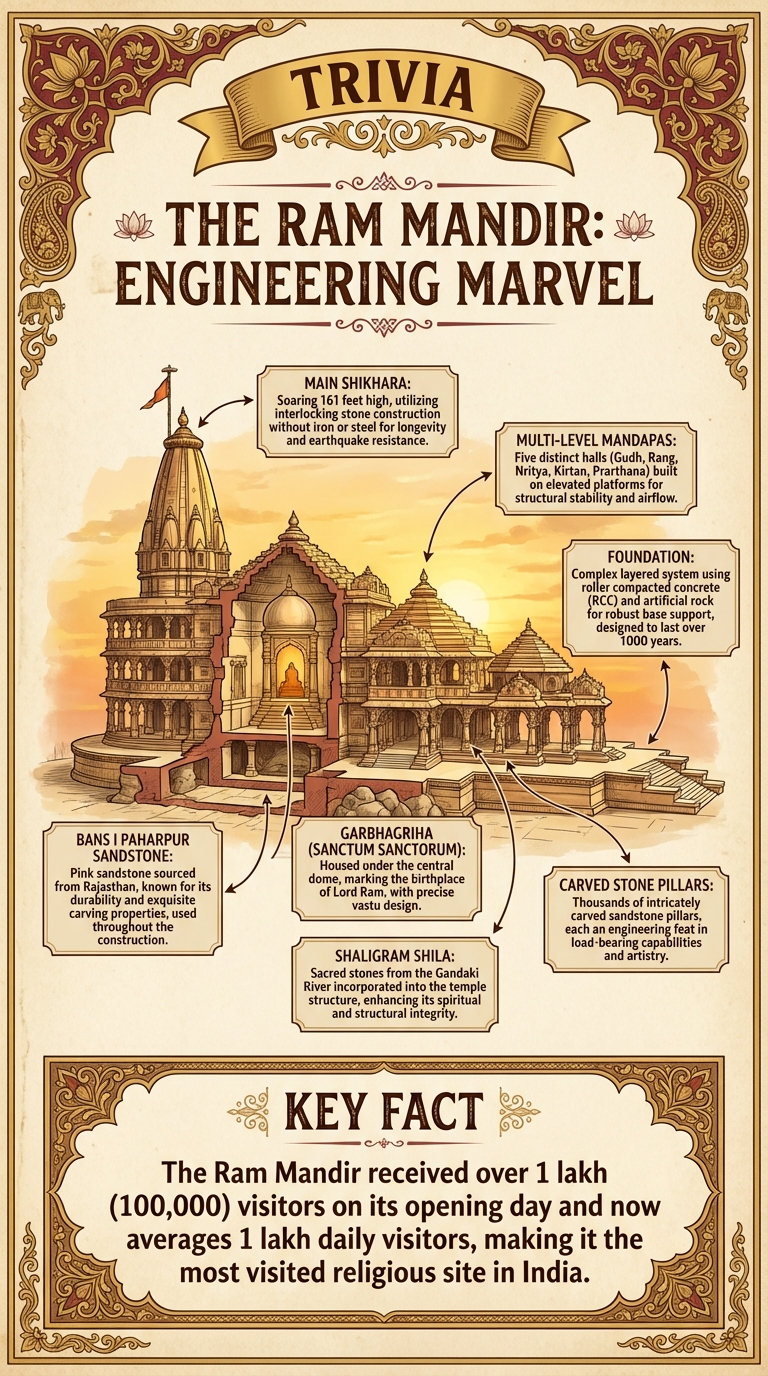
The Ram Mandir: Engineering Marvel
The Ram Mandir is built to last 1,000 years using ancient Vedic construction principles combined with modern engineering. No iron or steel was used in the structure - instead, copper and granite ensure longevity. The foundation goes 15 meters deep with 47 layers of engineered soil, making it earthquake-resistant up to magnitude 8.
- Temple can accommodate 10,000 devotees simultaneously
- 360 pillars each weighing 25 tonnes carved with 92 different deities
- Pink sandstone from Bansi Paharpur, Rajasthan used throughout
- 46-meter high shikhara visible from 20 km away
- Raft foundation using 56 layers of compacted soil
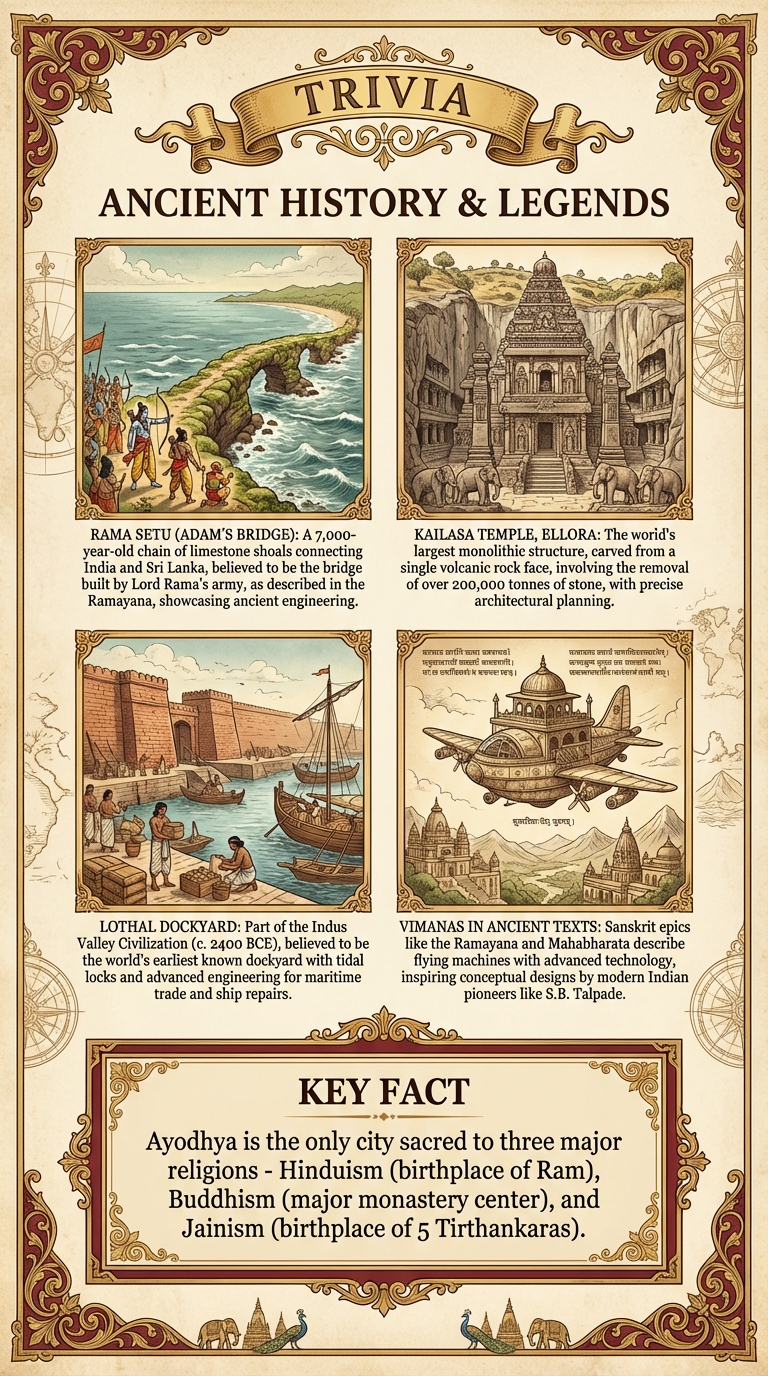
Ancient History & Legends
According to ancient texts, Ayodhya was founded by Manu, the first human in Hindu tradition, making it one of the oldest cities in recorded mythology. Archaeological excavations have uncovered evidence of continuous habitation dating back 9,000 years, including Painted Grey Ware pottery from 1000 BCE.
- One of the seven sacred cities (Sapta Puri) in Hinduism
- Mentioned in the Atharvaveda and Ramayana
- Buddhist records mention it as Saketa, a major center
- 5 Jain Tirthankaras were born here including Rishabhanatha
- Chinese pilgrim Xuanzang visited in 636 CE documenting 100 monasteries

The Saryu River's Spiritual Significance
The Saryu River is mentioned in the Vedas as a purifying force. Legend holds that a dip in the Saryu washes away the sins of seven lifetimes. The river sees unique traditions like the release of thousands of floating lamps during Kartik Purnima, creating a river of light.
- Ram Ki Paidi ghat has 14 steps representing 14 years of exile
- Over 5 lakh diyas (lamps) lit during Deepotsav
- Guinness World Record for most lamps lit: 22.23 lakh in 2023
- Water considered sacred for ancestral rituals
- Annual boat festival during Kartik month
More Ayodhya Secrets
The 110 Million Visitors Surge
Following the Ram Mandir consecration in January 2024, Ayodhya witnessed an unprecedented surge of over 110 million visitors in a single year, making it one of the largest religious tourism phenomena in history. The city is now building infrastructure to handle 5 lakh daily visitors.
Airport Named After Lord Ram
Ayodhya's new international airport is named 'Maharishi Valmiki International Airport Ayodhya Dham' - the first airport named after the author of the Ramayana. Its terminal design resembles a temple.
The Floating Stones Legend
According to the Ramayana, the rocks used to build Ram Setu floated because 'Ram' was inscribed on them. Scientists have found pumice stones in the area that naturally float due to trapped air pockets.
Want More Ayodhya Stories?
Get our complete 80+ page ebook with all the trivia, attractions, and insider tips.
Ebook Coming Soon