
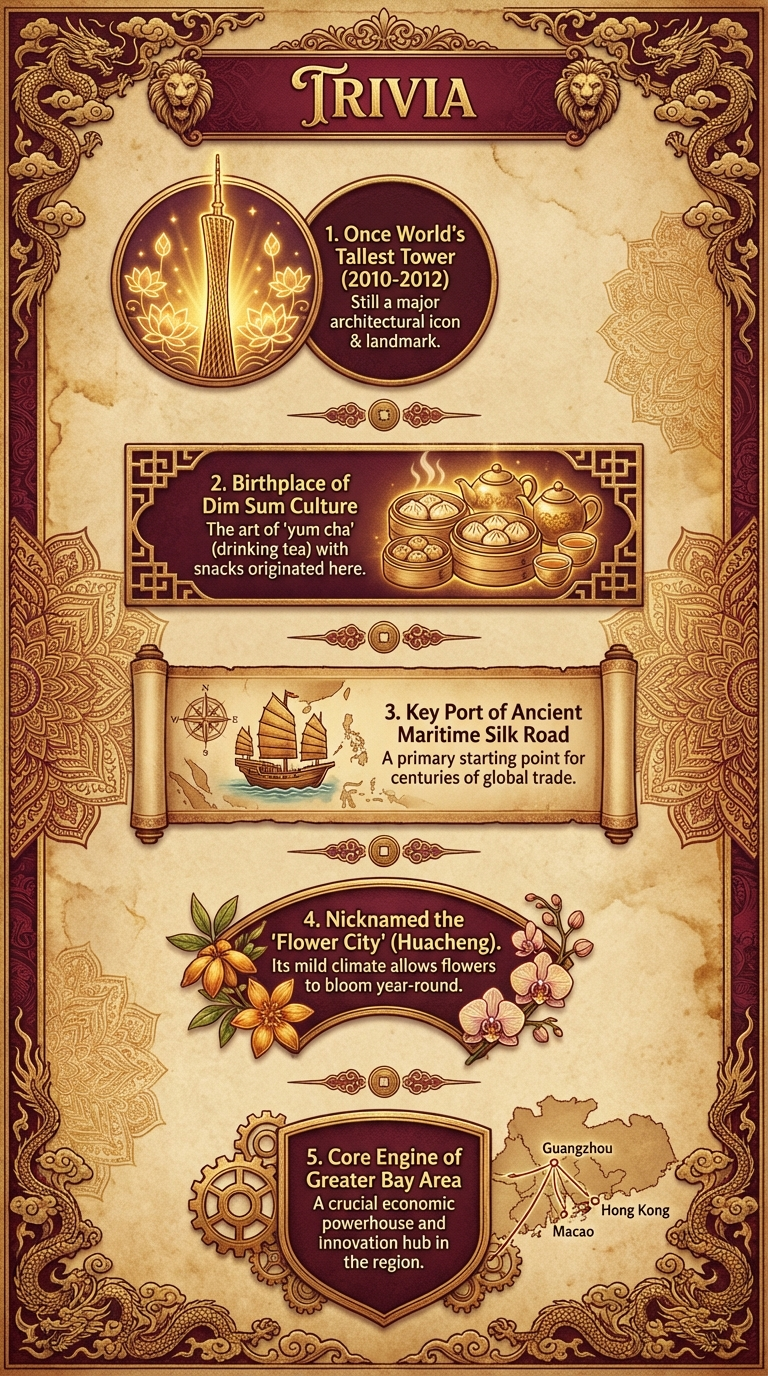
Guangzhou (Canton) has been China's gateway to the world for 2,000 years. Marco Polo visited. It was the only port open to foreign trade for centuries. And it gave the world "Chinese food" - because Cantonese cuisine became what the world knows.
Where Dim Sum Was Born
Dim sum started in Guangzhou's teahouses along the Silk Road - snacks to accompany tea for weary travelers:
- "Yum cha" (drink tea) is the Cantonese tradition of dim sum meals
- Over 2,000 types of dim sum exist
- Har gow (shrimp dumplings) must have exactly 12-14 pleats
- The art of dim sum takes 3+ years of apprenticeship
- Michelin-starred dim sum started here before spreading worldwide
The World's Largest Trade Fair
The Canton Fair has been running since 1957 and is where global trade happens:
- Held twice yearly (April & October) since 1957
- 1.2 million square meters of exhibition space
- 200,000+ buyers from 200+ countries attend each session
- $30+ billion in contracts signed per fair
- Everything from toys to machinery to electronics
"Eat in Guangzhou" (食在广州)
The Chinese saying "eat in Guangzhou" means Cantonese cuisine is the best - and it shaped global perceptions of "Chinese food":
- Cantonese cuisine is one of 8 great Chinese cuisines
- Emphasis on freshness - ingredients often bought live
- Early Chinatowns were mostly Cantonese - their food became "Chinese food"
- Cantonese will "eat anything with legs except a table"
- Roast meats (char siu, roast goose) are Guangzhou specialties
More Guangzhou Secrets
The Legend of Five Rams
Guangzhou's symbol is Five Rams - based on a legend that five celestial beings rode rams to the starving city, each ram carrying a stem of rice. The immortals blessed the city with eternal abundance and flew away; the rams turned to stone. The Five Ram Statue in Yuexiu Park commemorates this myth.
Fun fact: Guangzhou is sometimes called "Goat City" (羊城) because of this legend!
China's Only Port for 100 Years
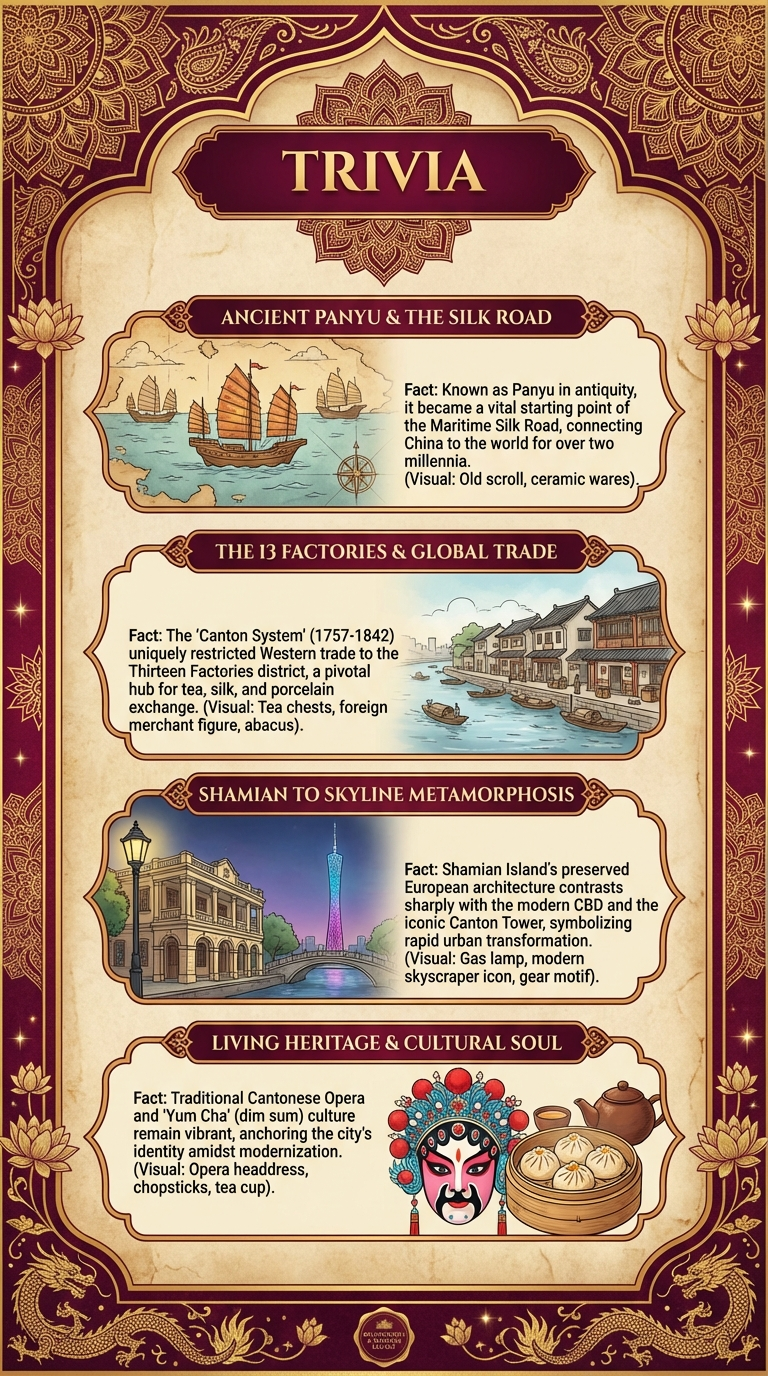
From 1757 to 1842, Guangzhou was the ONLY Chinese port open to Western trade (the Canton System). All tea, silk, and porcelain exports went through here. This is why "Canton" became synonymous with China trade. The Opium Wars were fought partly to open more ports.
The African Trading Community
Guangzhou has China's largest African community - estimated at 20,000-50,000 traders from Nigeria, Ghana, and other countries. They come to buy goods at wholesale markets and ship them home. Little Africa (Xiaobei) has African restaurants, hair salons, and churches.
Want More Guangzhou Stories?
Get our complete 80+ page ebook with all the trivia, attractions, and insider tips.
Ebook Coming Soon