
Osaka is the anti-Tokyo - louder, funnier, and obsessed with food. While Tokyo follows rules, Osakans famously break them. From inventing instant ramen to developing Japan's comedy industry, Osaka does things differently. Here's why.
Japan's Kitchen: "Eat Till You Drop"
"Kuidaore" (eat till you drop) is Osaka's motto. The city takes food more seriously than anywhere in Japan:
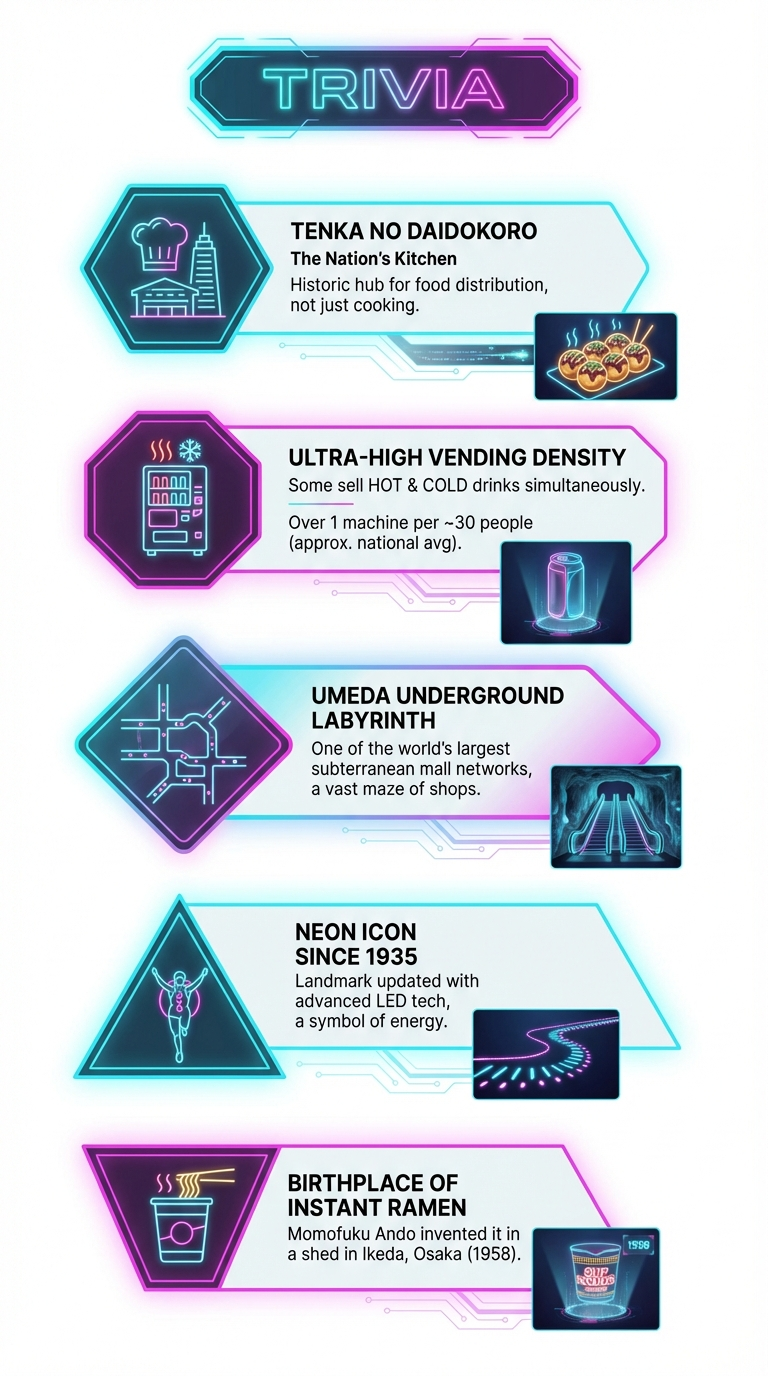
- Instant ramen was invented here (by Momofuku Ando, 1958)
- Takoyaki (octopus balls) is Osaka's soul food
- Okonomiyaki (savory pancakes) - every family has their recipe
- Osakans spend more on food than any other Japanese city
- Kushikatsu rule: Never double-dip! (Serious offense)
Japan's Comedy Capital
Osaka developed Japan's stand-up comedy and considers humor a civic duty:
- Manzai (double-act comedy) was born here in the 1900s
- Yoshimoto Kogyo is the world's largest comedy agency
- "Nandeyanen!" (What the heck?!) is the classic punchline
- Osakans are expected to be funnier than other Japanese
- The Osaka dialect itself is considered inherently funny
The Anti-Tokyo: Osaka Rebellion
Osaka and Tokyo have been rivals for centuries - and Osakans take pride in being different:
- Stand on the right side of escalators (opposite of Tokyo)
- Say "ookini" not "arigato" for thank you
- Bargaining in shops is acceptable (taboo in Tokyo)
- Pedestrians ignore red lights if streets are empty
- Women are louder and more assertive (by Japanese standards)
More Osaka Secrets
The Glico Man's Story
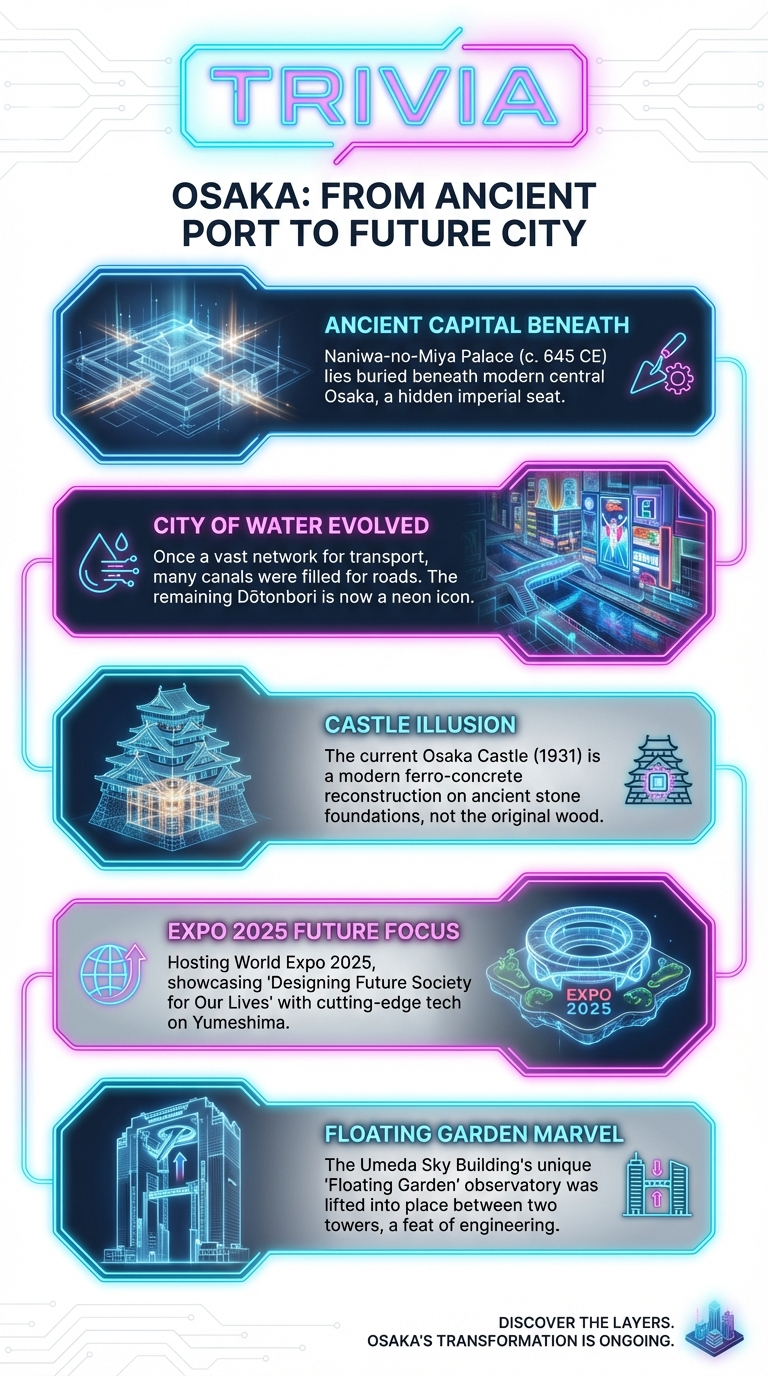
The iconic Glico Running Man sign in Dotonbori has been an Osaka landmark since 1935. The original slogan "One grain of Glico for 300 meters of energy" referred to the company's candy. The sign has been updated 6 times - the current LED version cost ¥1 billion (about $7 million) and has 140,000 lights.
Fun fact: Fans celebrate sports victories by jumping into the Dotonbori canal below the sign!
Osaka Castle's Survival
Osaka Castle has been destroyed and rebuilt multiple times. The current concrete structure (built in 1931) survived WWII bombings because US forces were using the adjacent park as a military base. The castle now contains an elevator - controversial among purists but practical for visitors.
The Underground City
Osaka's underground shopping network is one of the largest in the world. You can walk from Umeda to Shinsaibashi (several kilometers) entirely underground through connected malls and station complexes. In summer, Osakans escape the heat by shopping below ground.
Want More Osaka Stories?
Get our complete 80+ page ebook with all the trivia, attractions, and insider tips.
Ebook Coming Soon