
Seoul has reinvented itself multiple times - from dynastic capital to war-torn ruins to high-tech megacity. It's where 600-year-old palaces stand beside the world's fastest internet, and where K-pop conquered the globe. Here are the stories behind the phenomenon.
K-Pop: Korea's Greatest Export
K-pop is a $10 billion industry that was deliberately engineered by the Korean government after the 1997 financial crisis:
- Trainees practice 12+ hours daily for 2-7 years before debut
- BTS alone contributes $5 billion annually to Korea's economy
- The "Korean Wave" (Hallyu) is an official government strategy
- K-pop agencies own entertainment "cities" in Seoul
- Plastic surgery rates are highest in the world (partly due to K-pop)
The World's Most Connected City
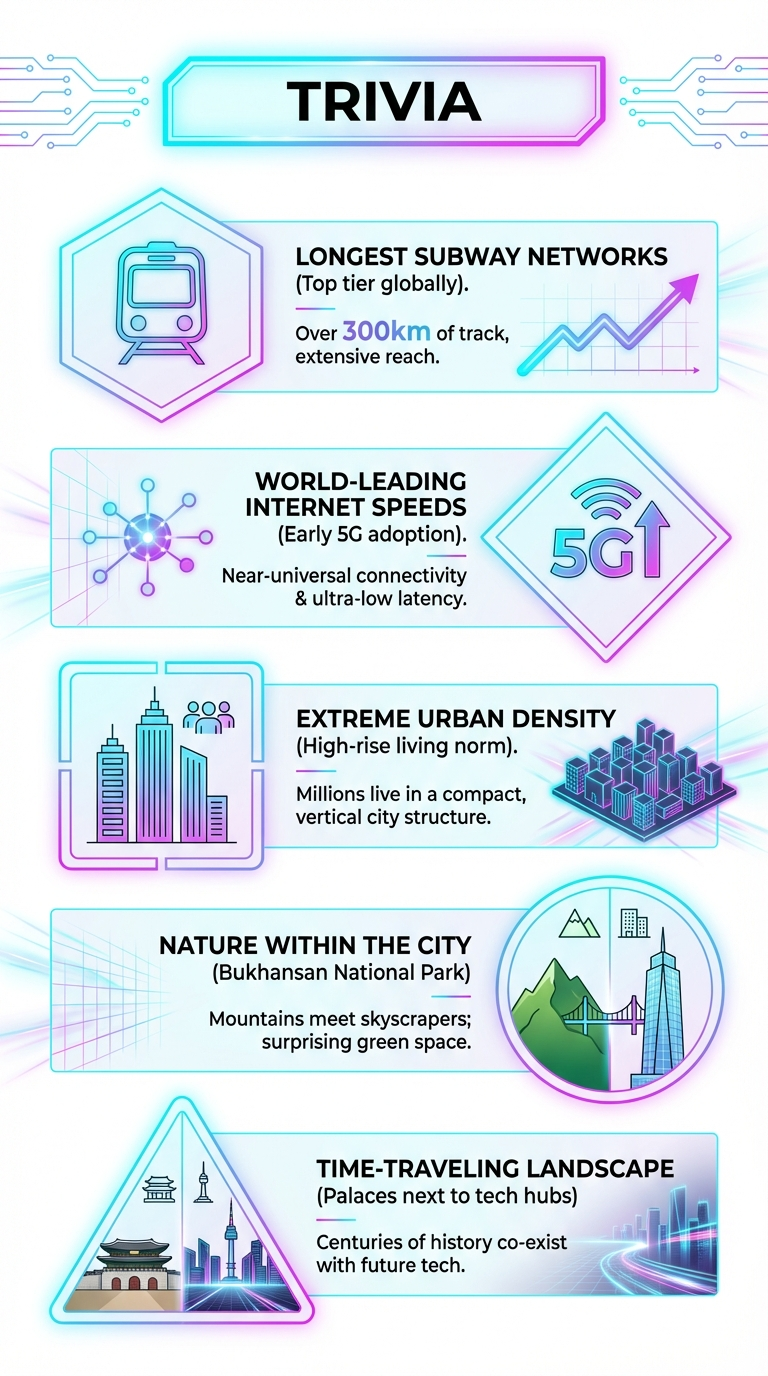
South Korea has the fastest internet on Earth, and Seoul is its showcase:
- Average internet speed: 145 Mbps (vs 65 Mbps in US)
- 95% smartphone penetration rate
- Free WiFi in subway (102 stations, 327km underground)
- PC bangs (gaming cafes) are open 24/7 everywhere
- E-sports is a national sport with star athletes
600 Years of Dynastic Capital
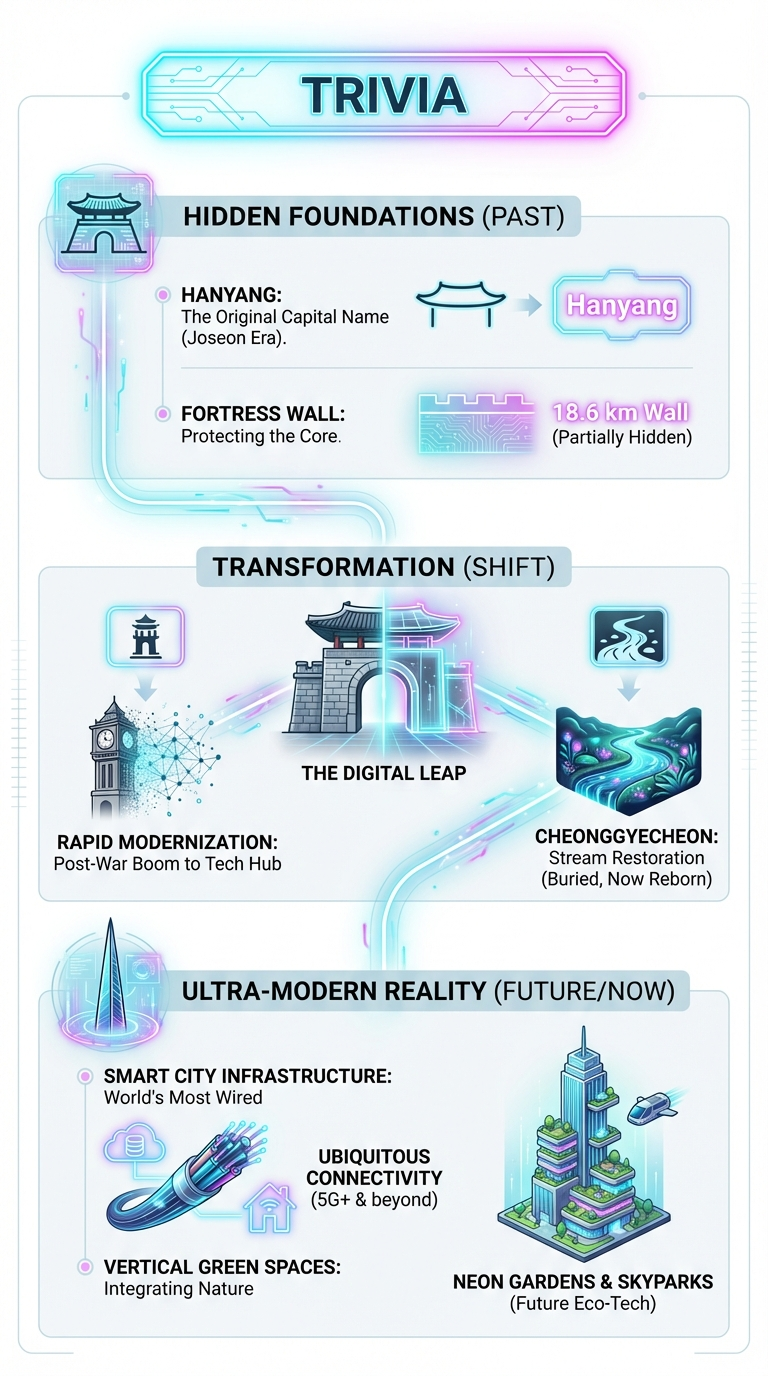
Seoul was founded in 1394 as the capital of the Joseon Dynasty and has survived invasions, occupation, and complete destruction:
- 5 grand palaces still exist from the Joseon Dynasty
- Gyeongbokgung Palace was destroyed twice (Japan invaded in 1592 and 1910)
- The Korean War (1950-53) destroyed 90% of the city
- Modern Seoul was essentially built from scratch after 1953
- The Hanok villages preserve traditional architecture
More Seoul Secrets
Why Everyone Has the Same Last Names
About 45% of Koreans have one of three surnames: Kim (21%), Lee (14%), or Park (8%). This isn't coincidence - historically, surnames were reserved for nobility. When commoners were finally allowed surnames in 1909, many chose prestigious noble names. That's why there are 10 million Kim families!
Fun fact: "Kim" comes from the Shilla royal family - so millions of "Kims" share a supposed royal ancestor!
The DMZ: Most Dangerous Border
The Demilitarized Zone is just 35 miles north of Seoul. Despite its name, it's the most heavily militarized border in the world, with 2 million soldiers on both sides. Tours from Seoul let you peer into North Korea, visit the "truce village" of Panmunjom, and see the tension up close.
Fried Chicken Culture
Korea has more fried chicken restaurants than McDonald's locations worldwide. Korean fried chicken (KFC - the other KFC) is double-fried for extra crispiness and served with beer (called "chimaek"). Delivery arrives in under 30 minutes to parks, beaches, even hiking trails.
Want More Seoul Stories?
Get our complete 80+ page ebook with all the trivia, attractions, and insider tips.
Ebook Coming Soon