
Vaishno Devi holds countless fascinating stories and secrets waiting to be discovered. From ancient legends to modern marvels, this destination continues to captivate visitors with its rich heritage.
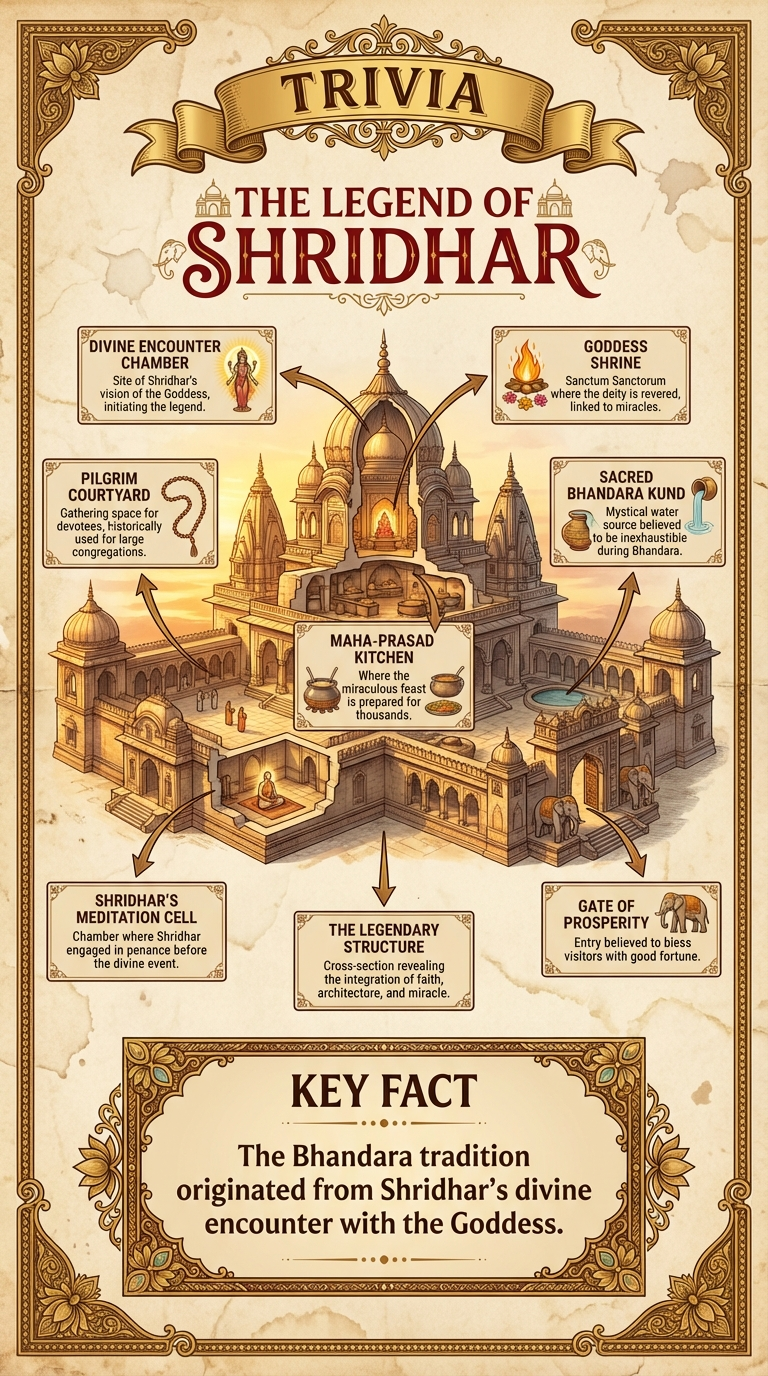
The Legend of Shridhar
The most popular legend associated with Vaishno Devi is that of Pandit Shridhar. He was a staunch devotee who, upon the Goddess's instruction, organized a Bhandara (community feast) that attracted the attention of Bhairon Nath. When Shridhar ran short of supplies, the Goddess appeared and helped him fulfill his commitment. This incident is believed to have solidified Shridhar's faith and established the tradition of organizing Bhandaras at Vaishno Devi. The cave itself is considered the manifestation of the Goddess's power revealed during this time. Shridhar's unwavering devotion serves as an inspiration to millions of pilgrims who visit the shrine every year. The Bhandara tradition continues to this day, providing free meals to pilgrims.
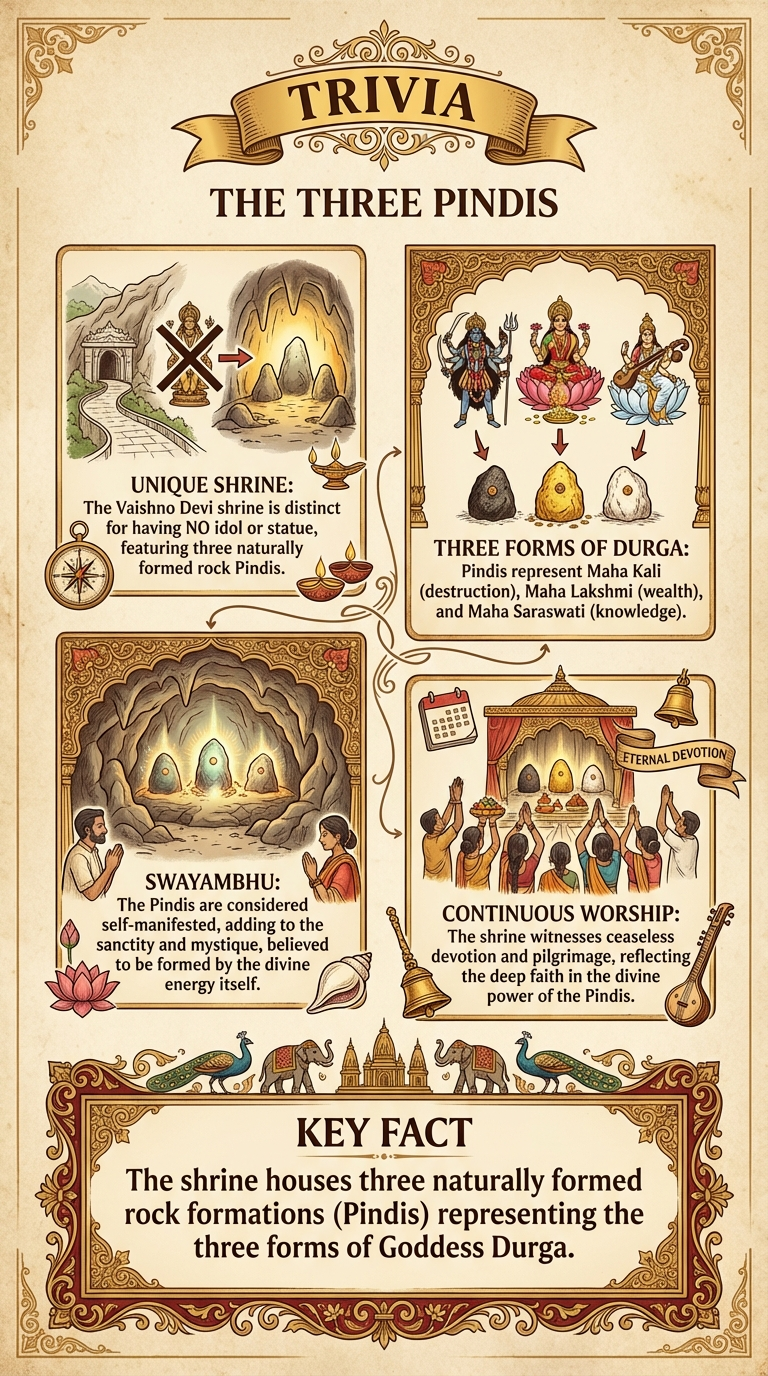
The Three Pindis
The Vaishno Devi shrine is unique because it doesn't house an idol or statue. Instead, it features three naturally formed rock formations called Pindis, representing the three forms of Goddess Durga: Maha Kali (the Goddess of destruction), Maha Lakshmi (the Goddess of wealth and prosperity), and Maha Saraswati (the Goddess of knowledge and wisdom). Each Pindi has a distinct color and texture, reflecting the unique qualities of the Goddess it represents. The Pindis are considered self-manifested (Swayambhu), adding to the sanctity and mystique of the shrine. The continuous worship and devotion offered to these Pindis over centuries have created a powerful spiritual energy that resonates with pilgrims.
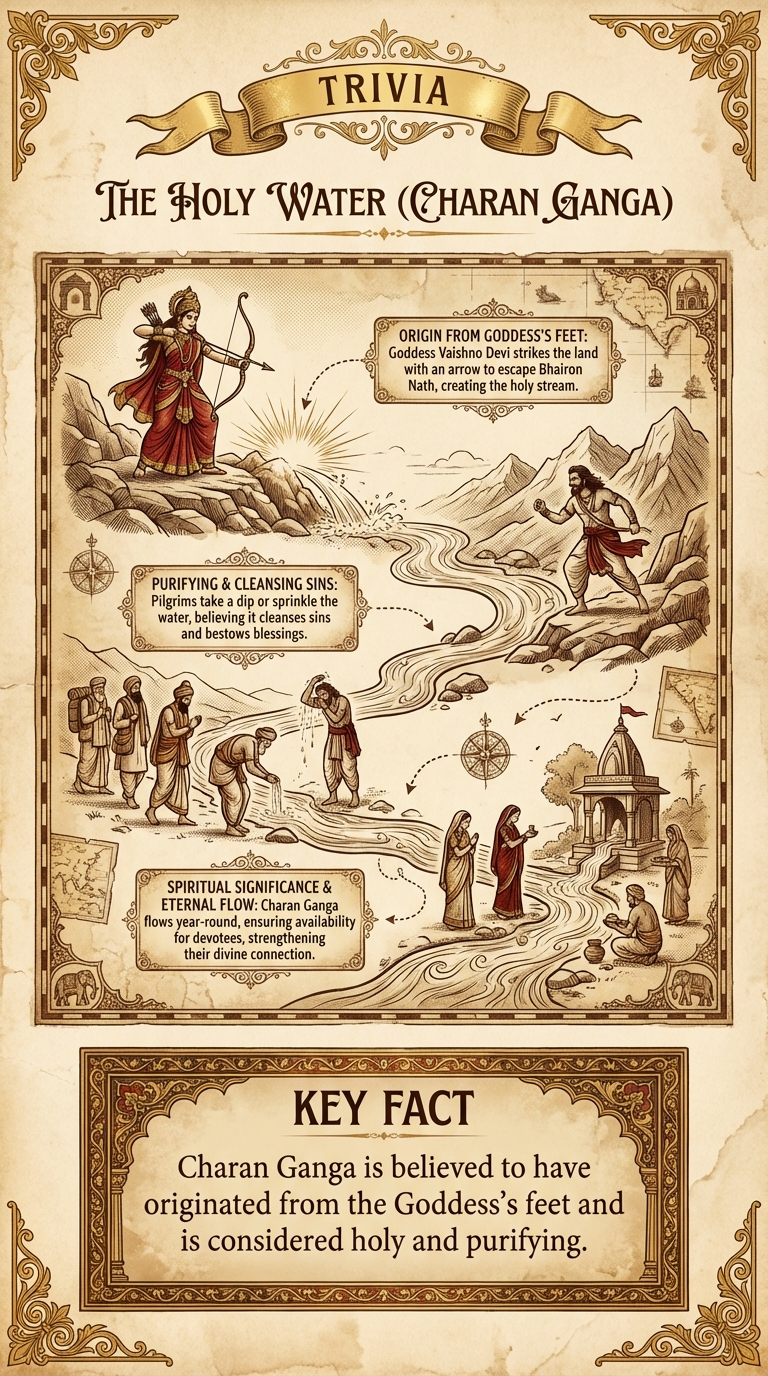
The Holy Water (Charan Ganga)
During the trek, pilgrims pass by the Charan Ganga, a holy stream believed to have originated from the Goddess's feet. It is said that when Goddess Vaishno Devi struck an arrow on the land while escaping from Bhairon Nath, the holy river emerged. Taking a dip or sprinkling this water on oneself is considered highly auspicious and purifying. The water is believed to cleanse sins and bestow blessings. The Charan Ganga adds to the spiritual significance of the Yatra and reinforces the connection between the devotees and the divine. The water flows year-round, ensuring its availability for pilgrims seeking its blessings. Many pilgrims collect the water to take back home as a sacred souvenir.
Want More Vaishno Devi Stories?
Get our complete 80+ page ebook with all the trivia, attractions, and insider tips.
Ebook Coming Soon