
Medina (Al-Madinah Al-Munawwarah - "The Radiant City") is where Prophet Muhammad established the first Muslim community after leaving Mecca. It's Islam's second holiest city and contains the Prophet's Mosque, one of the largest religious sites on Earth.
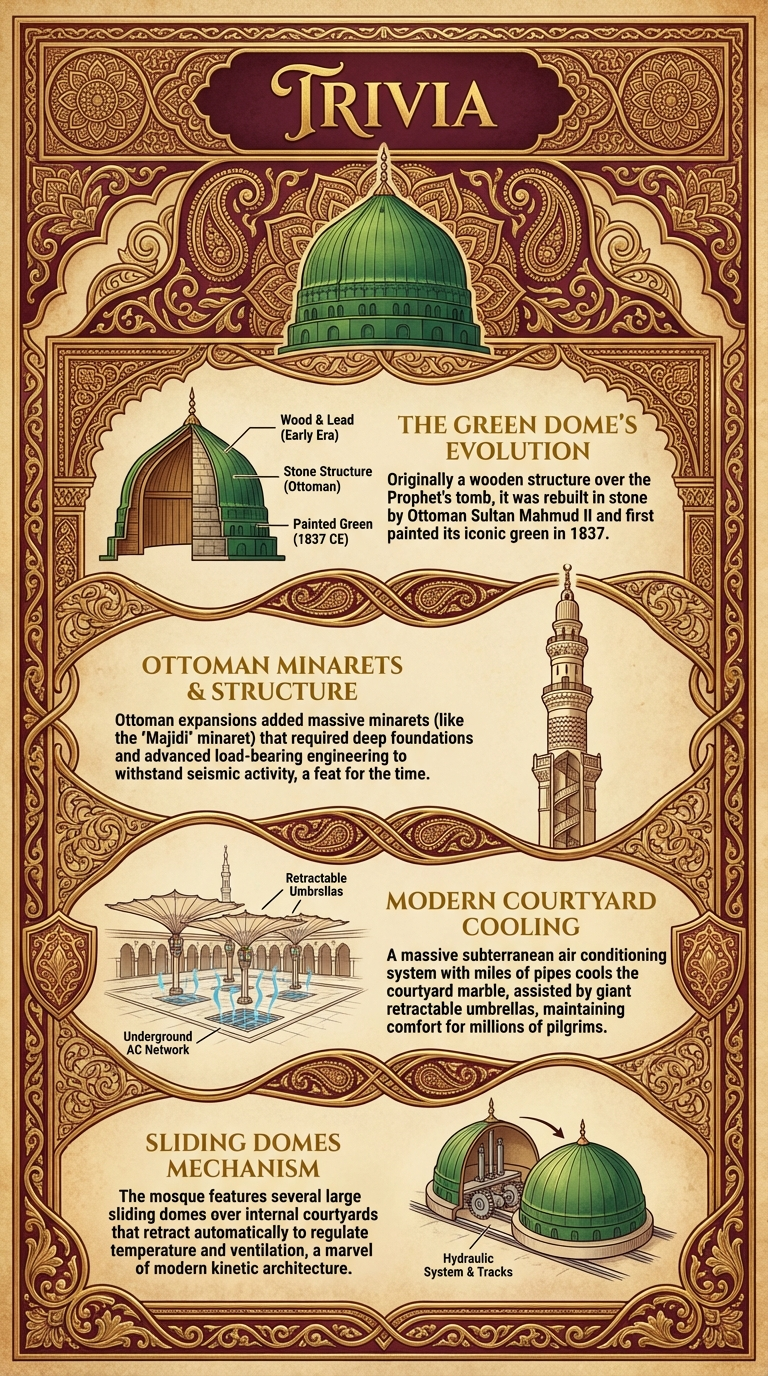
Al-Masjid an-Nabawi: The Prophet's Mosque
The Prophet's Mosque is one of the largest mosques in the world and contains the tomb of Prophet Muhammad:
- Can accommodate over 1 million worshippers
- The iconic green dome marks the Prophet's tomb
- Originally built by the Prophet himself in 622 CE
- Expanded numerous times over 1,400 years
- Features retractable umbrellas for shade in courtyards
Rawdah: Garden of Paradise
The Rawdah Sharif is the area between the Prophet's tomb and his original pulpit - one of the most sacred spots in Islam:
- The Prophet said it's "a garden from the gardens of Paradise"
- Distinguished by white marble floor and green carpet
- Extremely crowded - visitors book time slots via app
- Separate times allocated for men and women
- Many pilgrims spend hours in prayer here
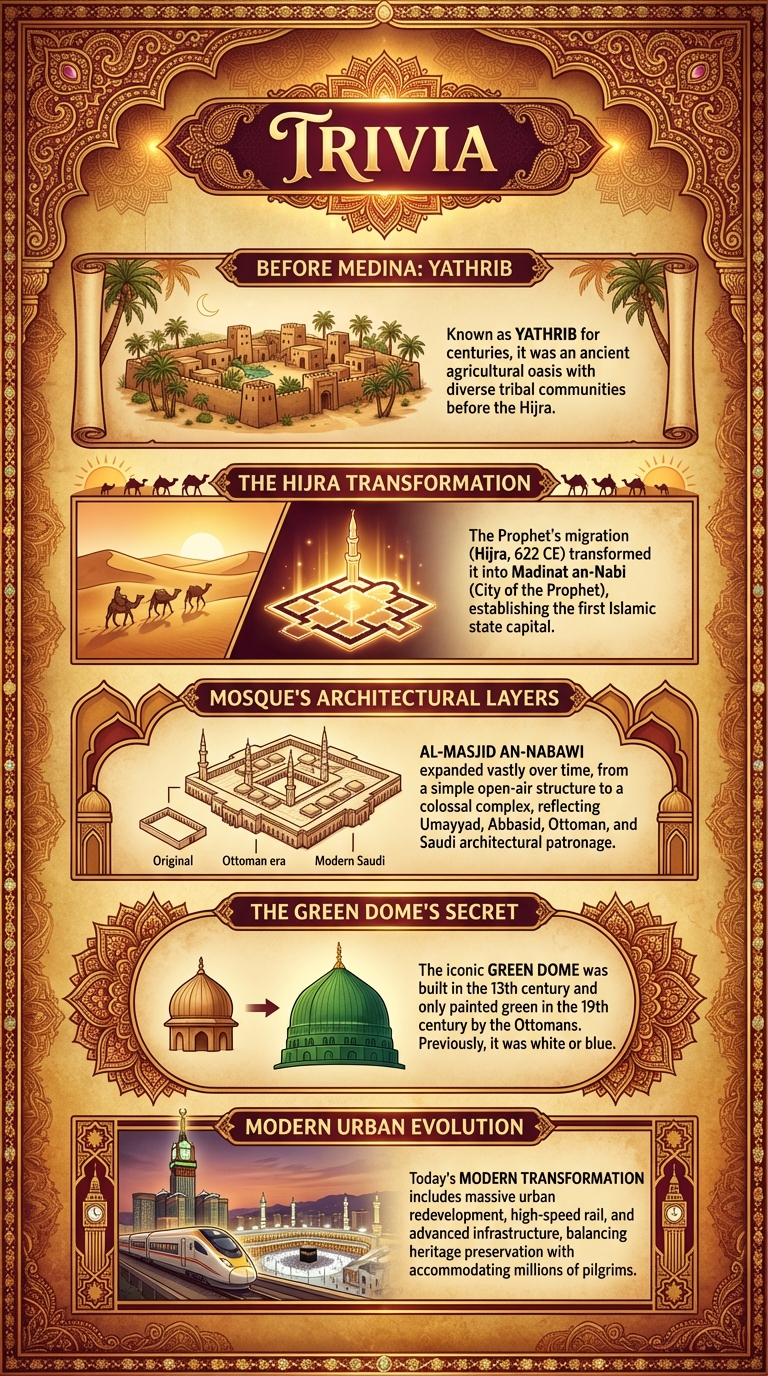
The Hijra: Islam's Founding Migration
The Prophet's migration (Hijra) from Mecca to Medina in 622 CE marks the start of the Islamic calendar:
- The journey took approximately 8 days
- The Prophet hid in a cave for 3 days (Cave of Thawr)
- Medina's people (Ansar) welcomed him with songs
- The first mosque (Quba) was built on arrival
- Year 1 AH (After Hijra) begins with this event
More Radiant City Facts
Quba Mosque: The First Mosque
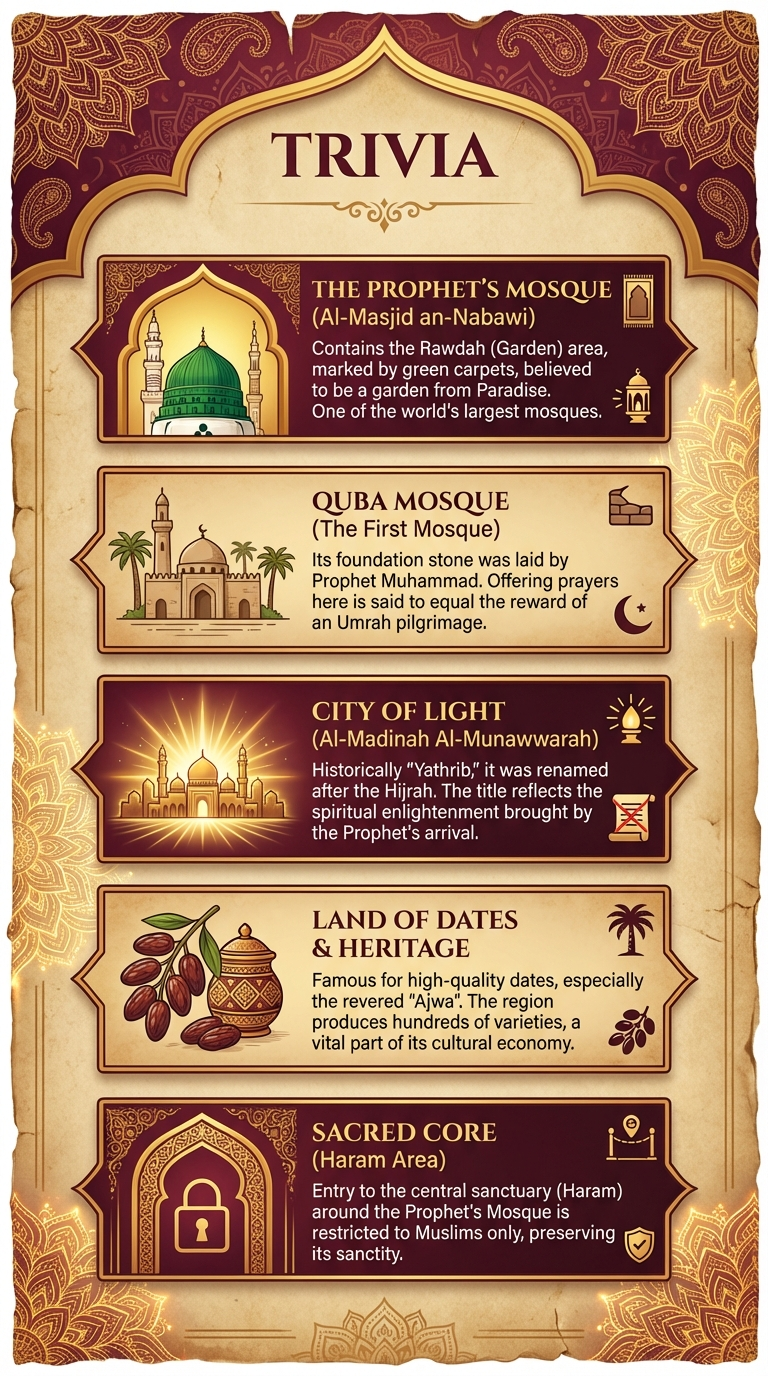
Quba Mosque is the first mosque ever built in Islamic history. Prophet Muhammad laid its first stones upon arriving in Medina before proceeding to the city center. He visited every Saturday, and said that praying here equals the reward of Umrah. The modern mosque is beautiful and well-maintained.
Did you know? Following the Sunnah, many pilgrims visit Quba on Saturdays!
The Battle Sites
Mount Uhud, north of Medina, was the site of the famous Battle of Uhud (625 CE). The Prophet's uncle Hamza was martyred here and is buried in the Martyrs' Cemetery. The Prophet said: "Uhud is a mountain which loves us and which we love." Visitors reflect on Islamic history at this significant site.
The Date Capital
Medina is famous for its dates, especially the Ajwa variety. The Prophet said eating 7 Ajwa dates in the morning protects against poison and magic. The date farms around Medina have existed for thousands of years, and buying Ajwa dates is an essential part of any pilgrim's visit.
Want More About the Sacred Cities?
Get our complete guide with spiritual preparation and practical information for pilgrims.
Ebook Coming Soon